

Quick answer: TENS intensity controls how strong the stimulation feels. Frequency controls the pulse rate, while pulse width describes the duration of each pulse. A mode may combine several settings into a preset. There is no universal intensity number or settings chart that fits every person, body area and device.
If a screen offers dozens of levels and several massage icons, it is easy to confuse a program with a strength setting. This guide explains the controls so you can read your own manual more confidently. For first-time setup and pad placement, start with our step-by-step TENS setup guide.
TENS unit settings chart: what each control means
| Control | Meaning | What to check |
|---|---|---|
| Intensity or amplitude | Strength of the electrical stimulation | Which channel is selected before pressing plus or minus |
| Frequency or pulse rate | Number of pulses per second, expressed in hertz (Hz) | Whether the model exposes this control or includes it in presets |
| Pulse width or duration | Length of an individual pulse, commonly expressed in microseconds (μs) | Whether adjustment is available and what the manual permits |
| Mode or program | A selected stimulation pattern or function | Whether it is TENS, EMS or another program category |
| Timer | Session duration | The intended duration, rather than automatically choosing the maximum |
| Channel A/B | The output associated with a lead and its pad pair | Which output you are adjusting |
The Norfolk and Norwich University Hospitals TENS leaflet explains pulse rate and pulse width separately. Its example settings belong to the equipment and clinical guidance in that leaflet; they are not a KONGZEE program map.

How high should you set TENS intensity?
For ordinary sensory TENS use, aim for a clear, comfortable sensation rather than a particular number. Cambridge University Hospitals advises a strong but tolerable sensation, with the frequency or mode chosen for comfort or according to the physiotherapist's advice. Discomfort is a reason to adjust or stop, not a target to push through.
On a numbered controller, level 10 is not a standardized dose. It cannot be compared directly with level 10 on another model. Nor does a 40-level scale mean that someone should eventually reach level 40. Use the display to identify your current setting, not to measure progress against another person.
- Read the supplied instructions and identify the active mode and channel.
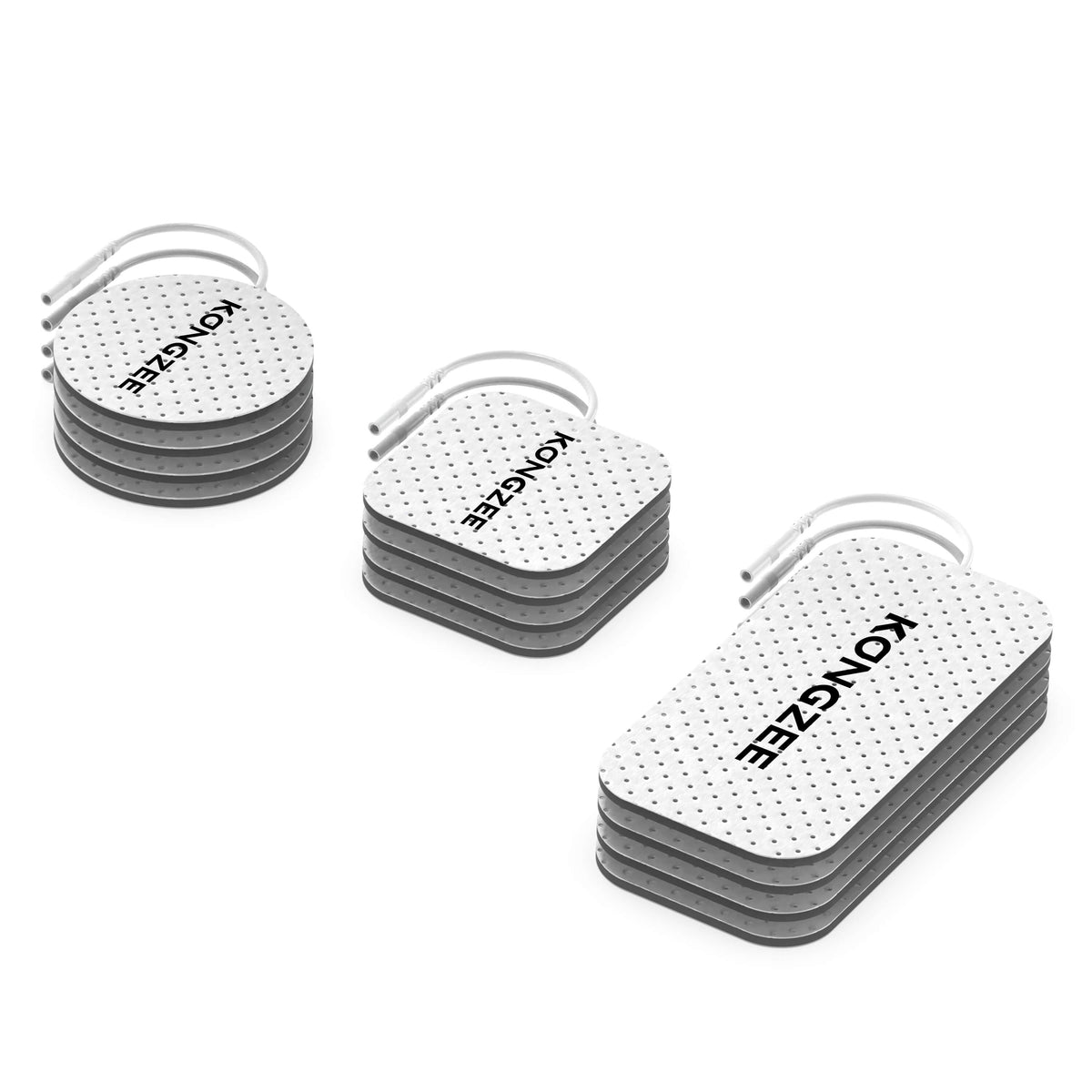
- Connect and position the pads with the device switched off.
- Begin at the lowest intensity and increase gradually within the manual's instructions.
- If the sensation is sharp, burning or painful, stop and check the setup and skin.
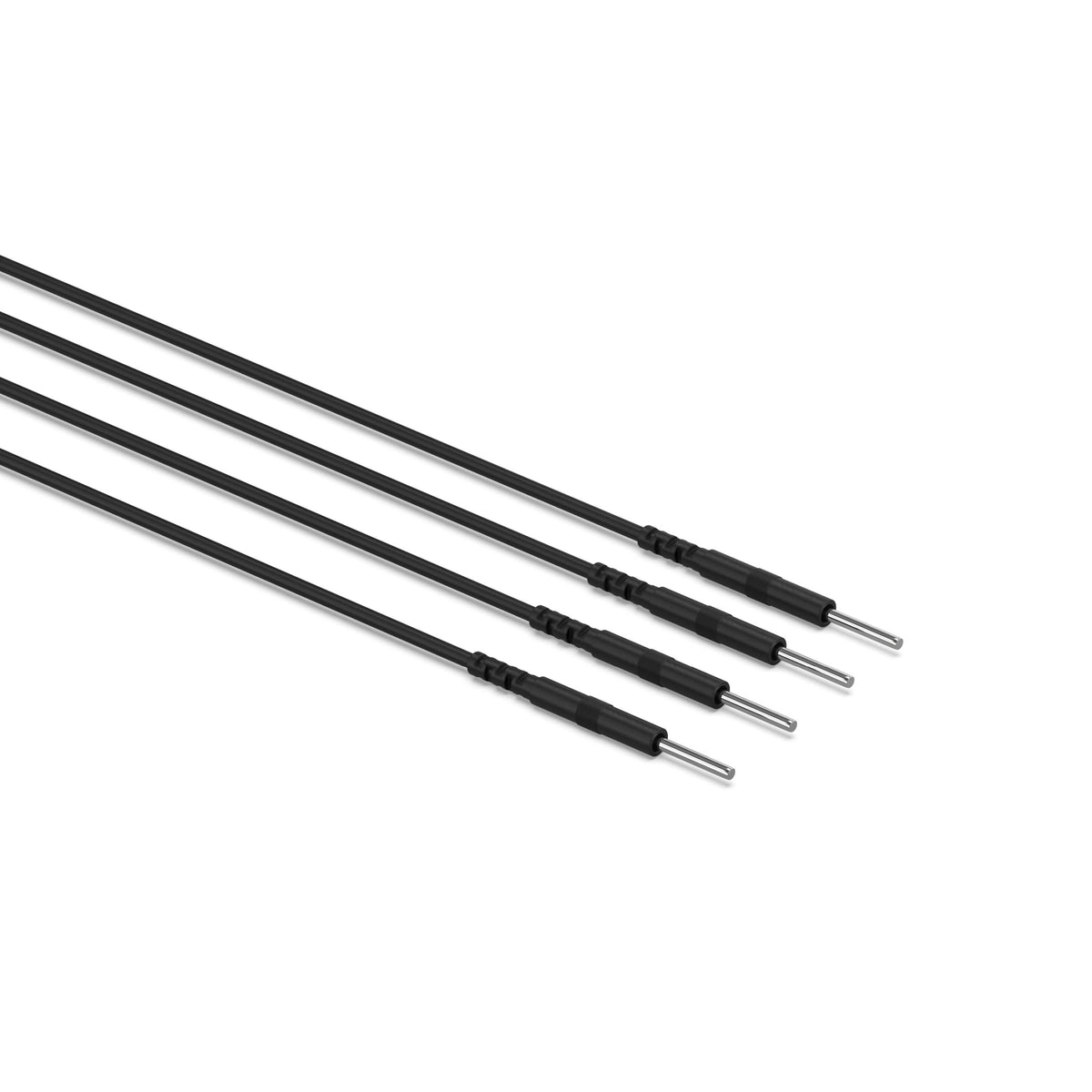
- Switch off before moving a pad, changing a lead or removing the electrodes.
If sensation becomes less noticeable, first distinguish comfortable fading from an electrical connection problem. CUH notes that adjustment may be needed as you get used to the sensation. However, an output that cuts in and out, a loose pad or a damaged cable needs checking rather than repeated increases. Use our troubleshooting checklist for those symptoms.
Why a preset is not an intensity level
A controller might show a program number next to an intensity number. Changing the program can change the pattern while leaving a separate strength control to adjust. Read the labels and manual together; an icon alone does not establish frequency, pulse width or a diagnosis-specific treatment.
The distinction matters on a combination unit. TENS and EMS serve different purposes. A program intended to produce muscle contractions is not interchangeable with comfortable sensory stimulation. Our TENS and EMS comparison explains the difference. Do not switch categories merely to obtain a stronger feeling.
Likewise, the timer answers a different question from intensity. A higher level does not justify a longer session. For timing considerations, use the session length guide together with the manual and any advice you have been given.

How this applies to the KONGZEE 9026
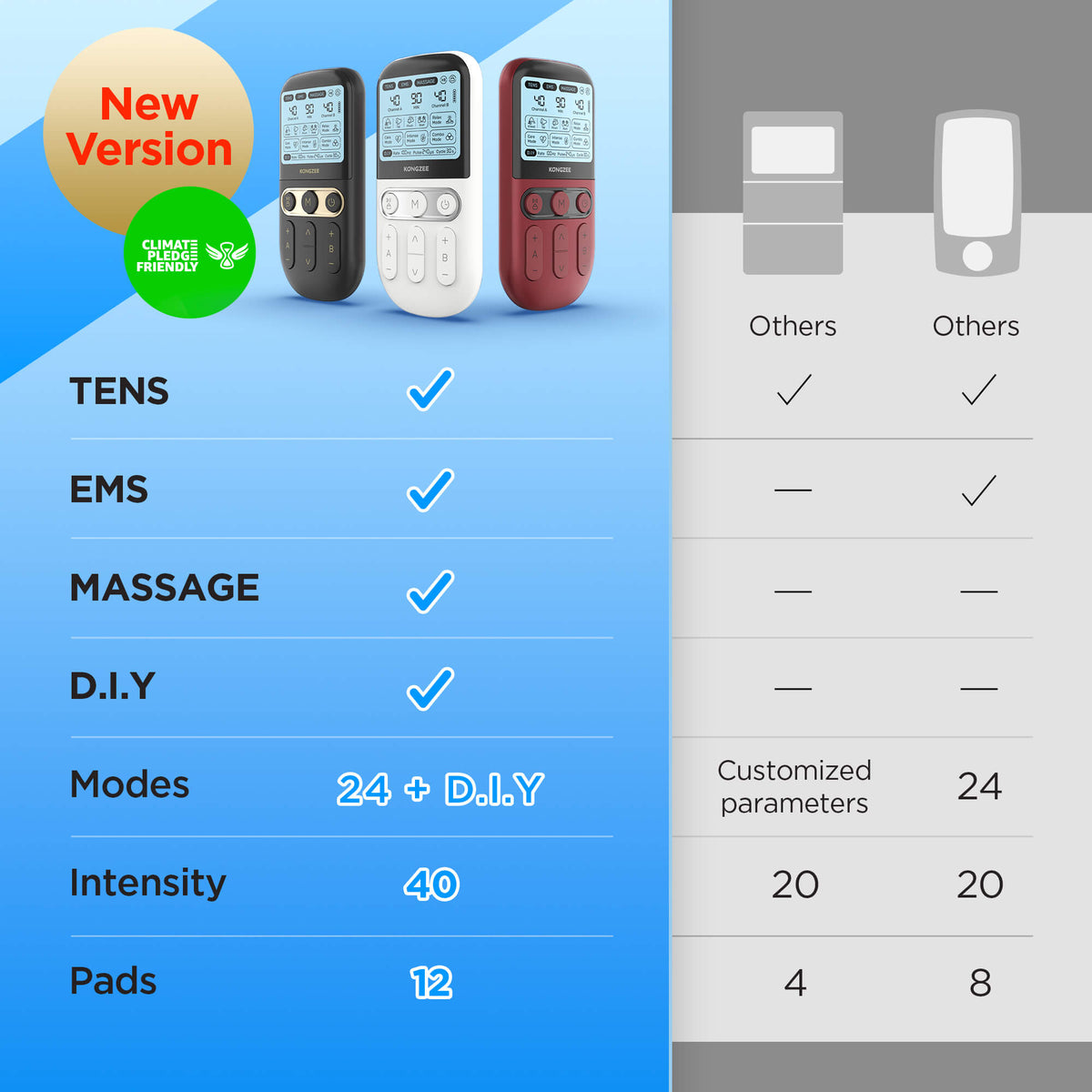
The current KONGZEE portable rechargeable TENS unit with EMS listing specifies 40 intensity levels, independent A/B intensity controls, 24 presets and TENS, EMS, Massage and DIY functions. These are control features, not evidence that a particular preset is best for a medical condition.
Check the selected output before changing intensity. Separate A/B adjustment does not by itself establish that each channel can run a different program. We also do not infer an exact Hz or μs value from a preset icon. For the model's button sequence and program details, use the 9026 manual and support page.
For a useful session note, record the model, mode, selected channel, pad location, intensity, duration and whether the sensation stayed comfortable. A note such as “channel A, same pad pair, comfortable throughout” is more informative to support than “used a high setting.” Do not record a new higher number as an achievement.
Common questions about TENS settings
Is there one best TENS setting for back pain?
No single number in this guide is a prescription for back pain. Placement, suitability and the specific controller matter. Use the device instructions and seek professional guidance if the pain is unexplained or the setup is uncomfortable.
Does more intensity mean more effective treatment?
A larger displayed number is not evidence of better results. The practical goal is appropriate, comfortable use, not reaching the top of the scale.
Can I copy settings from another brand?
Do not copy a program number or icon across brands. Even similarly named modes need to be checked against the exact model's instructions.
What if the pads make my skin itchy?
Stop and remove them after switching off. See our skin irritation guide for the next checks. Review TENS contraindications before use; these settings explanations do not override medical restrictions.
By KONGZEE Editorial. Sources and product specifications checked October 21, 2026. Educational information, not an individualized treatment plan. AI-generated lifestyle images illustrate everyday settings and do not demonstrate treatment or results.






Leave a comment
All comments are moderated before being published.
This site is protected by hCaptcha and the hCaptcha Privacy Policy and Terms of Service apply.