

Quick comparison: A TENS unit uses electrodes to deliver electrical stimulation for temporary pain relief. A massage gun applies repeated mechanical pressure to muscles. Choose according to the intended use, your tolerance for the sensation and professional advice; neither is a universal solution for soreness or unexplained pain.
If you are deciding between them for home use, the practical differences matter as much as the feature list. One requires pads and leads; the other requires holding and positioning a moving attachment. This comparison explains those tradeoffs without claiming that we tested competing massage guns.
TENS unit vs massage gun at a glance
| Consideration | TENS unit | Massage gun |
|---|---|---|
| How it delivers stimulation | Electrical pulses through skin electrodes | Repeated pressure from a moving attachment |
| Typical sensation | Tingling or pulsing | Tapping or percussion against muscle |
| Setup | Position approved pads and connect the controller | Select an attachment and reach the intended muscle |
| What to compare before buying | Clear controls, pad compatibility, leads and instructions | Grip, weight, reach, noise and attachment instructions |
| Ongoing checks | Electrode condition and skin tolerance | Attachment condition and comfort with pressure |
| What it does not establish | A diagnosis or guaranteed relief | A diagnosis or guaranteed recovery |
The NHS describes TENS as an option for temporary pain relief that does not work for everyone. Hospital for Special Surgery describes massage guns as tools that deliver bursts of pressure and may help some people with muscle tightness. These general explanations are not a direct clinical comparison between the KONGZEE 9026 and any massage gun.

Which setup is more practical for your routine?
If you want electrical stimulation without manual pressure
A TENS unit may be worth discussing if you prefer not to press a handheld attachment into a muscle. You still need to reach the approved electrode locations, attach the leads and check your skin. An area that is difficult to see or reach can make setup inconvenient; do not choose an unsafe placement simply because it is easier.
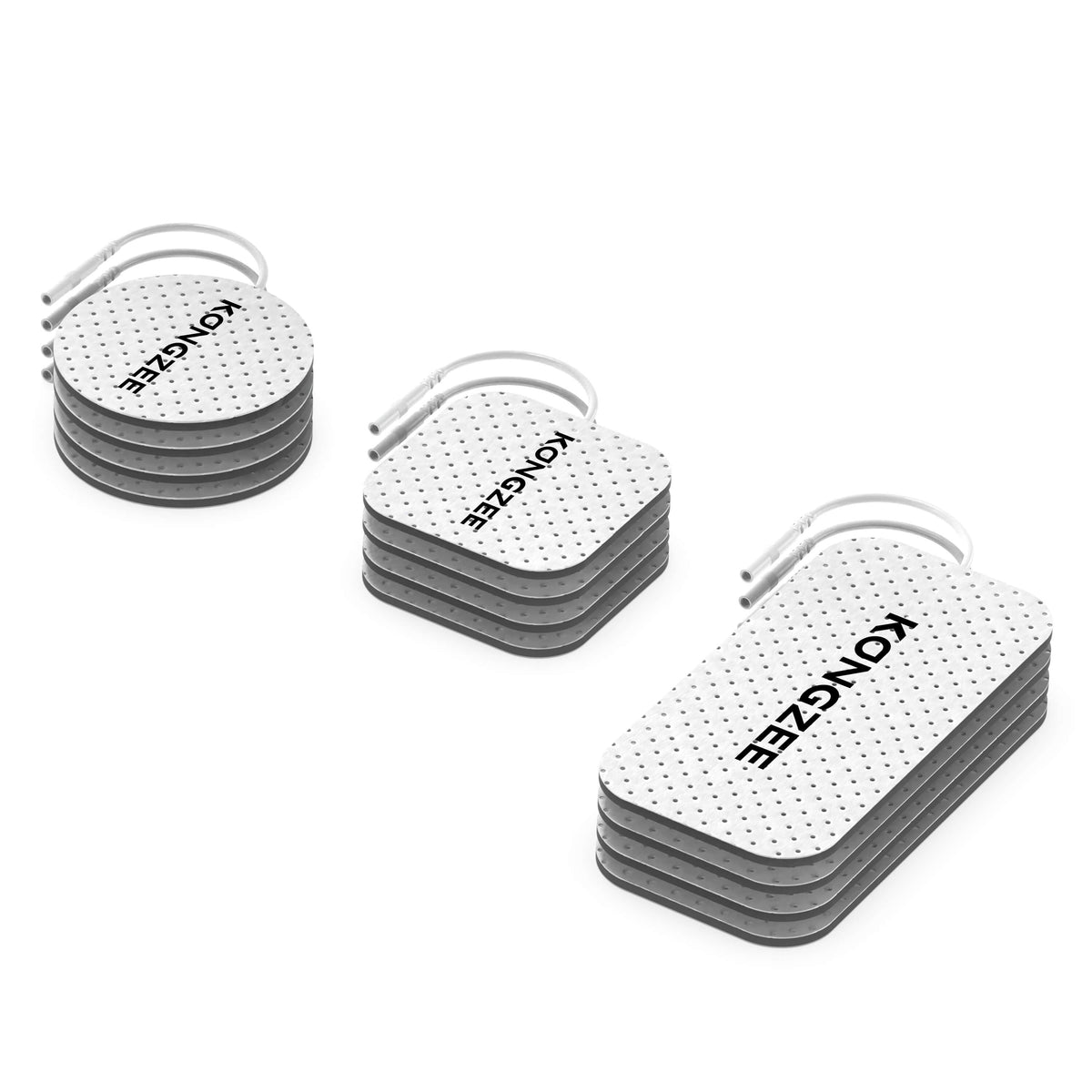
Before buying, open the manual and check whether you can identify the mode, intensity and channel. Think through where the controller will rest and how you will store the pads. Our home TENS buying guide and rechargeable unit checklist cover those decisions.
If you prefer a handheld mechanical tool
Consider whether holding the weight and reaching the target muscle will be comfortable for you. A demonstration of attachment movement is more useful than a long list of speed settings alone. Check the instructions for the model you are considering, including where its attachments may and may not be used.
HSS advises light, brief passes rather than prolonged pressure, stopping if the device hurts or irritates the skin. It cautions against use over bones, nerves or joints, and against using a massage gun on a fresh injury with substantial pain or swelling. Do not interpret a deeper or harsher sensation as a better outcome.
If the priority is portability and ongoing cost
Compare the complete kit you will actually carry. Include the controller, charger, leads and electrode storage for TENS; include the handle, charging equipment and any required attachments for a massage gun. “Portable” on a listing does not tell you how convenient either kit will be in your own bag.
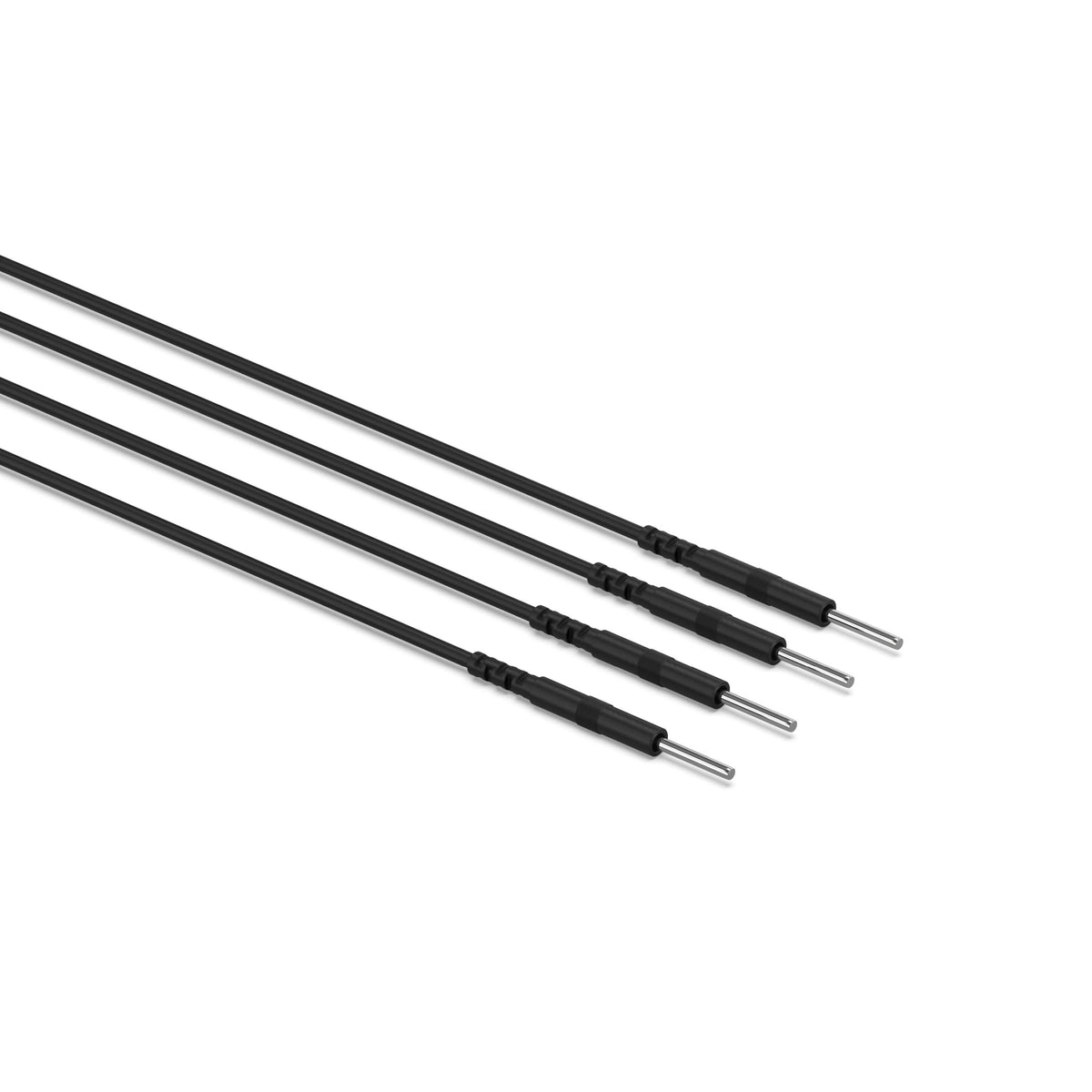
For TENS, price compatible replacement electrodes and leads, not just the initial kit. For a massage gun, check the seller's replacement attachment and service arrangements. Avoid comparing an accessory-rich bundle with a bare controller as if they were the same purchase.

Limits to keep in mind before choosing either tool
Neither sensation tells you why an area hurts. If pain is new, unexplained or worsening, seek an assessment rather than choosing whichever tool feels stronger. Neither product replaces a tailored rehabilitation plan. HSS treats a massage gun as one possible part of a broader routine, not a replacement for professional care.
TENS has its own restrictions. Do not use it with a pacemaker or epilepsy, or in pregnancy unless specifically advised by the appropriate clinician. Do not use it while asleep, driving or bathing. Review our TENS contraindications and placement precautions and the supplied manual before considering use.
For massage guns, HSS recommends discussing use with a doctor when pre-existing conditions or medication raise concerns. If you are unsure whether electrical stimulation or percussion is appropriate, ask that suitability question before comparing prices.
Where the KONGZEE 9026 fits
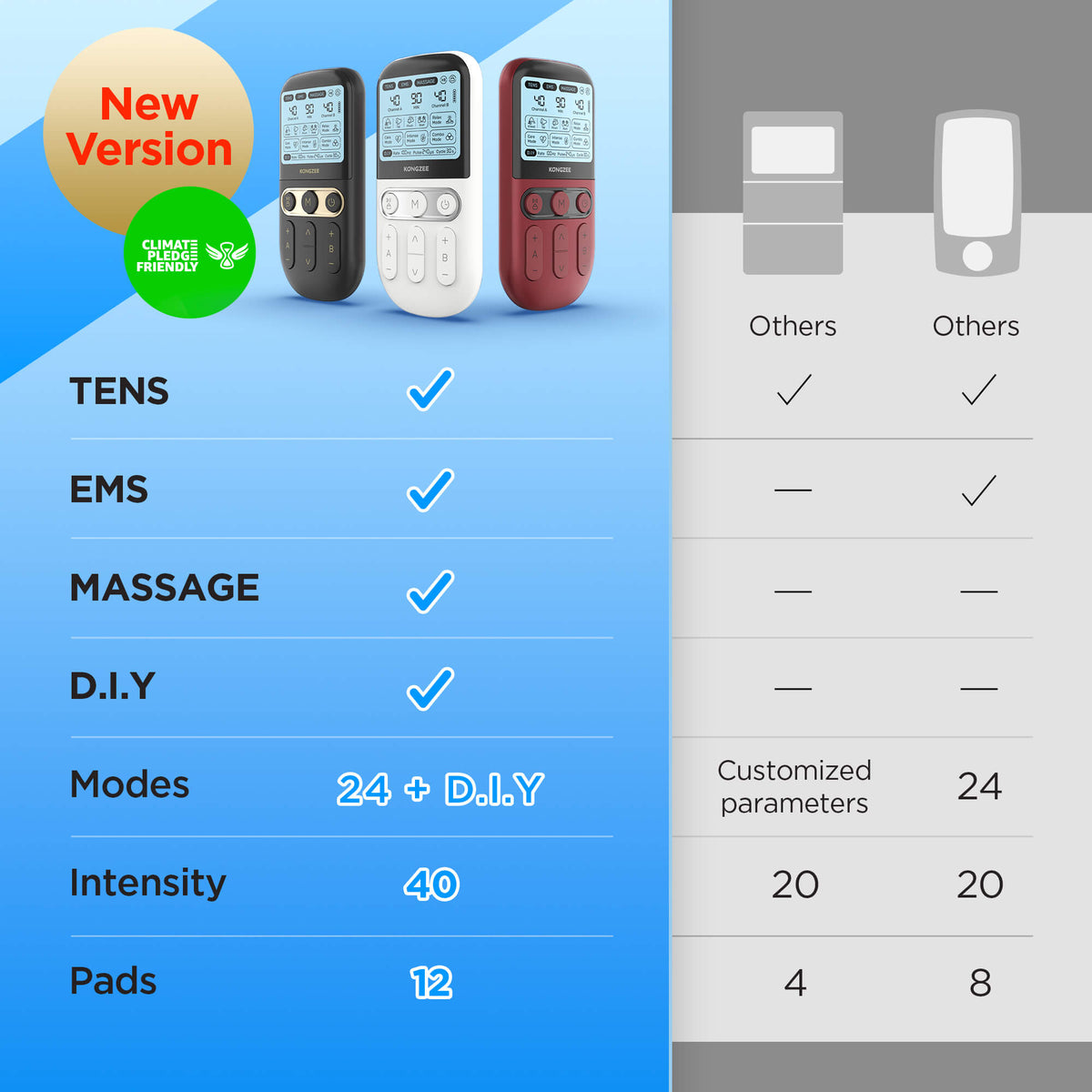
The KONGZEE portable rechargeable TENS unit with EMS is an electrical stimulation device. Its listed features include USB-C charging, independent A/B intensity controls, 40 intensity levels and 12 reusable pads. It offers TENS, EMS, Massage and DIY functions.
The word “Massage” in that program menu does not turn it into a percussion massage gun. It remains a device that uses electrodes. Likewise, EMS mode is a distinct function rather than a claim that the controller mechanically massages muscle. See the TENS/EMS combo guide for those distinctions.
Choose the 9026 only if its functions and setup match your needs and you can use it appropriately. We do not claim it is clinically superior to a massage gun, or that buying both produces additional benefit.
Frequently asked questions
Is TENS the same as an electric massager?
The label “electric massager” is too broad to answer that. Check whether the product uses electrodes, vibration or percussion. For the 9026, stimulation is delivered through electrode pads.
Which is better after a workout?
There is no universal winner in this comparison. Your symptoms, goals and suitability matter. Our TENS and EMS after exercise guide explains the limits of electrical stimulation claims.
Can I use a massage gun over TENS pads?
Do not improvise a combined setup or apply percussion over attached electrodes and leads. This guide does not establish that simultaneous use is safe or useful. Ask your clinician about an appropriate routine.
Do I need both?
No. Identify the problem you want to address and verify suitability first. Buying another tool is not the automatic next step if pain persists or a device does not help.
By KONGZEE Editorial. Sources and product specifications checked October 21, 2026. This is a feature and use comparison, not a hands-on trial or medical review. AI-generated lifestyle illustrations do not demonstrate device use or treatment results.






Leave a comment
All comments are moderated before being published.
This site is protected by hCaptcha and the hCaptcha Privacy Policy and Terms of Service apply.