

The short answer: There is no universal TENS session length. Follow the timing instructions for your device and the plan agreed with your clinician. Cambridge University Hospitals suggests starting with 30 to 60 minutes, but that is not a minimum or a target for everyone. Stop sooner for pain, burning, dizziness or skin irritation.
How Long Can You Use a TENS Machine?
Search results often give one number as if it applies to everyone. Real use is more personal. Session length can change with the device program, pad condition, skin sensitivity, intensity, body area, and reason for using TENS.
Cambridge University Hospitals (CUH) describes starting with 30 to 60 minutes and increasing use as needed in its physiotherapy patient leaflet. By contrast, the Royal National Orthopaedic Hospital (RNOH) advises a maximum of 60 minutes at a time, usually up to three times a day. These are different patient guides, not interchangeable instructions for every device. If your manual and care plan differ, ask your clinician to clarify rather than choosing the longer limit.
A shorter session does not remove a contraindication. Review the TENS contraindications and safety checklist before deciding on session length.
A Practical Starting Plan
| Situation | Practical approach | What to check |
|---|---|---|
| First session | Start with a short, supervised or closely monitored session | Comfort, pad contact, and skin response |
| Routine session | Use the time range in your device manual or care plan | Sensation should stay strong but comfortable |
| Repeat session | Allow a break and inspect the skin before reapplying pads | Redness should not be painful or persistent |
| New body area | Treat it like a first session and begin conservatively | Placement, sensation, and movement |
| Damaged or dry pads | Stop and replace the pads before continuing | Full, even contact across the gel surface |
This is a decision guide, not a prescription. If your manual gives a shorter limit, use that shorter limit. If a clinician gives you a specific plan after surgery or for a medical condition, confirm that the device and program are appropriate for that plan.

How to Time a TENS Session Safely
- Read the manual first. Confirm the recommended session length for the exact program you plan to use.
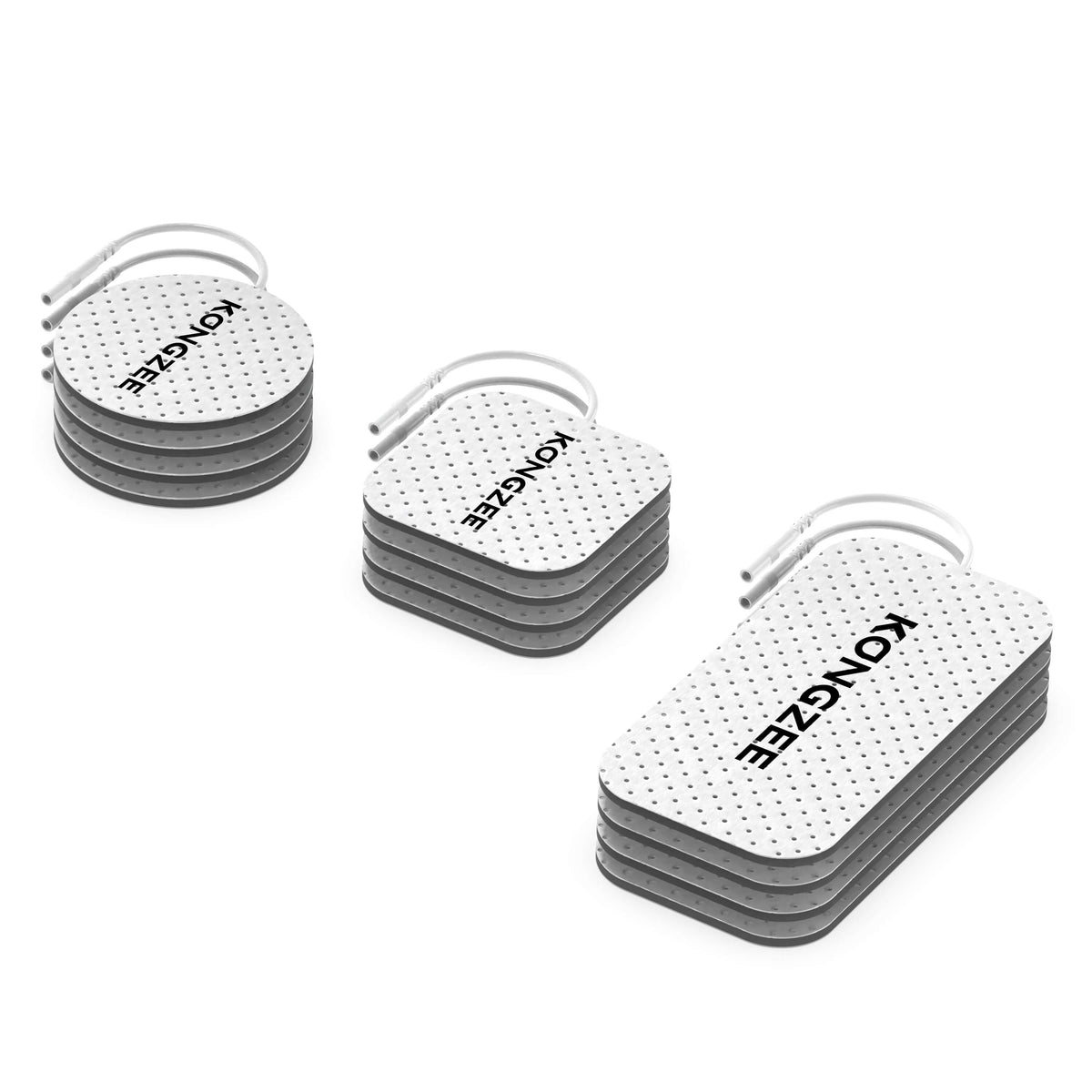
- Inspect your skin and pads. Use clean, intact skin with normal sensation. Replace pads that are dry, torn, or lifting.
- Set a timer. Do not rely on noticing how much time has passed while watching television or working.
- Begin at the lowest intensity. Increase slowly to a strong but comfortable tingling sensation.
- Check comfort during the session. Stop if the feeling becomes sharp, hot, painful, or unusually strong on one pad.
- Switch off before removing pads. Lower intensity to zero, turn the unit off, then peel each pad away by its edge.
- Check the skin again. Do not immediately reuse the same spot if redness, itching, tenderness, or swelling remains.
For the full setup sequence, read how to use a TENS unit safely. If you are unsure where pads can go, use the TENS unit pad placement guide before starting.
When a 30 to 60 Minute Session May Still Be Too Long
Stop early when the sensation changes from comfortable tingling to burning, stinging, or pain. A partly detached pad can concentrate current on a smaller area. Dry gel, damaged wires, or a sudden intensity change can also make a previously comfortable session feel wrong.
Skin response matters too. A faint temporary outline from the adhesive may occur, but painful redness, blistering, swelling, or a rash is not a reason to push through. Turn the unit off, remove the pads, and seek advice if the reaction is severe or does not settle.
Activities That Should Never Be Combined With TENS
Do not use TENS while sleeping. You may miss a warning sensation or allow a pad to shift. Do not use it while driving, operating tools, bathing, showering, or swimming. The NHS TENS guide lists the same activity restrictions.
A longer session is not automatically a better session. The goal is comfortable, controlled use within the instructions for your device.
How Often Can You Use a TENS Unit?
There is no universal daily schedule. Frequency depends on the device, your skin response, the reason for use, and professional advice. Some hospital guides describe several sessions per day, while other care plans use TENS only around specific activities.
Before every repeat session, check the skin and equipment. Move pads slightly within the approved treatment area instead of placing them on the exact same spot each time. Never move a pad to a prohibited area just to avoid irritated skin.
Does the Timer Setting Tell You How Long to Use TENS?
No. A selectable timer shows what the device can be set to do, not how long every person should use it. If a device offers a 90-minute setting, that alone is not a recommendation for a 90-minute session. Choose a duration within your device instructions and agreed care plan; do not automatically restart when the timer ends. Do not transfer a TENS timing recommendation to an EMS program without checking the instructions for that mode.
Choosing a Device With Clear Session Controls
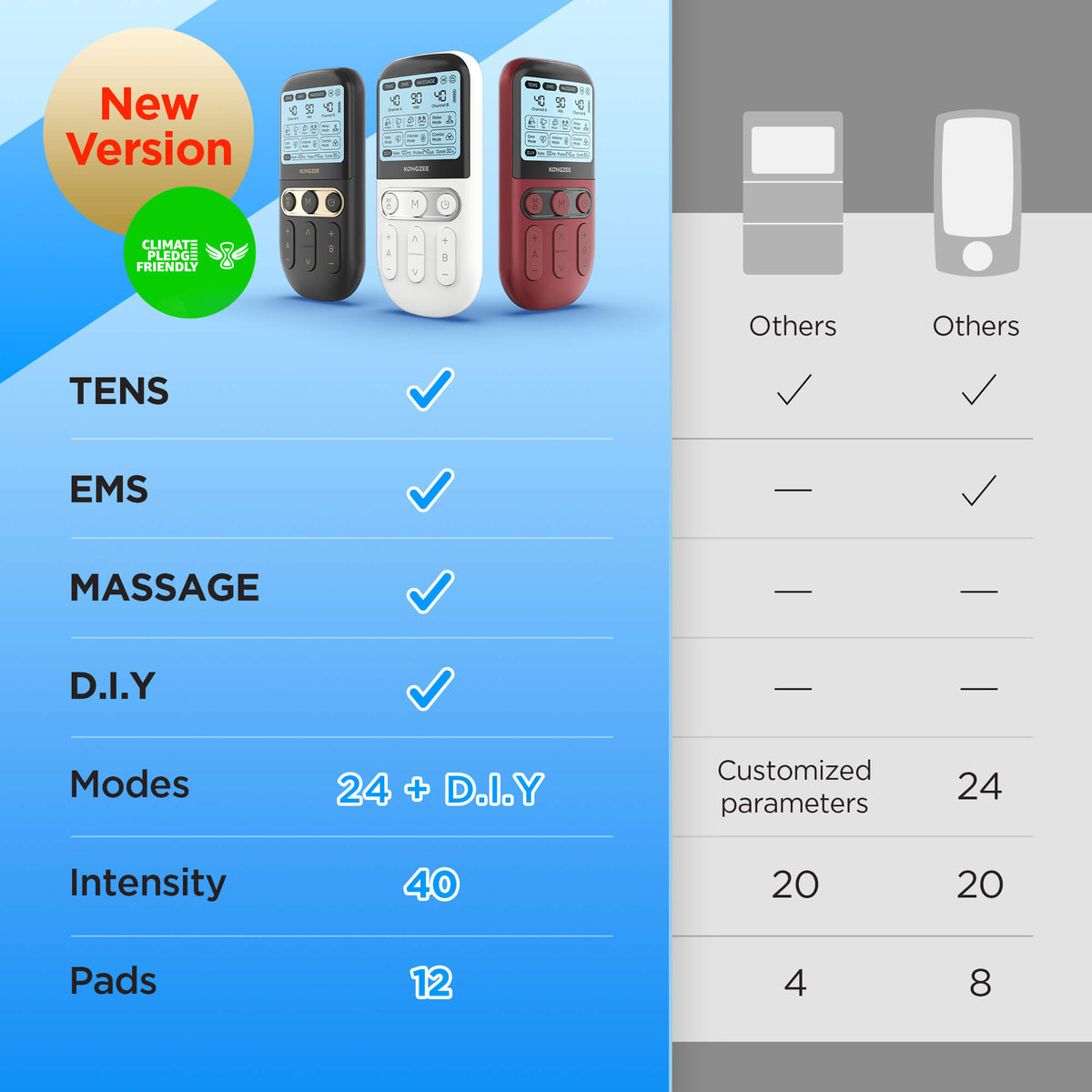
A visible timer, clear mode labels, and gradual intensity controls make it easier to follow a planned session. The KONGZEE 4-in-1 TENS and EMS unit separates its therapy modes and includes adjustable intensity controls. Owners should still follow the included manual rather than treating a blog time range as a device setting.
Model-specific instructions are available on the KONGZEE TENS unit manual and support page.
Frequently Asked Questions
Can I use a TENS unit for more than 60 minutes?
Do not exceed your device instructions. Longer use needs to be appropriate for the specific device, program and care plan; clarify any conflicting advice with your clinician. Mild stimulation is not proof that extending a session is safe.
How long should a beginner use a TENS unit?
Begin with the starting duration in your device instructions or agreed care plan, and monitor your skin and comfort. The hospital example above is not a minimum you need to reach. Stop if the session becomes uncomfortable.
Can you overuse a TENS unit?
Yes. RNOH warns that prolonged use without regular breaks can contribute to burns or skin damage, alongside excessive current or unsuitable electrode placement. Follow your device instructions, check your skin and stop for pain or irritation rather than repeatedly restarting the timer.
How long should I wait between TENS sessions?
Use the break stated in your manual or care plan. At minimum, remove the pads, inspect the skin, and wait until any temporary redness or sensitivity has settled before reusing that area.
Can I fall asleep with a TENS unit on?
No. TENS should not be used while sleeping because you cannot monitor the sensation, skin, pads, or wires.
Should TENS feel stronger as the session continues?
It should remain strong but comfortable. If the feeling becomes sharp, hot, painful, or uneven, switch the unit off and check the pads, leads, skin, and mode.
Sources checked September 3, 2026: CUH, RNOH and NHS patient guidance linked above. This is an editorial source check, not a medical review or an individual assessment. This article does not replace the instructions for your device or advice from a qualified healthcare professional.






Leave a comment
All comments are moderated before being published.
This site is protected by hCaptcha and the hCaptcha Privacy Policy and Terms of Service apply.