

The short answer: For ordinary menstrual cramps, TENS pads are commonly placed as a pair on clean, intact skin of the lower abdomen or as a pair on the lower back, following the device manual or a clinician’s plan. Keep pads away from the genitals, groin, front of the neck and broken or numb skin. Do not create a front-to-back circuit through the torso, and do not use TENS if you are pregnant or might be pregnant unless your healthcare professional specifically approves it.
Period Pain Is Common, but Severe Pain Deserves Attention
Cramping before or during a period is called dysmenorrhea. Primary dysmenorrhea describes recurrent cramps without another pelvic disease. Secondary dysmenorrhea is caused by a condition such as endometriosis, adenomyosis, fibroids or pelvic infection. A device cannot tell these apart.
The American College of Obstetricians and Gynecologists notes that period pain may occur with nausea, vomiting, diarrhea, headache or dizziness and can sometimes disrupt normal activities. New pain after years of mild periods, pain between periods, pain during sex or bowel movements, infertility concerns, or progressively worsening symptoms should be discussed with a clinician.
Can TENS Help Menstrual Cramps?
TENS uses mild electrical impulses delivered through skin electrodes to influence pain signaling. It does not stop menstruation or treat an underlying pelvic condition, but it may provide a drug-free layer of temporary symptom relief.
A 2024 Cochrane review of 20 randomized trials concluded that high- and low-frequency TENS may reduce primary dysmenorrhea pain compared with placebo or no treatment. The certainty was low because of risk of bias and other limitations. A newer 2026 meta-analysis also found pain reduction but reported very high heterogeneity, variable settings and small samples, so the best protocol remains uncertain.
These studies concern primary dysmenorrhea. Improvement during a TENS session does not rule out endometriosis, fibroids or another cause of pelvic pain.

TENS Unit Placement for Menstrual Cramps
Choose either a front lower-abdomen pattern or a lower-back pattern approved by your manual. Keep both electrodes in the same local region. Do not place one pad on the abdomen and its paired pad on the back, because that creates a path through the torso.
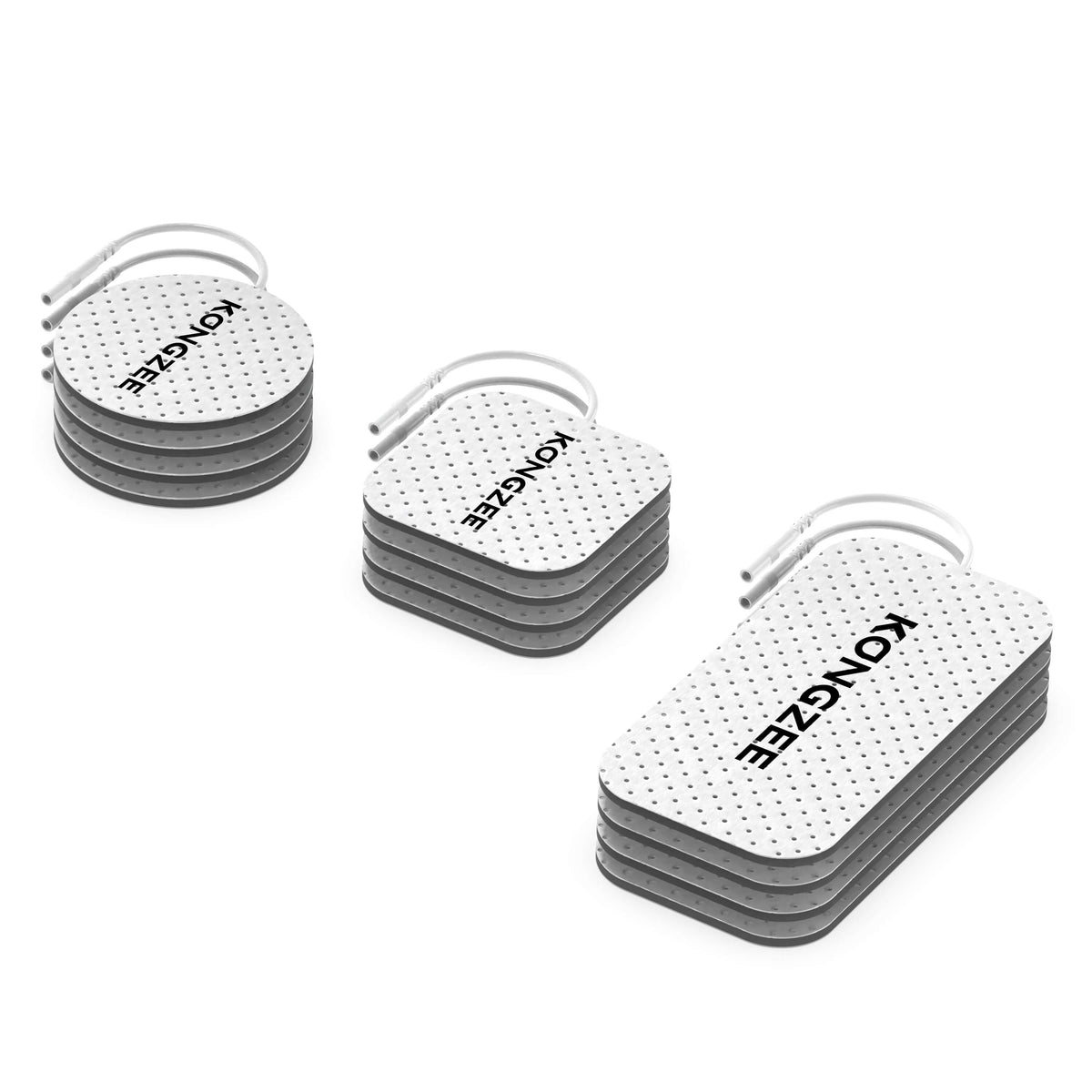
Leave space between pads and keep them on flat, healthy skin. Avoid the navel, pubic area, groin, genital area, prominent hip bones and any location compressed by tight clothing. If you use four pads, treat them as two clearly identified pairs and follow the channel diagram.
Lower-Abdomen Two-Pad Pattern
When the manufacturer permits abdominal use, two pads may be placed horizontally on the lower abdomen, one on each side of the painful midline region while remaining above the pubic area. Both pads should stay on the front surface and should not touch. Do not use this pattern if pregnancy is possible.
Lower-Back Two-Pad Pattern
For cramps felt in the lower back, two pads may be placed on healthy muscle to either side of the spine at the same general level. Do not place electrodes directly over the spine, on the upper buttock cleft or across irritated skin. Keep both pads on the back surface.
Four-Pad Pattern
A clinician may recommend four pads across the lower abdomen or lower back. Confirm which two pads form channel A and which form channel B. Do not mix a front pair with a back pair, and do not improvise a circuit around the pelvis.
How to Set Up a TENS Session
- Confirm that symptoms are consistent with previously evaluated primary period pain.
- Read the device manual, contraindications and approved placement guidance.
- Make sure you are not pregnant and do not suspect pregnancy.
- Sit or lie in a stable, comfortable position.
- Inspect the skin for cuts, rash, infection, irritation or numbness.
- Clean and dry intact skin; remove lotion from the pad area.
- With the unit off, apply the paired pads to the chosen front or back region.
- Select TENS mode and begin at the lowest intensity.
- Increase gradually to a strong but comfortable tingle without painful contraction.
- Turn the unit off before moving or removing pads, then inspect the skin.
Use the session schedule in the manual or from your clinician. More intensity and more time do not guarantee more relief. Our complete TENS setup guide and guide to TENS session length cover general steps.

When Period Pain Needs Medical Care
Seek urgent care for severe pelvic or abdominal pain that starts suddenly, especially with fainting, shoulder pain, fever, repeated vomiting, pregnancy or possible pregnancy. Heavy bleeding with dizziness, weakness, shortness of breath or soaking through protection very rapidly also needs prompt assessment.
Arrange a routine evaluation when pain regularly stops school, work, sleep or normal activity; becomes progressively worse; occurs outside periods; is associated with painful sex or bowel movements; or does not respond to usual self-care. Do not use TENS to postpone care for these changes.
Using TENS With Other Period-Pain Strategies
Some people combine TENS with gentle movement, rest, a warm bath or clinician-approved medication. Follow medication labels and advice from your pharmacist or healthcare professional. Do not place a heat source over electrodes or a powered device, because heat and pressure may affect the skin, adhesive and equipment.
Record pain timing, bleeding, associated symptoms and what helps. A brief symptom diary can make a medical consultation more useful and reveal whether the pattern is changing.
Areas and Situations to Avoid
- Do not use TENS during pregnancy or possible pregnancy without explicit clinical approval.
- Do not place pads on the pubic or genital area, groin, inner thighs or navel.
- Do not pair one abdominal pad with one back pad or send current through the torso.
- Avoid cuts, rashes, infected skin, fresh incisions, severe irritation and numb areas.
- Keep electrodes away from the front and side of the neck.
- Do not use while sleeping, bathing, driving or operating machinery.
Ask a healthcare professional before using TENS if you have a pacemaker, implanted defibrillator or another electronic implant; have epilepsy, heart disease, cancer, unexplained pelvic pain, unusual bleeding or reduced sensation; or recently had abdominal or pelvic surgery. Review our TENS contraindications checklist.
What the Sensation Should Feel Like
The expected sensation is a strong but comfortable tingling. It should not burn, sting or produce painful abdominal contractions. Stop if pain increases, becomes sharp or one-sided, or if you feel faint, nauseated beyond your usual pattern or otherwise unwell.
Soft abdominal movement and waistbands can lift a pad edge. Turn the unit off before checking adhesion or moving an electrode. Replace pads that are torn, dry or no longer adhere evenly; see our guide to cleaning reusable TENS pads.
TENS vs EMS for Menstrual Pain
| Feature | TENS | EMS |
|---|---|---|
| Main purpose | Temporary pain modulation | Muscle activation or contraction |
| Expected response | Comfortable tingling | Rhythmic or visible movement |
| Typical goal here | Symptom relief | Not a routine treatment for cramps |
| Treats an underlying condition | No | No |
Do not switch to EMS on the abdomen using the same placement. Strong muscle contraction is not the goal for menstrual-cramp relief. Read our TENS vs EMS comparison before changing modes.
Choosing a Unit for Period Pain
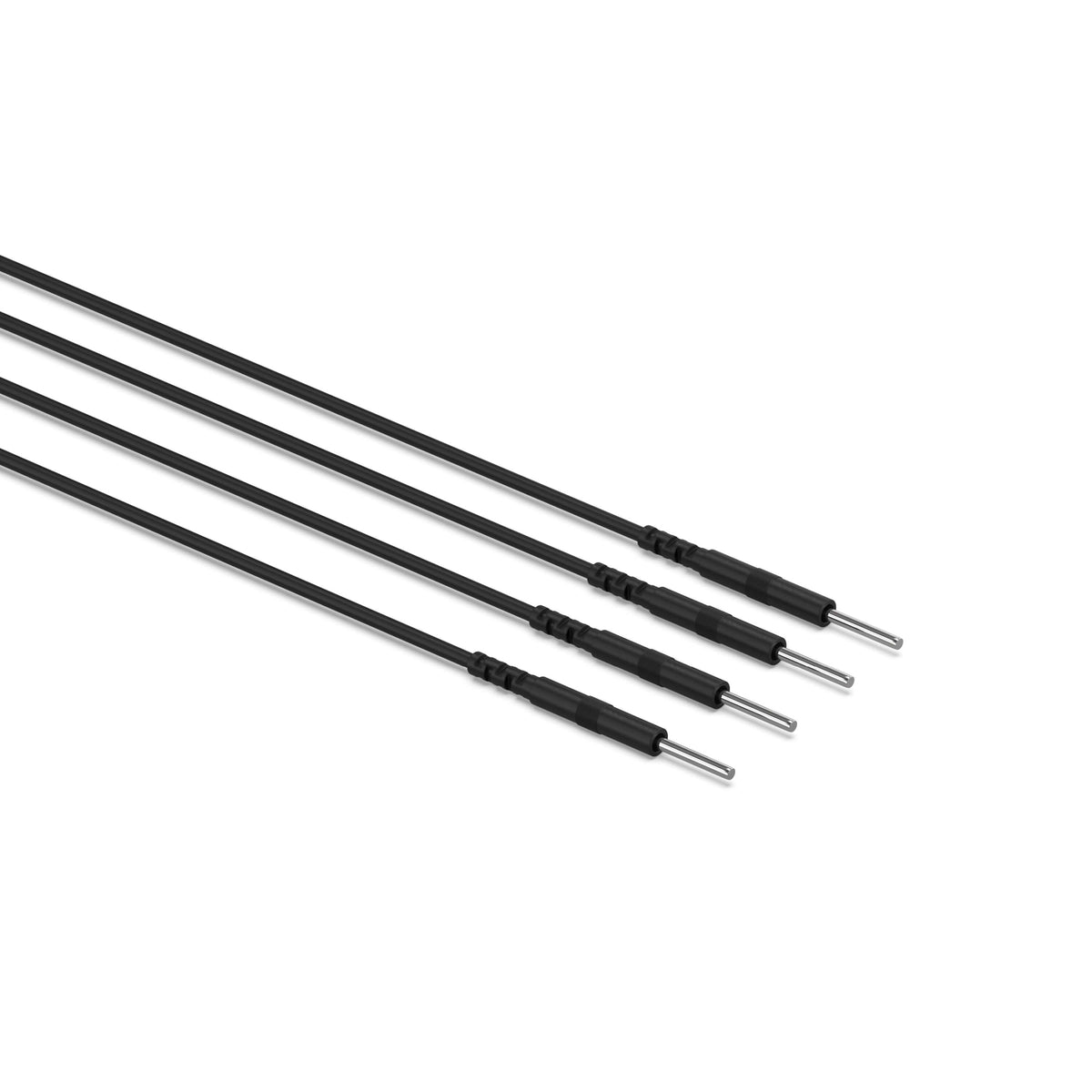
Look for clear TENS and EMS labels, gradual intensity control, secure leads, electrodes that sit flat on the chosen area and readable safety instructions. Independent channels can support two approved pairs, but they do not make front-to-back or pregnancy use appropriate.
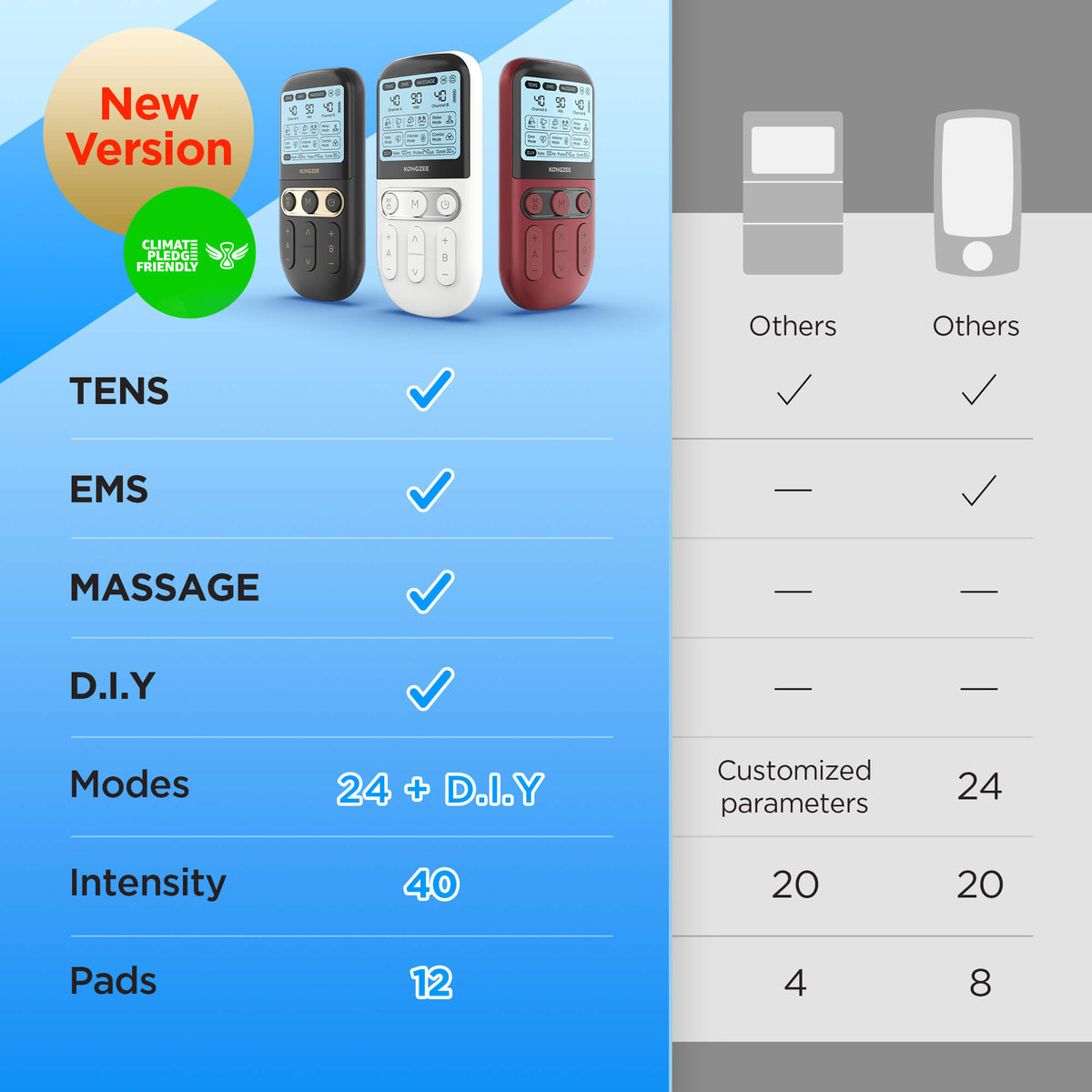
The KONGZEE 4-in-1 TENS and EMS unit includes separate TENS, EMS, Massage and DIY modes, independent A and B controls, 40 intensity levels and reusable 2mm pin electrodes. These features offer adjustment options; they do not diagnose pelvic pain or treat endometriosis, fibroids or infection.
Frequently Asked Questions
Where do TENS pads go for period cramps?
Use a manual-approved pair on healthy lower-abdominal skin or a pair on the lower back. Keep each pair on one surface and away from the pubic area, groin, spine and numb skin.
Can I place one pad on my stomach and one on my back?
No. Do not create a front-to-back circuit through the torso. Use both paired electrodes on the same local front or back region.
Can I use TENS if I might be pregnant?
Do not use it unless a qualified healthcare professional who knows your situation specifically approves the device, placement and timing.
Can TENS treat endometriosis?
TENS may help some people manage pain, but it does not diagnose or treat the underlying endometriosis. Persistent or severe symptoms need clinical care.
Can I sleep with TENS on?
No. You need to remain awake so you can monitor the sensation, skin and leads and turn the unit off if anything changes.
Reviewed September 17, 2026. This article is educational and does not replace diagnosis, medical advice, gynecologic care or the instructions supplied with your device.






Leave a comment
All comments are moderated before being published.
This site is protected by hCaptcha and the hCaptcha Privacy Policy and Terms of Service apply.