

The short answer: For suspected iliotibial band syndrome, TENS pads are usually placed on clean, intact soft tissue near the painful outer-thigh or outer-knee region, not directly over the kneecap, prominent outer-knee bone, numb skin or a swollen joint. Keep both pads on the same leg and follow the device manual or a clinician’s plan. TENS may temporarily reduce pain, but it cannot “release,” lengthen or repair the IT band.
What Is Iliotibial Band Syndrome?
The iliotibial band, or IT band, is a strong band of connective tissue running down the outside of the thigh from the hip region to the upper shin. Iliotibial band syndrome (ITBS) commonly causes activity-related pain at the outside of the knee, especially in runners and cyclists. Symptoms may begin after a change in distance, hills, speed, footwear or training frequency.
Outer-knee pain can also come from a ligament injury, meniscus problem, arthritis, referred pain or another tendon. A diagnosis matters because these conditions do not share the same rehabilitation or pad placement.
Can TENS Help IT Band Pain?
TENS sends mild electrical impulses through skin electrodes to influence pain signaling. It may make pain feel more manageable during or shortly after a session, but it does not alter running mechanics, rebuild hip strength or change the structure of the IT band.
There is no strong evidence that TENS specifically treats ITBS. A 2023 scoping review of 98 ITBS studies found a clear research gap: only 32 were original clinical studies and just seven were randomized trials. A 2024 systematic review of conservative treatment in runners found large variation between studies; hip-abductor strengthening was a common strategy, while optimal treatment remained uncertain.
Use TENS, if appropriate, as an optional pain-management layer. Training adjustment, graded hip and leg strengthening, and a gradual return to running usually matter more for function.

IT Band TENS Unit Placement
A two-pad setup keeps both electrodes on healthy soft tissue of the same outer thigh. Depending on where symptoms are felt, the painful region may sit between the pads or just beside them. Avoid placing a pad directly on the prominent bone at the outside of the knee, across the knee crease or on the kneecap.
Use a placement diagram from the manufacturer or a clinician who has examined the knee. The goal is comfortable sensory stimulation around an appropriate region, not driving current through the knee joint.
Outer-Knee Pattern
When pain is concentrated near the outer knee, one pad may sit on healthy lower outer-thigh tissue above the painful point and the second farther up the same outer thigh. This avoids the joint line and bony prominence. Keep enough distance from the knee crease so both electrodes remain flat when the leg bends.
Mid-Thigh Pattern
For broader outer-thigh discomfort, two pads may be placed vertically along healthy lateral-thigh soft tissue, with space between them. Do not place an electrode where tight shorts, a brace or body weight will fold or compress it.
Four-Pad or Dual-Channel Pattern
Four pads are not automatically more effective. If a professional recommends two channels, keep each paired circuit local to the same leg and confirm which pads belong to channel A and channel B. Never place one pad on each leg or create a path across the pelvis or torso.
How to Set Up a TENS Session
- Confirm that the pain pattern is consistent with ITBS and that TENS is appropriate.
- Read the manual, contraindications and approved placement diagrams.
- Sit or lie in a stable position with the leg supported.
- Inspect the outer thigh and knee for cuts, rash, swelling, bruising or numbness.
- Clean and dry intact skin; remove lotion from the electrode area.
- With the unit off, place the pads on approved soft-tissue locations.
- Route leads so they do not cross the pelvis or snag on clothing.
- Select TENS mode and start at minimum intensity.
- Increase gradually to a strong but comfortable tingle without forceful movement.
- Turn the unit off before moving or removing pads, then check the skin.
Follow the schedule in the manual or from your clinician. Longer or stronger stimulation is not automatically better. Read our complete TENS setup guide and guide to TENS session length before changing settings.

Do Not Use TENS to Push Through a Run
Temporary symptom relief can hide the signal that training load is still too high. Avoid running with ordinary electrodes and loose cables attached. Pads can lift with sweat and movement, while the unit and leads can distract you or catch on clothing.
Track how the knee feels during activity and the next day. A gradual plan may adjust hills, speed, distance and consecutive running days. If symptoms repeatedly return at the same point in a run, a physical therapist or sports clinician can assess strength, training errors and movement.
Can You Stretch or Foam-Roll the IT Band?
The IT band is dense connective tissue and is not easily lengthened like a muscle. Stretching may target nearby hip muscles, and foam rolling may change short-term sensation, but neither method should be described as mechanically “breaking up” or permanently releasing the band.
A review of IT band stretching and release methods found some support for including these approaches early in rehabilitation while also emphasizing uncertainty. Use gentle methods that do not increase lateral-knee pain, bruising or numbness.
Areas and Situations to Avoid
- Do not place pads on the kneecap, outer-knee bone, joint crease or directly over a swollen joint.
- Avoid cuts, rashes, infected skin, fresh incisions and severe bruising.
- Do not use on numb skin or where you cannot judge intensity normally.
- Do not place one pad on each leg or send current across the pelvis or torso.
- Do not put pads where tight clothing, a brace or body weight will compress them.
- Do not use while running, cycling, sleeping, bathing, driving or operating machinery.
Ask a healthcare professional before using TENS if you are pregnant; have a pacemaker, implanted defibrillator or another electronic implant; have epilepsy, heart disease, cancer, poor circulation or reduced sensation; or recently had surgery. Review our TENS contraindications checklist.
What the Sensation Should Feel Like
TENS should create a strong but comfortable tingling. It should not burn, sting or force the thigh or knee to move. If the leg twitches repeatedly, confirm that TENS rather than EMS is selected and lower the intensity.
Curved thigh contours and movement can lift a pad edge and concentrate the sensation. Turn the unit off before adjusting anything. Replace pads that are torn, dry or no longer adhere evenly; our guide to cleaning reusable TENS pads explains safe care.
TENS vs EMS for ITBS
| Feature | TENS | EMS |
|---|---|---|
| Main purpose | Temporary pain modulation | Muscle activation or contraction |
| Expected response | Comfortable tingling | Rhythmic or visible movement |
| Placement basis | Near an appropriate painful region | Over a target muscle or motor point |
| Changes running mechanics | No | No, not by itself |
Do not copy a TENS placement when switching to EMS. A rehabilitation professional may use muscle stimulation for a defined goal, but uncontrolled contractions are not a substitute for progressive strength and movement practice. Read our TENS vs EMS comparison.
Choosing a Unit for Outer-Knee Pain
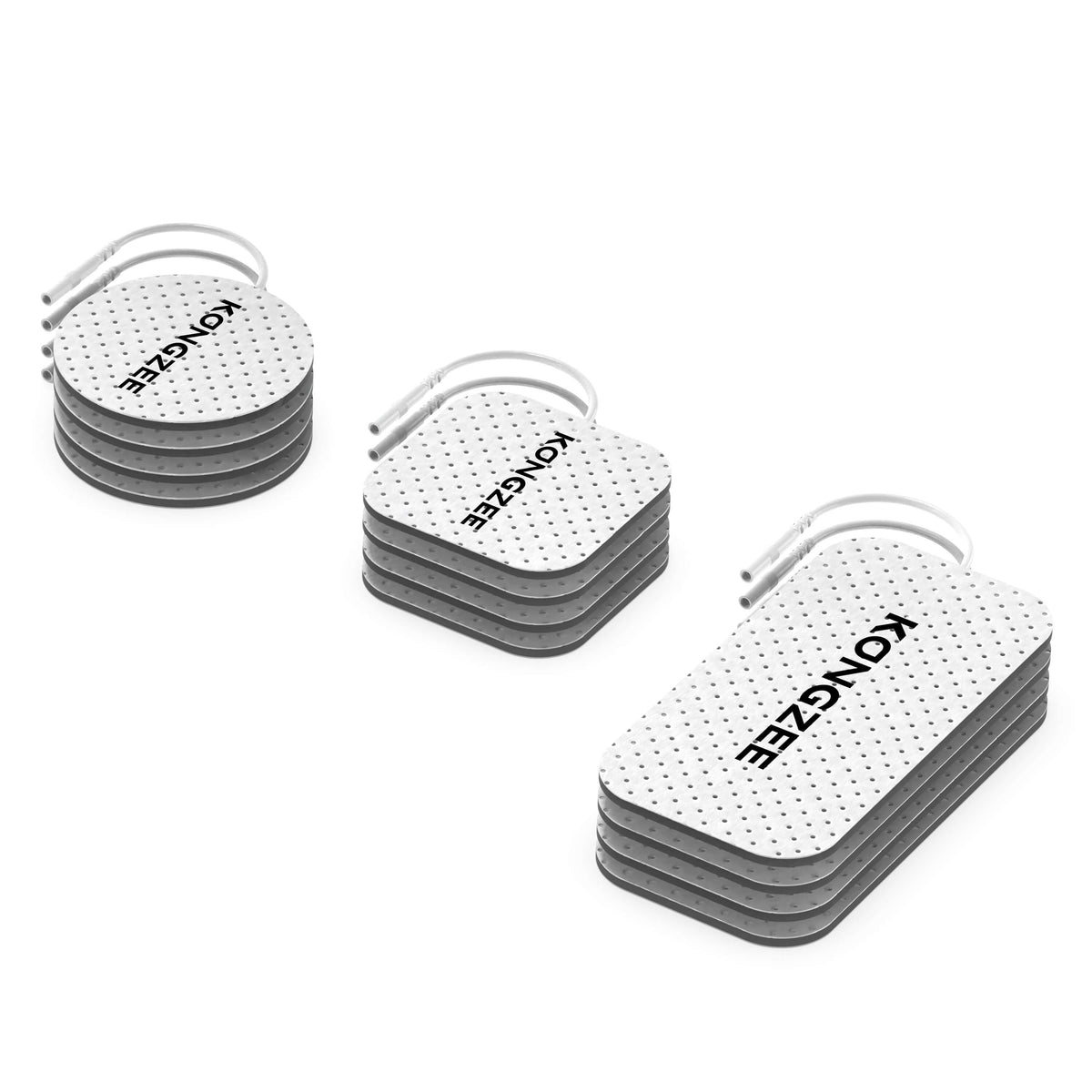
Look for clear TENS and EMS labels, gradual intensity steps, electrodes that sit flat on the thigh, secure lead connections and readable safety instructions. Independent channels can support two clinician-approved pad pairs, but they do not make cross-pelvis placement or running with electrodes safe.
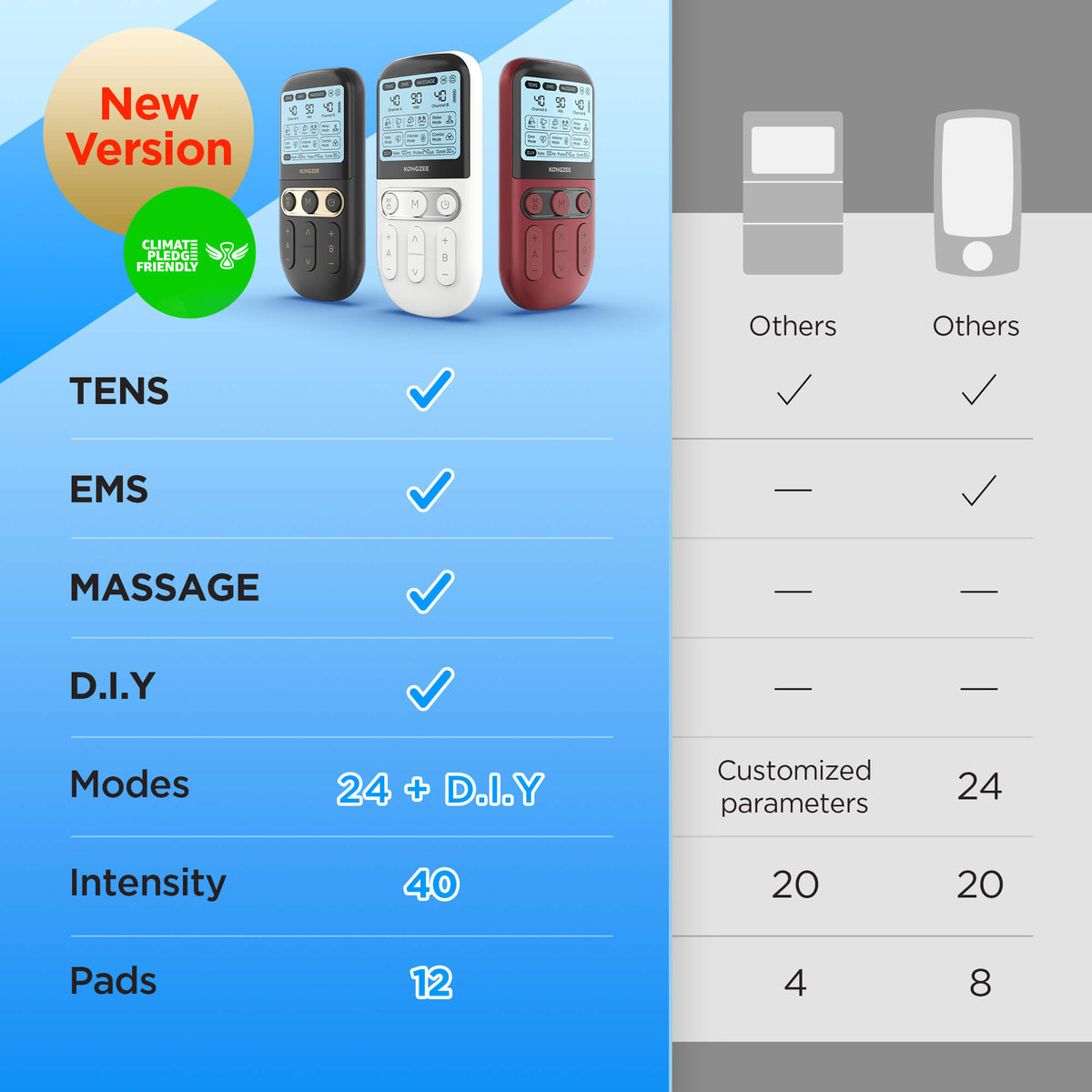
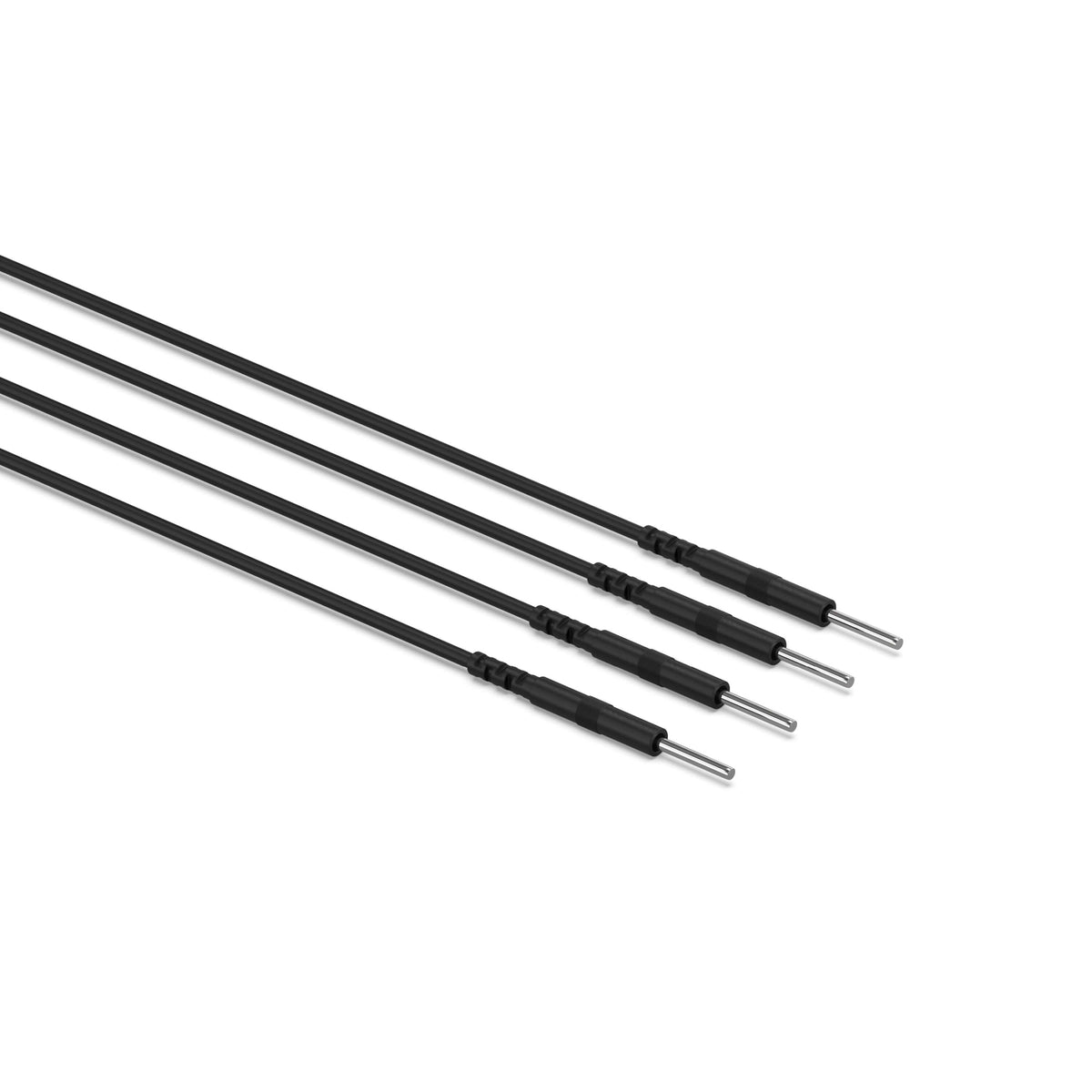
The KONGZEE 4-in-1 TENS and EMS unit includes separate TENS, EMS, Massage and DIY modes, independent A and B controls, 40 intensity levels and reusable 2mm pin electrodes. These features provide adjustment options; they do not diagnose ITBS or replace training modification and rehabilitation.
Frequently Asked Questions
Where do TENS pads go for IT band pain?
Use approved healthy soft-tissue locations along the same outer thigh, leaving space between pads. Avoid the kneecap, outer-knee bone, joint crease, swollen tissue and numb skin.
Can TENS release a tight IT band?
No. TENS may temporarily change pain perception, but it does not mechanically lengthen or release the IT band.
Can I run while wearing TENS pads?
Avoid running with ordinary electrodes and cables. Movement and sweat can lift pads, equipment can snag, and pain relief may encourage you to exceed the current safe load.
Should pads go directly on the outside of the knee?
Avoid the prominent outer-knee bone, kneecap and joint crease. Nearby lateral-thigh soft tissue is generally easier to use safely when approved by the manual or clinician.
When should lateral-knee pain be assessed?
Seek care after a significant injury or for severe swelling, locking, giving way, inability to bear weight, deformity, fever, numbness, a cold or discolored foot, or pain that keeps worsening.
Reviewed September 17, 2026. This article is educational and does not replace diagnosis, medical advice, physiotherapy or the instructions supplied with your device.






Leave a comment
All comments are moderated before being published.
This site is protected by hCaptcha and the hCaptcha Privacy Policy and Terms of Service apply.