

The short answer: For pain thought to involve the piriformis, TENS pads are generally placed on clean, intact soft tissue around the painful buttock, with both electrodes on the same side. Do not place pads over the spine, hip bone, genital area, broken or numb skin, or so current crosses the pelvis. Because piriformis syndrome can resemble sciatica and other conditions, confirm the cause of persistent pain before relying on a home placement.
What Is Piriformis Syndrome?
The piriformis is a small, deep muscle that runs from the lower spine to the upper thigh bone. It helps rotate and stabilize the hip. Piriformis syndrome describes irritation or compression of the sciatic nerve around this muscle, which may cause aching, burning, tingling or numbness in the buttock and sometimes the back of the thigh.
Long periods of sitting, repetitive running, a fall, muscle spasm or altered hip mechanics may contribute. However, a lumbar disc problem, spinal stenosis, sacroiliac pain, hip disease or another nerve disorder can feel similar. Cleveland Clinic notes that diagnosis usually requires a history and physical examination while ruling out other causes.
Can TENS Help Piriformis Pain?
TENS delivers low-voltage electrical impulses through skin electrodes. It may temporarily change how pain signals are processed and make symptoms easier to manage. It does not move the sciatic nerve, remove pressure from it or correct the reason the piriformis became irritated.
Evidence specifically testing TENS for piriformis syndrome is limited. Current clinical care more often emphasizes activity modification, stretching or strengthening, medication when appropriate and physical therapy. A recent randomized study found improvement after either ultrasound-guided dry needling or shockwave therapy combined with stretching, but that research did not establish TENS as a cure. Treat TENS as an optional comfort measure within a broader plan.

Piriformis TENS Unit Placement
A common two-pad approach keeps both electrodes on the painful side of the buttock, on healthy soft tissue around rather than directly on the most sensitive point. The painful region may sit between the pads. Keep the electrodes separated and completely flat so their adhesive surfaces do not overlap.
Exact anatomy varies, and the piriformis lies deep beneath larger gluteal muscles. A skin placement cannot target it with anatomical precision. Use the placement diagram in the device manual or ask a physical therapist to mark safe locations after examining you.
Two-Pad Same-Side Pattern
One pad may sit on the upper outer portion of the affected buttock and the other lower and slightly inward, provided both remain on fleshy tissue and away from the spine, tailbone and gluteal crease. This local arrangement avoids creating a current path across the pelvis.
Broader Buttock-to-Upper-Thigh Pattern
If discomfort extends toward the upper back of the thigh, a clinician may suggest one electrode on the buttock and another on healthy upper posterior-thigh tissue on the same side. Do not place the lower pad in the groin, directly in a skin fold or where sitting will compress it.
Four-Pad or Dual-Channel Pattern
Four pads are not automatically stronger or better. If your manual or clinician supports two channels, keep each paired circuit local to the same side and confirm which two pads belong to channel A and channel B. Never place one pad on each buttock or route current across the pelvis.
How to Set Up a Session
- Confirm that TENS is appropriate and review the device contraindications.
- Choose a stable lying or side-lying position where pads will not be trapped beneath body weight.
- Inspect the skin for cuts, rash, bruising, infection, swelling or reduced sensation.
- Clean and dry the skin and remove lotion or oil.
- With the unit switched off, place both pads on approved same-side soft tissue.
- Connect and route leads so they cannot wrap around the body or snag.
- Select TENS mode, not EMS, and begin at the lowest intensity.
- Increase slowly to a strong but comfortable tingling without a forceful contraction.
- Follow the session time in the manual or your clinician's plan.
- Turn the unit off before moving pads, then inspect the skin after removal.
Read our complete TENS setup guide and guide to TENS session length before changing intensity or duration.

Where Not to Place the Pads
- Over the lower spine, tailbone, hip bone or directly on a prominent bone.
- Across the pelvis, abdomen or torso, or with one pad on each buttock.
- Near the genitals, groin or anus.
- On broken, infected, irritated, recently shaved or severely bruised skin.
- On numb skin or an area where temperature and touch are reduced.
- Under the body while sitting or lying, where pressure can concentrate stimulation.
- On the front or side of the neck, head or chest.
Do not use TENS while driving, sleeping, bathing or operating machinery. Ask a healthcare professional before use if you are pregnant; have a pacemaker, implanted defibrillator or another electronic implant; have epilepsy, heart disease, cancer, poor circulation or impaired sensation; or recently had surgery. Review our TENS contraindications checklist.
What the Sensation Should Feel Like
A TENS session should produce a noticeable but comfortable tingling. It should not burn, sting, feel sharp or make the buttock and leg contract strongly. If you see repeated muscle movement, confirm that the unit is in TENS rather than EMS mode and lower the intensity.
Turn the unit off immediately if pain travels farther down the leg, numbness increases, the foot feels weak or the skin reacts. Curved body contours and sitting pressure can loosen a pad edge, producing a concentrated sensation. Replace damaged or dry electrodes and use our guide to clean reusable TENS pads.
TENS, Stretching and Exercise
Gentle mobility and strengthening may be part of treatment, but the correct exercise depends on the diagnosis. A commonly used figure-four stretch may feel helpful for some people and aggravating for others. Stop if it increases tingling, numbness or radiating pain.
A physical therapist can assess hip strength, spinal movement, running load and sitting habits. Cleveland Clinic recommends stretching and strengthening the piriformis and surrounding muscles as part of conservative care. TENS may make a session more comfortable, but it should not be used to mask worsening symptoms or push through painful exercise.
Piriformis Syndrome vs Sciatica
| Feature | Piriformis-related pattern | Lumbar sciatica pattern |
|---|---|---|
| Common starting area | Buttock or deep hip | Lower back or buttock |
| Possible trigger | Prolonged sitting, hip activity or local trauma | Spinal disc or nerve-root irritation |
| Diagnosis | Clinical assessment and exclusion of other causes | Neurologic and spinal assessment; imaging only when indicated |
| Pad placement | Local same-side soft tissue if approved | Depends on the diagnosed source and device guidance |
Symptoms alone cannot reliably distinguish the two. Our TENS guide for sciatica explains why a confirmed pain source matters before choosing a placement.
When to Seek Medical Care
Arrange an assessment when pain persists for more than a few weeks, repeatedly returns, limits walking or sleep, or follows an injury. Seek urgent care for new bowel or bladder problems, numbness around the groin or saddle area, rapidly worsening leg weakness, foot drop, fever, unexplained weight loss, severe night pain, or a cold or discolored leg. Those findings are not appropriate for home TENS troubleshooting.
Choosing a TENS Unit for Buttock Pain
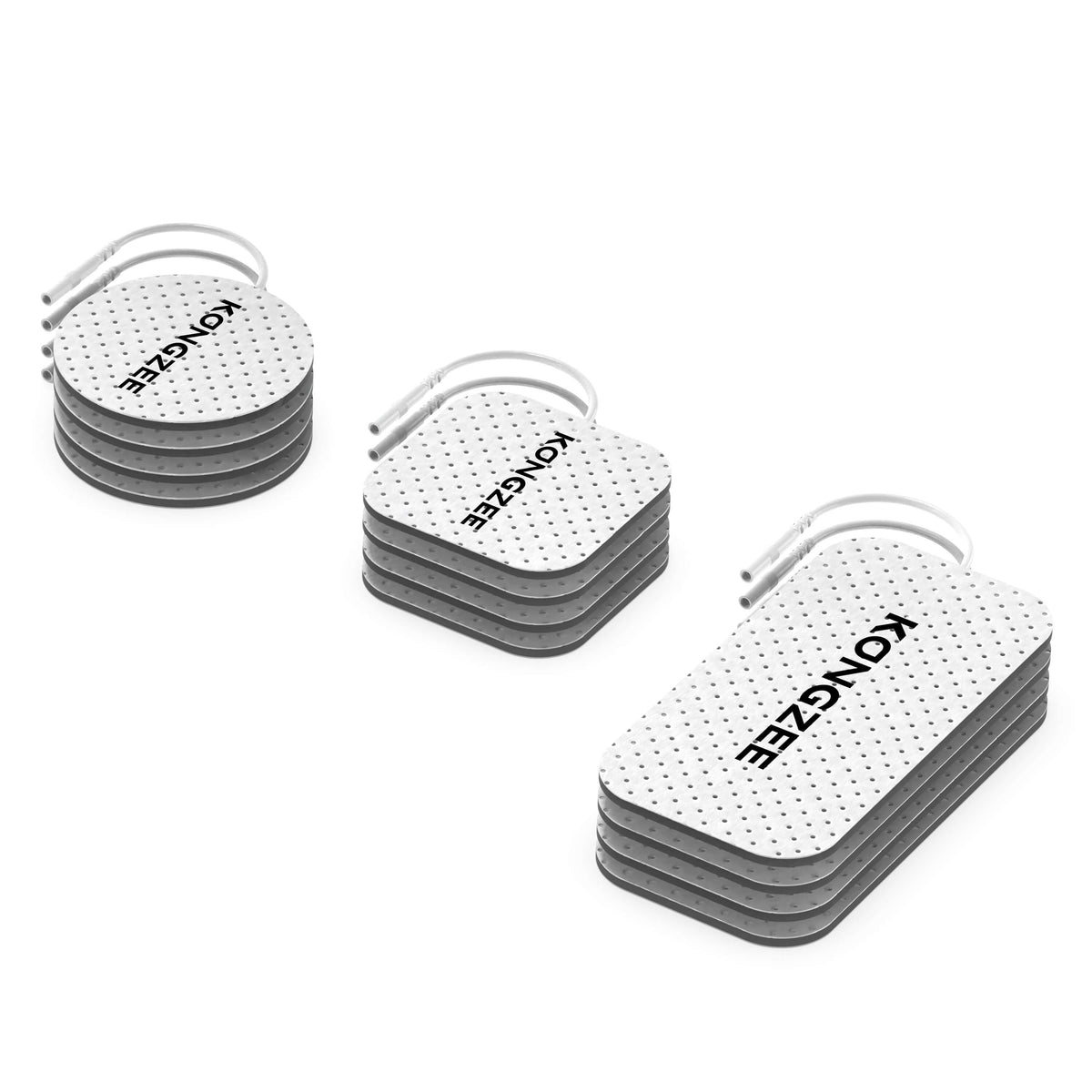
Look for clearly separated TENS and EMS modes, small intensity steps, secure lead connections, readable instructions and electrodes that conform to curved soft tissue. Independent channels may support two approved pad pairs, but they do not make cross-pelvis placement safe.
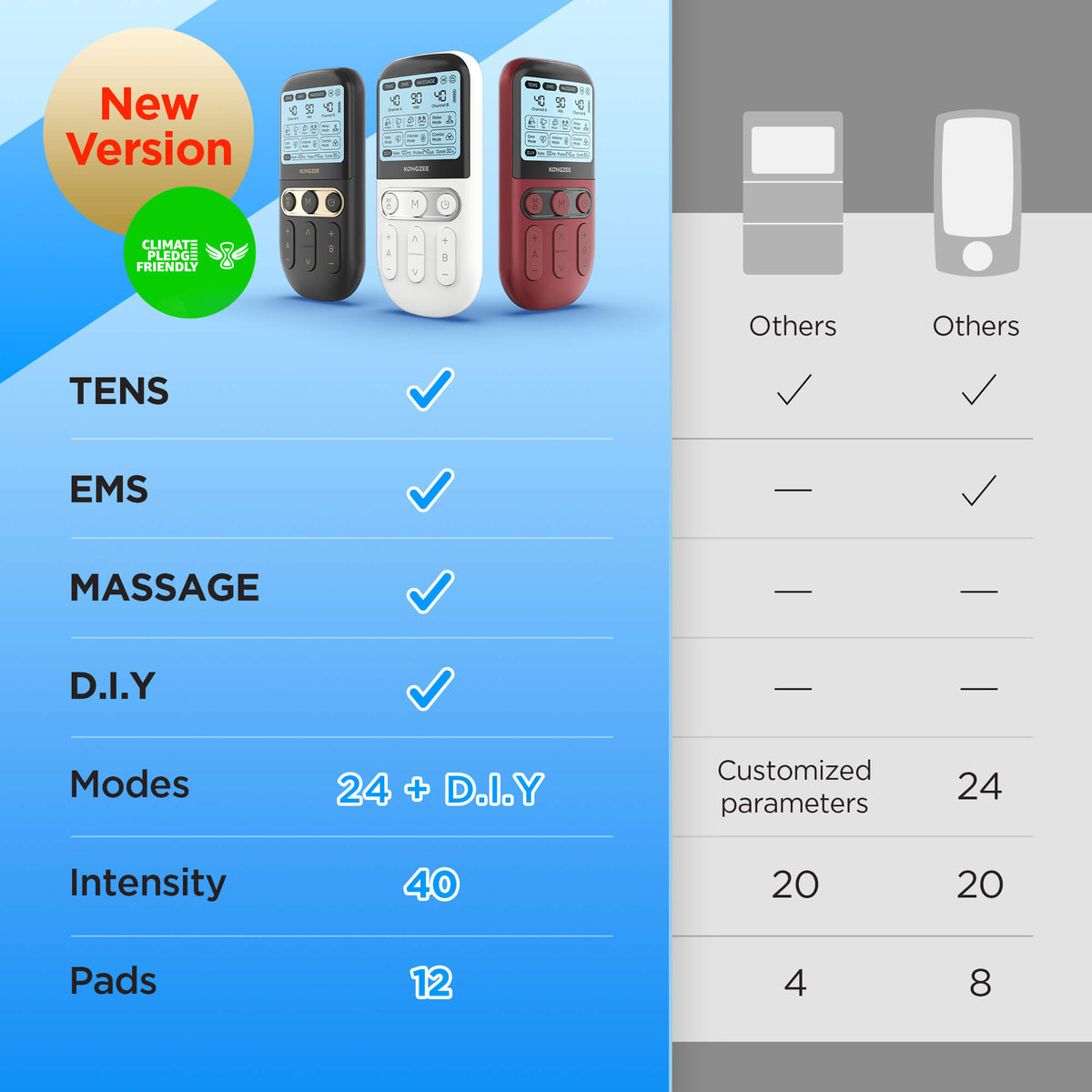
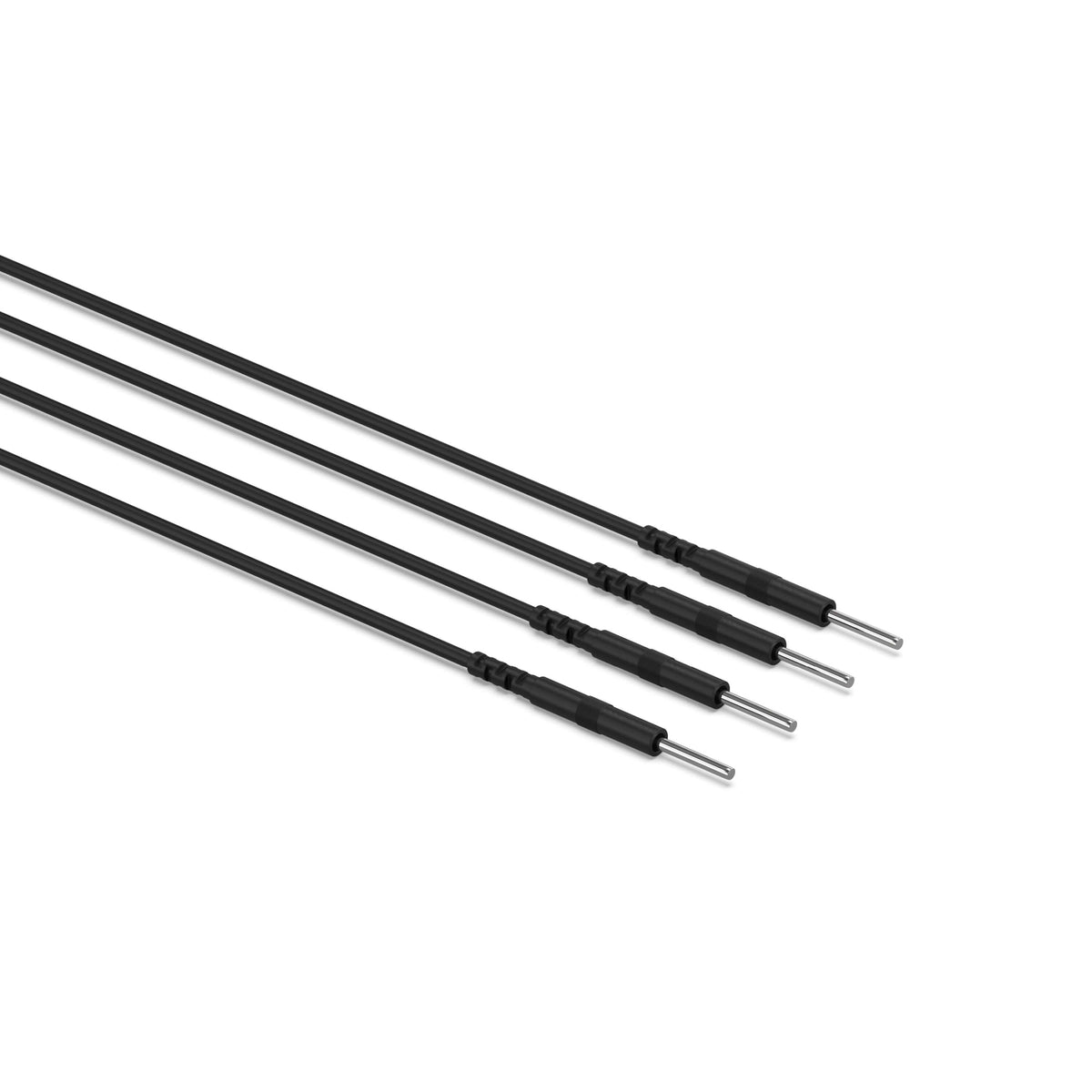
The KONGZEE 4-in-1 TENS and EMS unit includes separate TENS, EMS, Massage and DIY modes, independent A and B controls, 40 intensity levels and reusable 2mm pin electrodes. These features offer adjustment options; they do not diagnose piriformis syndrome or replace rehabilitation.
Frequently Asked Questions
Where should TENS pads go for piriformis pain?
Place both electrodes on approved, healthy soft tissue around the painful buttock on the same side. Avoid the spine, tailbone, bony hip, groin, genital area, numb skin and a path across the pelvis.
Can I sit on the pads?
Avoid trapping electrodes under body weight. Pressure can loosen or fold a pad and concentrate the sensation. Side-lying or another stable position may keep the pads flat.
Can TENS cure piriformis syndrome?
No. TENS may temporarily reduce pain perception, but it does not correct nerve compression, mobility, strength or training-load factors.
Should TENS make the glute contract?
Ordinary TENS should feel like a comfortable tingle. Strong rhythmic contractions suggest the intensity is too high or an EMS program is selected.
When is buttock pain an emergency?
Seek urgent care for bowel or bladder changes, saddle numbness, rapidly worsening weakness, foot drop, major trauma, fever or a cold or discolored leg.
Reviewed September 17, 2026. This article is educational and does not replace diagnosis, medical advice, physical therapy or the instructions supplied with your device.






Leave a comment
All comments are moderated before being published.
This site is protected by hCaptcha and the hCaptcha Privacy Policy and Terms of Service apply.