

The short answer: For diagnosed tennis elbow, TENS pads are commonly placed on clean, intact soft tissue of the painful outer forearm, with both electrodes on the same arm. Avoid the point of the elbow, the bony outer elbow, the joint crease, broken or numb skin and any path across the chest. TENS may provide temporary pain relief, but current evidence does not show that it heals the irritated tendon or restores grip strength.
What Is Tennis Elbow?
Tennis elbow, also called lateral elbow tendinopathy or lateral epicondylitis, causes pain around the outside of the elbow where forearm tendons attach. Despite the name, racquet sport is only one trigger. Repeated gripping, lifting, mouse use, gardening, painting and tool work can also overload the wrist-extensor tendons.
Pain may spread down the outer forearm and become worse when gripping a cup, turning a handle, lifting with the palm down or extending the wrist. Numbness, prominent swelling, locking or pain after a fall may suggest a different condition and deserves assessment.
Does TENS Help Tennis Elbow?
TENS sends mild electrical impulses through skin electrodes to influence pain signaling. Some people experience short-term comfort during or after a session, but passive stimulation does not rebuild tendon capacity.
A 2023 systematic review and meta-analysis found that TENS did not improve pain or function compared with control at 12 months. The available evidence therefore does not support TENS as a stand-alone treatment for lateral elbow tendinopathy. If you use it, treat it as an optional comfort measure while managing load and following an exercise plan.

Tennis Elbow TENS Unit Placement
A two-pad setup keeps both electrodes on healthy soft tissue of the same outer forearm. The painful region can sit between or just beside the pads. Do not cover the sharp bony prominence on the outside of the elbow or place a pad directly across the elbow crease, where bending can lift it.
Use your device manual's placement diagram or ask a clinician to mark safe locations. The goal is comfortable sensory stimulation around an appropriate area, not sending current through the joint.
Outer-Forearm Pattern
Place one pad on the upper outer-forearm muscle below the elbow and the second farther down the same muscle toward the wrist, leaving space between them. Both pads should remain fully on soft tissue when the wrist and elbow move.
Around-the-Pain Pattern
If the tender area is broad, one pad may sit slightly above and another below it, while avoiding bone and the joint crease. Never place an electrode directly on a sharp tender bony point just because that is where the pain feels strongest.
Four-Pad Pattern
Four pads are not automatically more effective. If a clinician recommends two channels, keep each paired circuit on the same arm and confirm the A and B lead pairs. Do not place one pad on each arm or create a path across the chest.
Step-by-Step Setup
- Confirm the diagnosis and that TENS is appropriate for you.
- Read the manual, warnings and approved placement diagrams.
- Sit with the forearm supported and the unit switched off.
- Inspect the skin for cuts, rash, swelling, bruising or reduced sensation.
- Clean and dry the skin; remove lotion and oil.
- Place both pads flat on approved outer-forearm soft tissue.
- Route leads so they do not cross the chest or catch on furniture.
- Select TENS mode and start at minimum intensity.
- Increase slowly to a strong but comfortable tingle without a forceful contraction.
- Turn the unit off before adjusting or removing electrodes, then inspect the skin.
Follow the timing in the manual or your clinician's plan. More intensity and longer sessions are not automatically better. See our complete TENS setup guide and guide to TENS session length.

Areas and Situations to Avoid
- Do not place pads on the point of the elbow, directly over the outer-elbow bone or across the joint crease.
- Avoid cuts, rashes, infected skin, fresh incisions and severe bruising.
- Do not use on numb skin or where sensation is reduced.
- Do not place one electrode on each arm or route current across the chest.
- Avoid positions where a brace, desk edge or body weight compresses the pads.
- Do not use while driving, sleeping, bathing or operating machinery.
Ask a healthcare professional before use if you are pregnant; have a pacemaker, implanted defibrillator or other electronic implant; have epilepsy, heart disease, cancer, poor circulation or reduced sensation; or recently had surgery. Review our TENS contraindications checklist.
What Should TENS Feel Like?
The sensation should be strong but comfortable tingling. It should not burn, sting or force the wrist or fingers to move. Repeated muscle contractions can mean that an EMS program is selected or intensity is too high.
Turn the device off if pain increases, tingling spreads into the hand, grip suddenly weakens or the skin becomes irritated. Pads can loosen on a moving forearm, concentrating current at an edge. Replace dry, torn or uneven electrodes and follow our guide to cleaning reusable TENS pads.
Load Management Matters More
The NHS advises reducing activities that aggravate symptoms and gradually restoring movement. That may mean changing grip size, using two hands for lifting, reducing tool time, adjusting a workstation or temporarily shortening tennis sessions. Complete rest for weeks can reduce capacity, while repeatedly pushing into high pain can prolong irritation.
Track discomfort during an activity and later that day. A physical therapist can prescribe progressive isometric and slow resistance exercises for the wrist extensors and help plan a return to work or sport. TENS should not be used to hide pain so you can continue the same overload.
TENS vs EMS for Elbow Pain
| Feature | TENS | EMS |
|---|---|---|
| Main purpose | Temporary pain modulation | Muscle activation |
| Expected response | Comfortable tingling | Rhythmic muscle contraction |
| Placement basis | Near an appropriate painful region | Over a target muscle or motor point |
| Heals the tendon | No | No |
Do not copy a TENS placement when switching to EMS. A rehabilitation professional may use muscle stimulation for a defined goal, but contractions are not a substitute for progressive tendon loading. Read our TENS vs EMS comparison.
When to Get the Elbow Assessed
Seek care after a fall or direct blow, or for deformity, inability to move the elbow, marked swelling, redness with fever, persistent numbness, progressive hand weakness, or a cold or discolored hand. Arrange a nonurgent assessment if pain has not begun to improve after several weeks of load modification and self-care.
Choosing a Unit for Forearm Pain
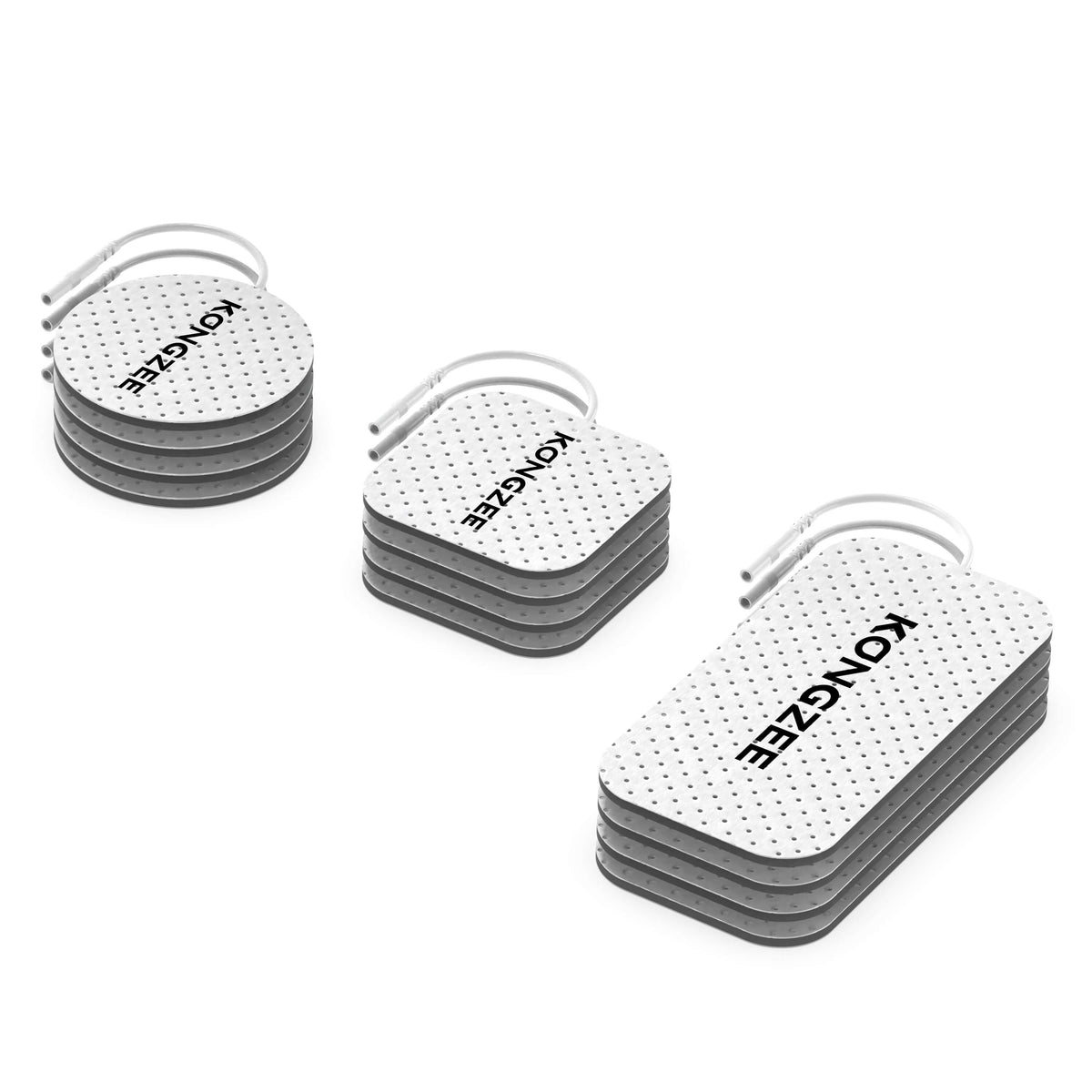
Look for clear TENS and EMS labels, gradual intensity steps, secure lead connections, readable safety instructions and pads that remain flat on the forearm. Independent channels can support two approved pad pairs, but they do not make cross-chest placement safe.
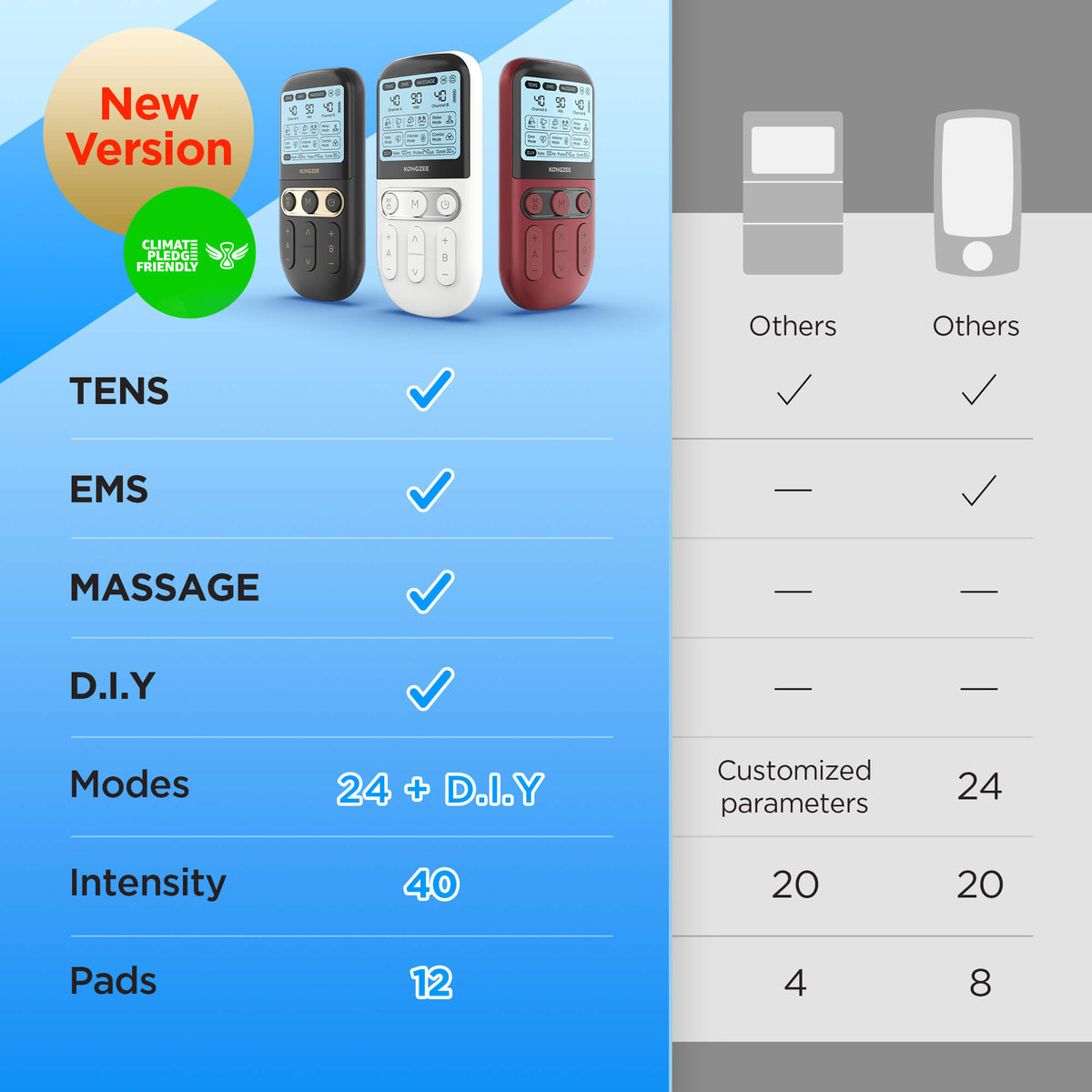
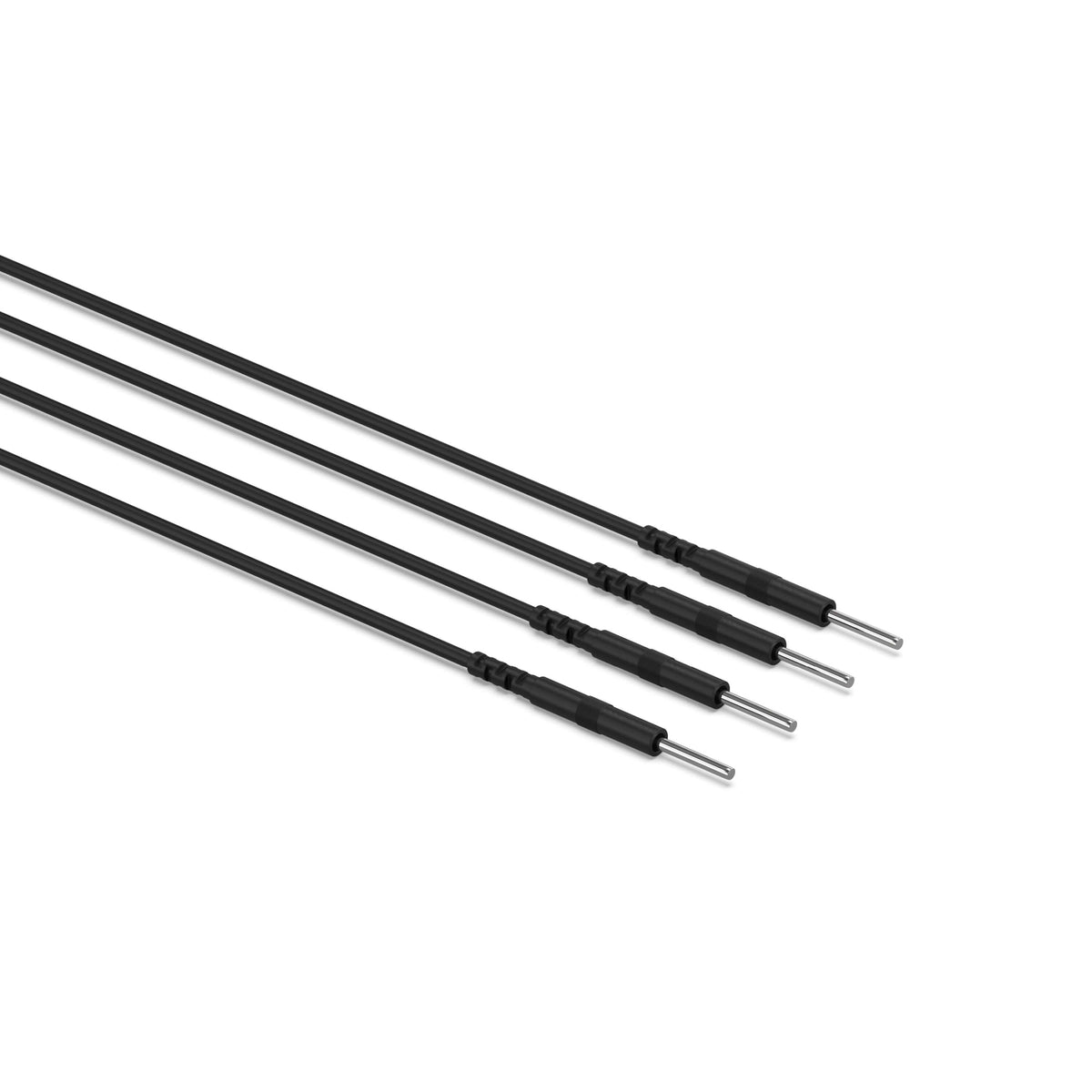
The KONGZEE 4-in-1 TENS and EMS unit includes separate TENS, EMS, Massage and DIY modes, independent A and B controls, 40 intensity levels and reusable 2mm pin electrodes. These features provide adjustment options; they do not diagnose tennis elbow or replace progressive rehabilitation.
Frequently Asked Questions
Where do TENS pads go for tennis elbow?
Use clean, intact soft tissue on the painful outer forearm, keeping both electrodes on the same arm. Avoid the bony outer elbow and joint crease.
Can I put a pad directly on the elbow bone?
Avoid prominent bone. Pads adhere and distribute current more evenly on nearby soft tissue.
Does TENS heal tennis elbow?
No. TENS may change pain temporarily, but it does not rebuild tendon capacity. Load management and progressive exercise are central to recovery.
Can I exercise while wearing TENS?
Avoid active sport or tool use with ordinary electrodes and loose cables attached. Use TENS in a stable position and complete prescribed exercise separately unless a clinician directs otherwise.
Why does my hand move during TENS?
Confirm that TENS rather than EMS is selected and reduce intensity. Strong movement is not the usual target for a pain-relief session.
Reviewed September 17, 2026. This article is educational and does not replace diagnosis, medical advice, physical therapy or the instructions supplied with your device.






Leave a comment
All comments are moderated before being published.
This site is protected by hCaptcha and the hCaptcha Privacy Policy and Terms of Service apply.