

Short answer: A TENS EMS combo unit puts two different types of electrical stimulation in one portable controller. TENS is generally used for temporary pain relief, while EMS activates motor nerves and can produce visible muscle contractions. The best combo unit makes those modes easy to tell apart, lets you adjust intensity gradually, and includes pads and leads that fit your intended setup.
This guide explains what to compare before buying, how dual channels work, and which safety checks matter. It is educational and does not replace the instructions supplied with your device or advice from a healthcare professional.
What Is a TENS EMS Combo Unit?
A TENS EMS combo unit is one controller with separate programs for transcutaneous electrical nerve stimulation (TENS) and electrical muscle stimulation (EMS). The same controller may use the same lead wires and electrode pads for both functions, but the sensation and intended goal are different.
- TENS mode: normally produces a strong but comfortable tingling sensation without deliberate muscle contraction. Some people use it for temporary relief of certain types of pain, although it does not work for everyone.
- EMS mode: stimulates motor nerves so the targeted muscle contracts. It should not be treated as a substitute for exercise, rehabilitation, or a clinician-directed recovery plan.
Read our TENS vs EMS comparison if you want a deeper explanation of the two technologies before comparing devices.

Seven Features That Matter Most
1. Clearly Separated TENS and EMS Programs
A good interface should make the selected mode obvious before intensity rises. If you expect a TENS tingling sensation but the muscle begins to contract, reduce the intensity to zero, switch the unit off, and check whether EMS mode was selected. More program names do not automatically make a device better; clear labels are more useful than a long menu that is hard to understand.
2. Independent Dual-Channel Intensity
A dual-channel unit has two outputs, commonly labeled A and B. Each output controls its own pair of pads. Independent controls are useful because two treatment areas may not feel comfortable at the same intensity.
Dual channel does not necessarily mean the device can run TENS on one channel and EMS on the other at the same time. That depends on the controller design. Confirm the behavior in the manual rather than assuming it from the number of outputs. Our dual-channel TENS guide explains the setup in more detail.
3. Small, Gradual Intensity Steps
The useful setting is the lowest one that gives the intended comfortable sensation. A large maximum number is less important than having gradual adjustments. Start at zero after the pads are attached, then increase slowly. Stimulation should not feel sharp, hot, burning, or painful.
4. Pad Sizes and Connector Compatibility
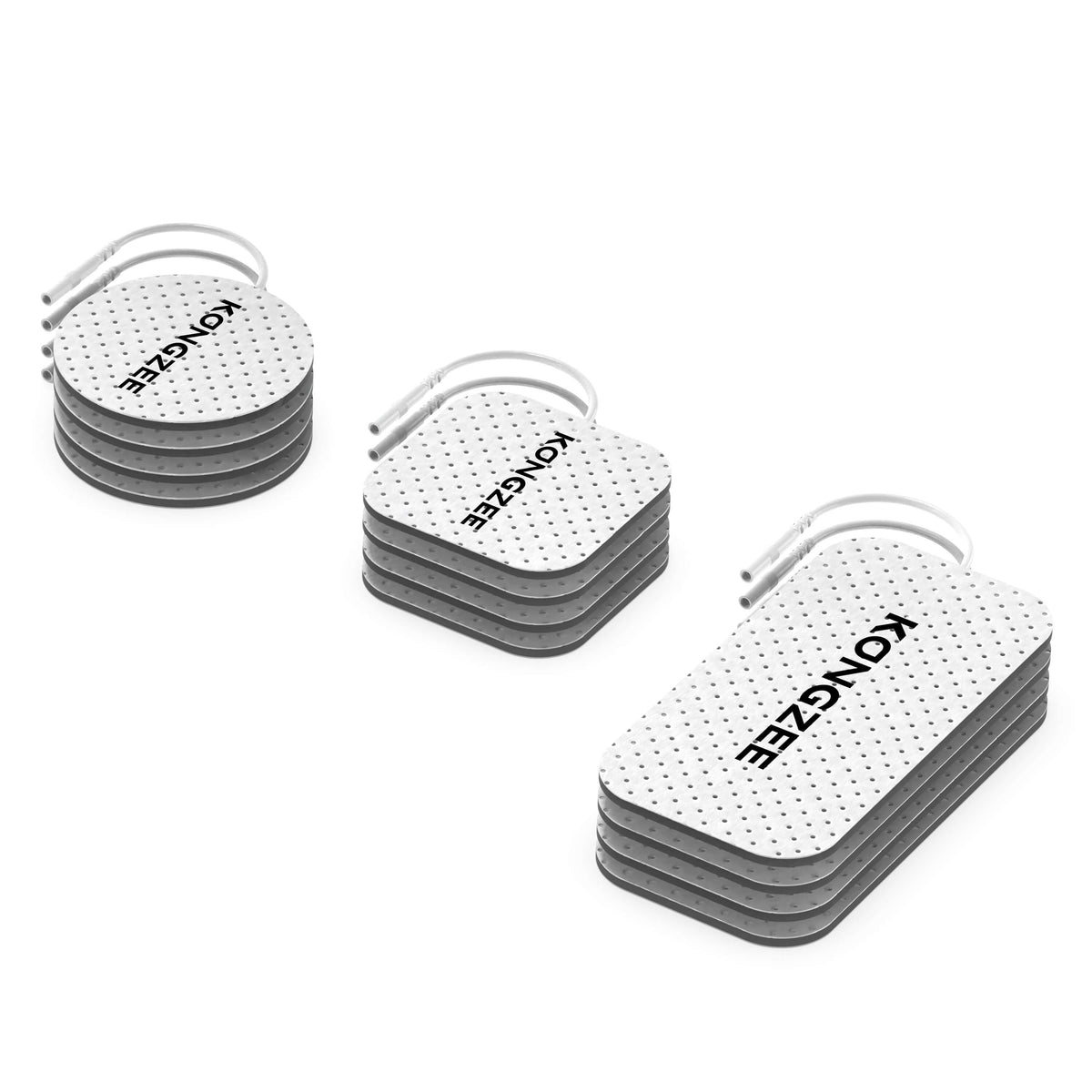
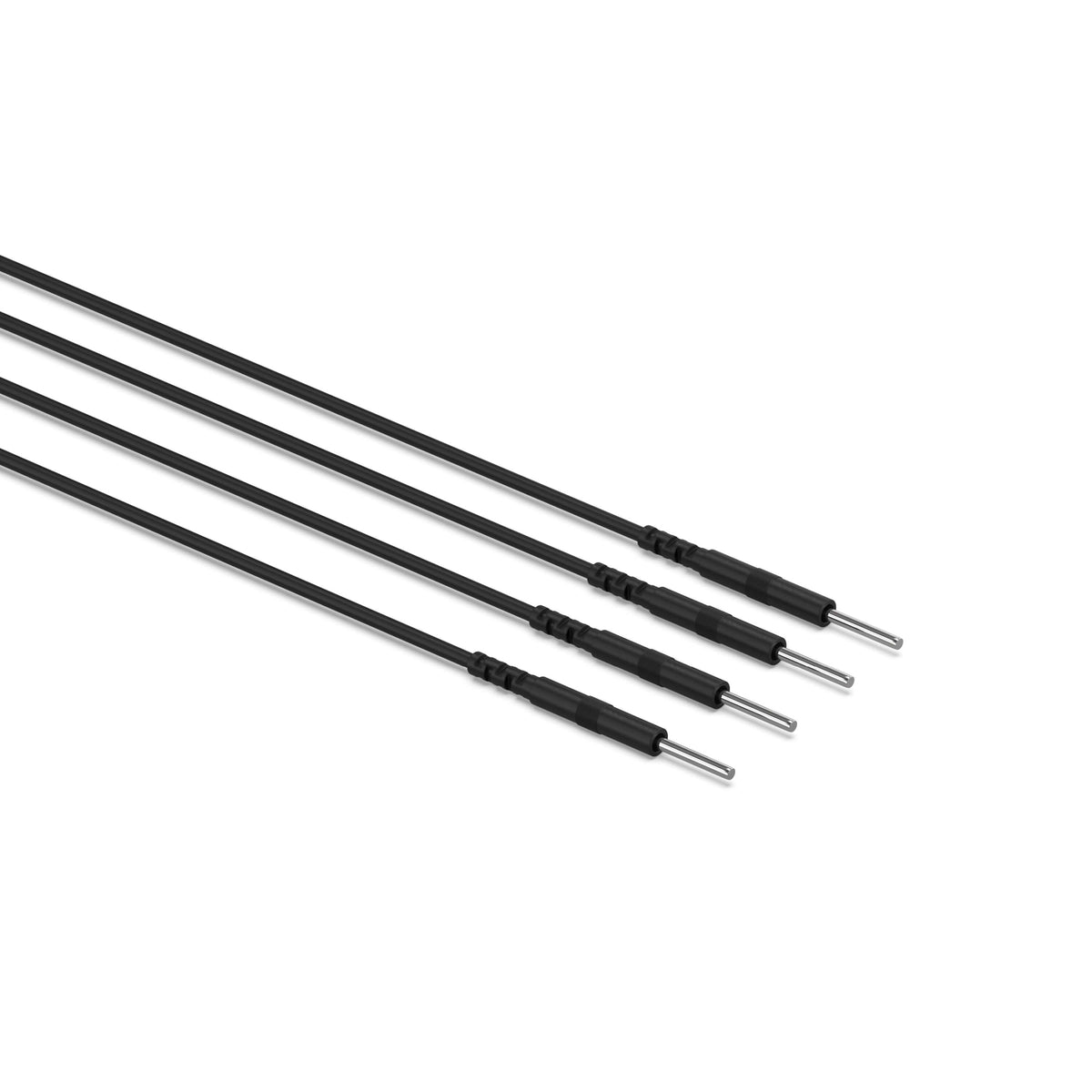
Different pad sizes can make setup easier on different body areas, but every pad must match the device and lead connection. A common 2 mm pin connection is widely used, yet connector size alone does not guarantee compatibility with every controller. Check the manual, pad specifications, and lead condition before use.
Reusable pads should lie flat on clean, dry, intact skin. Replace pads that are torn, dried out, contaminated, or lifting at the edges. See our guide to replacement TENS pads for connector and sizing checks.
5. Rechargeable Power and Everyday Portability
A rechargeable TENS EMS unit avoids repeated disposable-battery purchases and is easier to keep ready for home or travel. Compare charging connection, battery indicator, controller size, and whether the case can hold the leads and pads without bending them. Recharge the controller according to its manual and do not use damaged charging cables.
6. Understandable Session Controls
Look for a readable screen, a visible timer, and controls that can be returned to zero quickly. Session length is device- and program-specific. Do not transfer a TENS timing recommendation to an EMS program, and do not assume that a longer or stronger session works better.
7. Complete Instructions and Replaceable Accessories
The controller is only one part of the system. Clear instructions, intact lead wires, compatible replacement pads, storage liners, and responsive support all affect long-term use. Avoid a unit if basic operating limits, contraindications, or replacement specifications are difficult to find.

A Practical Safety Checklist
- Confirm that electrical stimulation is appropriate for you. Ask a healthcare professional if the cause of your symptoms is unclear or if you have a medical condition that may affect safe use.
- Inspect the controller, leads, connectors, pads, and skin. Do not use damaged equipment or place electrodes on broken, infected, irritated, or numb skin.
- Keep the unit switched off while connecting and positioning pads.
- Select the intended mode before raising intensity. TENS and EMS should not be treated as interchangeable settings.
- Begin at the lowest intensity. Increase slowly and stop if the sensation becomes painful or the skin reacts.
- Return intensity to zero before moving or removing pads.
Do not place electrodes on the head, eyes, mouth, front or sides of the neck, broken or numb skin, or in a pattern that sends current across the chest. Do not use electrical stimulation while driving, bathing, sleeping, or operating machinery. For body-area examples, use our TENS unit pad placement chart and safety guide.
Do not self-use TENS or EMS if you have a pacemaker or another implanted electronic device. Seek professional advice before use if you are pregnant, have epilepsy, have reduced sensation or circulation, or have an undiagnosed pain condition. The NHS TENS guidance notes that TENS is not suitable for everyone, and the FDA's EMS guidance reports risks including shocks, burns, bruising, skin irritation, pain, and possible interference with implanted devices.
Who May Prefer a Combo Unit?
A combo unit may make sense for someone who wants one controller with clearly separated sensory-stimulation and muscle-stimulation programs, plans to use multiple pad sizes, and values rechargeable portability. It is less suitable for someone who wants a device to diagnose an injury, replace prescribed rehabilitation, or guarantee a specific result.
If portability and simple home setup are your main priorities, compare the practical features in our home-use TENS unit guide.
If your primary goal is temporary pain relief, start by understanding TENS mode. If a clinician has recommended muscle stimulation for a specific purpose, confirm the correct EMS program, electrode placement, intensity, and session schedule with that clinician.
How the KONGZEE 4-in-1 Unit Fits This Checklist
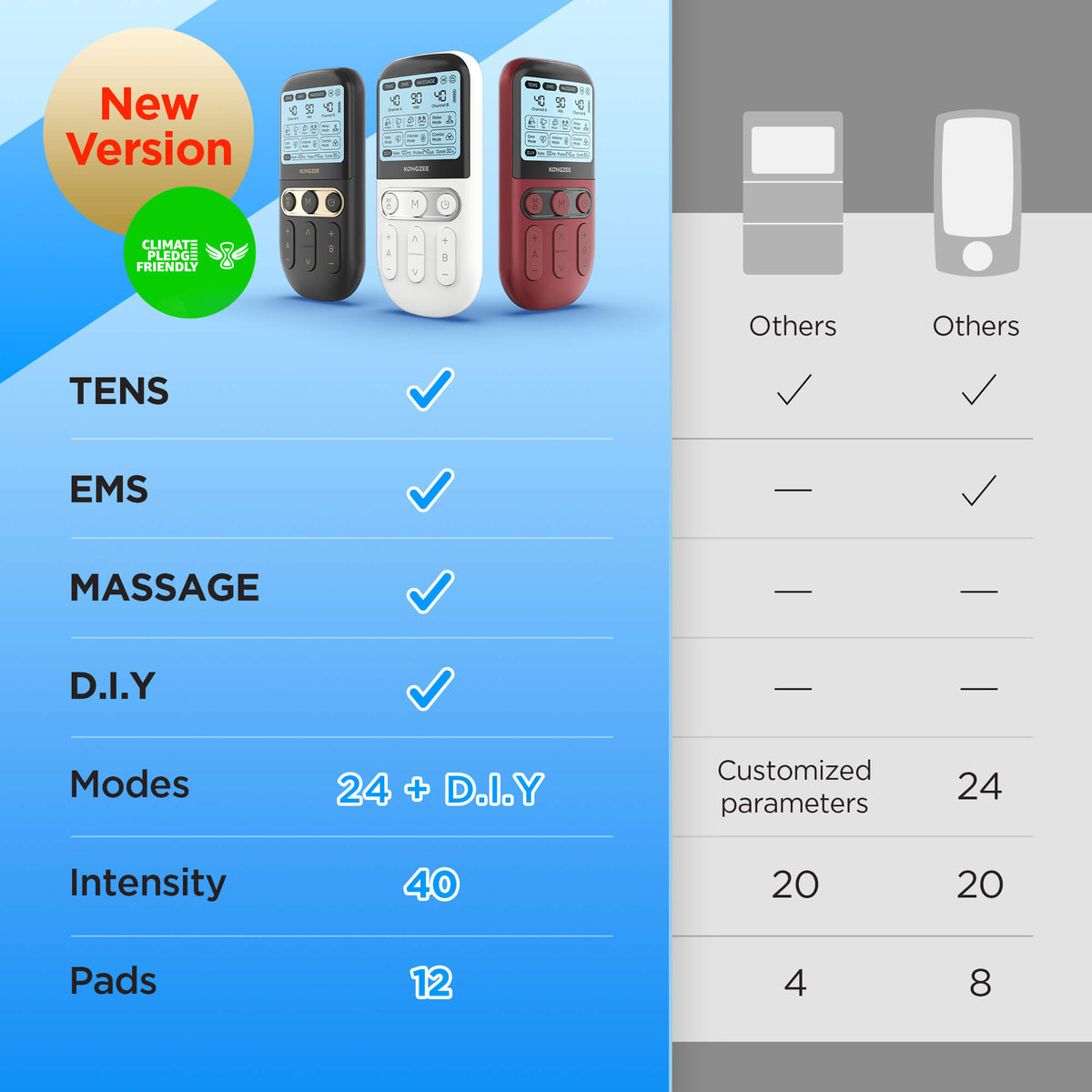
The KONGZEE portable rechargeable TENS and EMS unit includes separate TENS, EMS, Massage, and DIY modes, independent A and B channel intensity controls, 40 intensity levels, USB-C charging, and 12 reusable electrode pads in multiple sizes. Its standard 2 mm pin pad connection also makes replacement specifications easier to compare.
Those features make it a practical option for users who want one portable controller with clear mode choices and flexible pad coverage. The supplied manual still takes priority for program selection, placement, session timing, contraindications, and charging.
Frequently Asked Questions
Is a TENS EMS combo unit better than a TENS-only unit?
It is more versatile, but not automatically better. Choose a combo unit if you have a valid reason to use both TENS and EMS and can follow the instructions for each mode. A TENS-only unit may be simpler if temporary sensory stimulation is your only goal.
Can TENS and EMS use the same electrode pads?
Many combo units use the same compatible pads and leads for both modes, but you must confirm that in the device manual. Pad placement and intensity can differ because EMS is intended to produce muscle contraction.
Should EMS make the muscle move?
EMS can produce visible contraction because it stimulates motor nerves. The contraction should remain controlled and comfortable. Stop if it is painful, causes cramping, or does not match the instructions or clinician-directed plan.
How many channels should a combo unit have?
Two channels are useful when you want two independently adjustable pad pairs. The number of channels matters less than clear controls, safe placement, and whether the device supports the setup you actually need.
Can a combo unit replace physical therapy?
No. It can be one tool within a broader plan, but it does not diagnose the cause of pain and should not replace exercise, rehabilitation, medication, or professional care prescribed for you.
Reviewed October 12, 2026. This article is for general education and does not replace medical advice or the instructions supplied with your device.





Leave a comment
All comments are moderated before being published.
This site is protected by hCaptcha and the hCaptcha Privacy Policy and Terms of Service apply.