

The short answer: TENS pads for foot pain should go on clean, intact skin near the painful area, using a pattern approved by the device instructions or a clinician. Avoid wounds, numb skin, infected areas, prominent bone and places where standing or shoes will press on an electrode. Use TENS only while safely seated or resting, and stop if the sensation burns, stings or increases symptoms.
Foot Pain Needs a Cause, Not Just a Location
Foot pain can come from a muscle or tendon strain, plantar fascia irritation, arthritis, a stress injury, a pinched nerve, poor circulation, diabetes-related neuropathy or footwear pressure. These problems do not share one treatment or one electrode pattern.
Seek assessment after a significant injury, when you cannot bear weight, or when the foot is very swollen, red, hot, deformed or accompanied by fever. A wound that is infected or not healing also needs care. People with diabetes should take new foot pain, tingling, burning, numbness, color change or a blister seriously because nerve damage and reduced blood flow can make small injuries harder to detect and heal.
Can TENS Help Foot Pain?
TENS delivers mild electrical impulses through skin electrodes to influence pain signaling. It may provide temporary relief for some conditions, but it does not repair a fracture, tendon, ligament, plantar fascia or damaged nerve.
Evidence depends on the diagnosis. Small older trials suggested short-term benefit for painful diabetic neuropathy, but the evidence base was limited. A meta-analysis of three randomized trials found improvement at four and six weeks but not at twelve weeks and called for larger, longer studies. A newer network meta-analysis ranked TENS highly among several neuromodulation approaches, yet only spinal cord stimulation showed a statistically significant reduction at the final follow-up. Those findings do not establish that home TENS is appropriate for a numb or vulnerable foot.
Use TENS as an optional symptom-management tool within a plan that addresses the cause of pain. Footwear changes, activity adjustment, exercise, medication, wound care or physical therapy may be more important depending on the diagnosis.

TENS Unit Placement on the Feet
A general pattern uses two electrodes on healthy soft tissue around the painful region, leaving space between them. Depending on the diagnosis, pads may be positioned near the arch, heel, top of the foot or lower leg. The safest location is the one confirmed by the manual or a qualified professional who can assess sensation, skin condition and circulation.
Do not put a pad directly over a blister, callus crack, ulcer, rash, infected area or bony prominence. Avoid placing an electrode where body weight or a shoe will press on it. Do not stand or walk on electrodes unless the device manufacturer explicitly supplies a system designed for that purpose.
Arch or Heel Pain
For pain around the arch or heel, a clinician may place one pad near the painful soft tissue and the paired pad farther along the same local pathway. Do not improvise by sticking both pads under a weight-bearing surface and walking on them. Pain that is sharp on the first steps of the day, follows a sudden injury or persists despite activity changes needs a diagnosis.
Top-of-Foot or Ankle-Area Pain
The top of the foot has little padding over bones and tendons. Choose flat, healthy skin where the entire electrode can adhere without crossing a joint crease. A clinician may place the second pad above the ankle or along nearby soft tissue, but swelling, bruising or pain after injury should be assessed before stimulation.
Neuropathy Symptoms
Do not place TENS on an area with reduced sensation unless a healthcare professional has specifically approved and explained the plan. If you cannot feel temperature, pressure or intensity normally, you may not notice excessive stimulation or skin injury. The CDC foot-care guidance for people with diabetes recommends daily checks for cuts, redness, swelling, sores and blisters and prompt medical attention for new foot changes.
How to Set Up a Foot TENS Session
- Confirm the cause of pain and whether TENS is appropriate.
- Read the manual, contraindications and approved placement guidance.
- Sit or lie in a stable position and remove shoes and socks.
- Inspect the entire foot for broken skin, blisters, redness, swelling or numb areas.
- Clean and dry intact skin; avoid lotion under the electrodes.
- With the unit off, place the pads on approved soft-tissue areas.
- Select TENS mode, start at minimum intensity and increase gradually.
- Keep the feeling clear and comfortable, without burning or forceful movement.
- Turn the unit off before moving or removing any pad, then inspect the skin again.
Use the schedule in the device instructions or a clinician-designed plan. Longer is not automatically better. See our complete TENS setup guide and guide to TENS session length for general precautions.

Areas and Situations to Avoid
- Do not use on an ulcer, blister, cut, rash, infected area or fresh incision.
- Do not place pads on numb skin or an area where you cannot judge intensity.
- Do not place an electrode where standing or footwear will compress it.
- Do not apply pads directly over prominent bone or across a joint crease.
- Do not use while walking, sleeping, bathing, driving or operating machinery.
Ask a healthcare professional before using TENS if you are pregnant; have a pacemaker, implanted defibrillator or another electronic implant; have epilepsy, heart disease, cancer, circulation problems, diabetes-related foot changes or reduced sensation; or recently had surgery. Review our full TENS contraindications checklist.
What the Sensation Should Feel Like
In TENS mode, the expected feeling is a strong but comfortable tingle. It should not burn, sting or cause a forceful contraction. Because the foot contains curved surfaces and moves easily, a pad edge may lift and concentrate the sensation.
Turn the unit off if the feeling becomes sharp or uneven. Check that the whole adhesive surface is flat and that the lead is secure. Replace a pad that is torn, dry or no longer adheres evenly. Our guide to cleaning reusable TENS pads explains safe care and replacement signs.
TENS vs EMS for the Foot
| Feature | TENS | EMS |
|---|---|---|
| Main purpose | Temporary pain modulation | Muscle activation or contraction |
| Expected feeling | Comfortable tingling | Rhythmic or visible movement |
| Placement basis | Around an appropriate painful region | Over a target muscle or motor point |
| Repairs damaged tissue | No | No |
Do not copy a TENS placement when switching to EMS. The small muscles and nerves of the foot require a clear rehabilitation goal, and uncontrolled movement can affect balance. Read our TENS vs EMS comparison before changing modes.
Choosing a Unit for Foot Pain
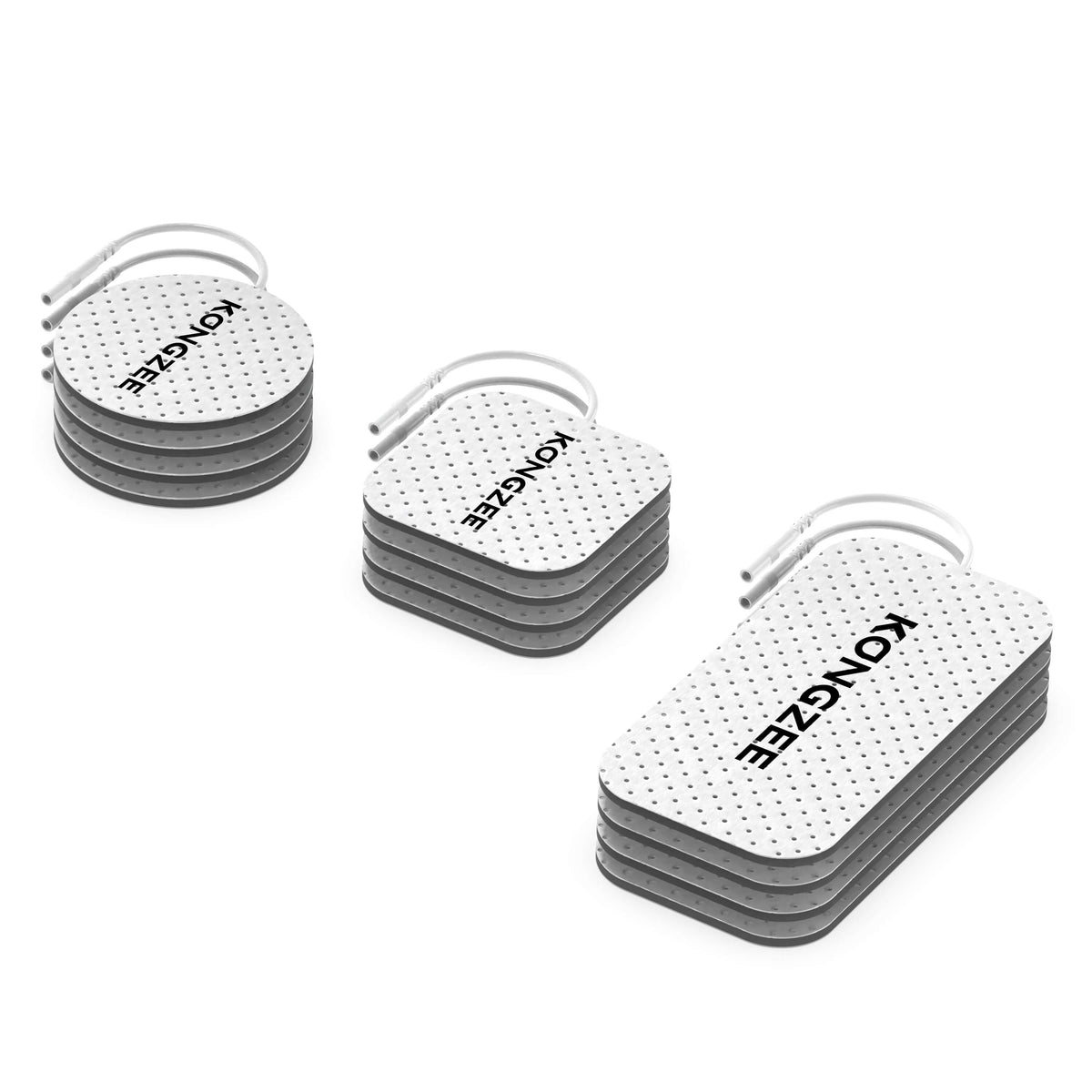
Look for clear mode labels, gradual intensity steps, small compatible electrodes for curved areas, secure lead connections and readable safety instructions. Independent dual channels may help when a professional recommends two pad pairs, but extra channels do not make unsafe skin or placement acceptable.
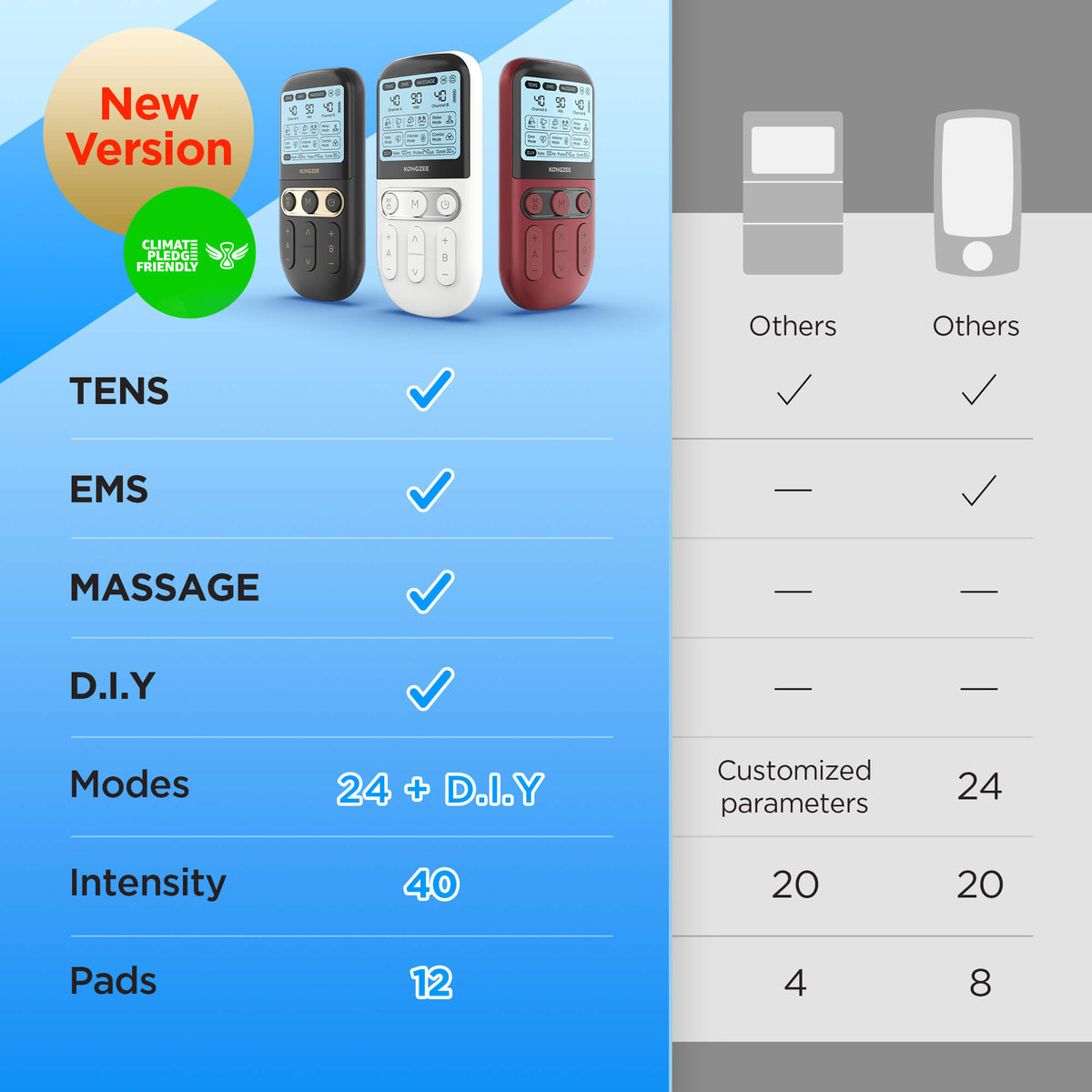
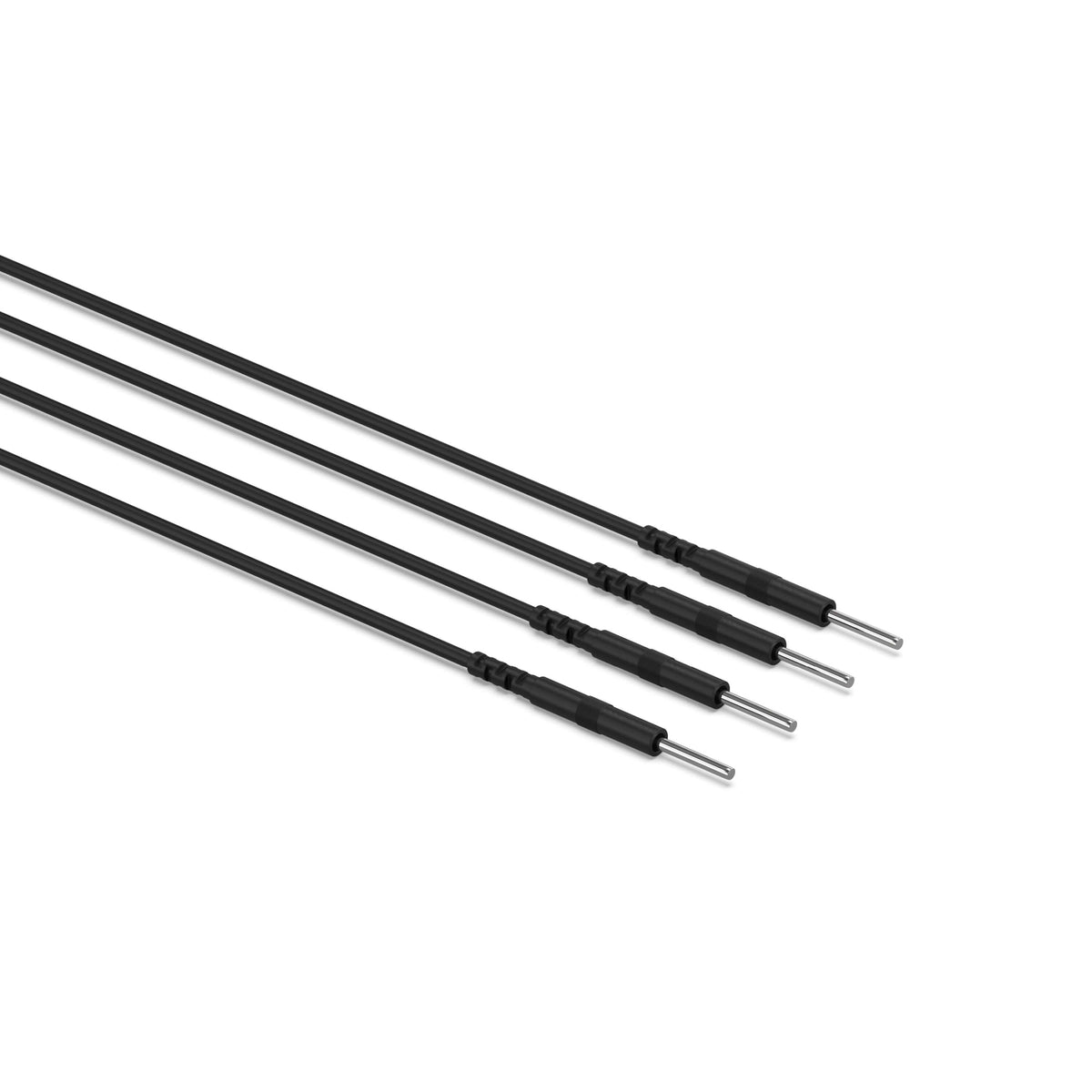
The KONGZEE 4-in-1 TENS and EMS unit includes separate TENS, EMS, Massage and DIY modes, independent A and B intensity controls, 40 intensity levels and reusable 2mm pin electrodes. These features provide adjustment options; they do not diagnose foot pain or make the unit suitable for a numb, wounded or poorly perfused foot.
Frequently Asked Questions
Can I put TENS pads on the sole of my foot?
Only when the device instructions or a healthcare professional approves that location. Never stand or walk on ordinary electrodes, and do not use them on cracked, callused, numb or injured skin.
Can TENS treat plantar fasciitis?
TENS may temporarily change pain perception, but it does not repair the plantar fascia or address every cause of heel pain. A treatment plan may also involve load management, footwear and exercise.
Can I use TENS for diabetic neuropathy?
Discuss it with the clinician who manages your diabetes or foot care. Reduced sensation, wounds and poor circulation increase risk, and the foot should be inspected before any home electrical stimulation.
Why does the foot twitch during TENS?
Check that TENS rather than EMS is selected and reduce intensity. TENS usually produces tingling without a forceful contraction.
Can I wear shoes over the pads?
Avoid footwear that presses, shifts or folds an electrode. Use the unit while seated or resting unless the manufacturer explicitly allows a different setup.
Reviewed September 17, 2026. This article is educational and does not replace diagnosis, medical advice, podiatry, rehabilitation or the instructions supplied with your device.






Leave a comment
All comments are moderated before being published.
This site is protected by hCaptcha and the hCaptcha Privacy Policy and Terms of Service apply.