

The short answer: For wrist pain, TENS pads are usually placed on clean, intact soft tissue around the painful area rather than directly on the wrist crease, palm, prominent wrist bones or numb skin. Keep space between the electrodes, begin at the lowest intensity and aim for a comfortable tingling sensation. Because wrist pain may come from a sprain, tendon irritation, arthritis, nerve compression or a fracture, identify the likely cause before using electrical stimulation.
Start With the Cause of Wrist Pain
“Wrist pain” describes a location, not a diagnosis. Repetitive gripping may irritate tendons. A fall may cause a sprain or fracture. Arthritis can create stiffness and aching, while carpal tunnel syndrome may cause tingling, numbness or weakness when the median nerve is compressed at the wrist. These problems need different treatment plans.
Do not use TENS to delay an assessment after an injury. Seek prompt medical care if the wrist looks deformed or changes color, you heard a snap or grinding sound, you cannot move the wrist or hold objects, or you have lost feeling in part of the hand. The NHS wrist-pain guidance also recommends medical advice for worsening or recurrent pain, persistent tingling or loss of sensation, and a wrist that is warm, swollen and stiff.
Can TENS Help Wrist Pain?
TENS sends mild electrical impulses through electrodes on the skin. It may temporarily reduce pain for some people by influencing pain signaling, but it does not heal a torn ligament, repair a fracture, reduce nerve compression or correct the cause of persistent symptoms.
A large systematic review and meta-analysis of 381 randomized trials found moderate-certainty evidence that pain was lower during or immediately after TENS than placebo. The authors found too little suitable evidence for several other outcomes and noted that reported adverse events were generally mild. This broad result does not prove that every wrist condition will respond, so judge TENS by its short-term effect within a diagnosis-based plan.

TENS Unit Placement for Wrist Pain
A simple two-pad setup places the electrodes on healthy soft tissue near the painful region, often on the lower forearm rather than on the hand itself. The painful area sits between or beside the pads without either pad covering irritated skin, a joint crease or a prominent wrist bone. Follow the placement diagrams supplied with your device or a clinician-designed plan.
Do not place a paired set so that electrical current travels across the chest or from one arm to the other. Do not wrap electrodes completely around the wrist as if they were a bracelet. Keep both pads on the same local limb region and make sure the full adhesive surface lies flat.
Back-of-Wrist Pain
For pain on the back of the wrist, one pad may sit on healthy lower-forearm tissue above the painful area and the other nearby on the same side. Leave the wrist crease free so movement does not fold or lift an electrode. Pain after a fall, visible swelling or marked tenderness over a bone needs assessment before stimulation.
Thumb-Side Wrist Pain
Thumb-side pain can be associated with tendon irritation, but it can also follow an injury. Small electrodes may fit more easily on the adjacent forearm while avoiding the bony point at the wrist. Do not place a pad over a hot, swollen tendon or force repetitive thumb movement simply because TENS temporarily dulls the pain.
Palm-Side Wrist Symptoms
The palm and wrist crease move, sweat and contain sensitive structures, so electrodes may adhere poorly there. A clinician may instead use nearby forearm locations when TENS is appropriate. Avoid the palm, broken skin and any area where sensation is reduced.
Carpal Tunnel Symptoms Need Extra Care
Carpal tunnel syndrome involves compression of the median nerve at the wrist. Typical symptoms can include tingling or numbness in the thumb, index and middle fingers, night symptoms and reduced grip strength. TENS may change how discomfort feels for a short time, but it cannot create more space in the carpal tunnel or remove pressure from the nerve.
New or progressive numbness, weakness, dropping objects or loss of fine hand control should be evaluated. Do not increase intensity over numb skin in an attempt to “feel something.” Reduced sensation makes it harder to judge stimulation and skin irritation.
How to Set Up a Wrist TENS Session
- Confirm that TENS is appropriate for the suspected cause of pain.
- Read the device manual, contraindications and placement instructions.
- Remove watches, bracelets and tight sleeves from the treatment area.
- Inspect the wrist and forearm for cuts, rash, swelling, bruising or numbness.
- Clean and dry intact skin; do not apply lotion beneath the pads.
- With the unit off, place two pads on approved soft-tissue areas with space between them.
- Keep the wrist supported in a relaxed, neutral position.
- Select TENS mode and raise intensity slowly from the minimum setting.
- Stop if the sensation burns, stings, increases pain or spreads unexpectedly.
- Turn the unit off before moving or removing the pads, then check the skin.
Use the session length recommended in the manual or by your clinician. More time or higher intensity does not guarantee more relief. See our complete TENS setup guide and our guide to TENS session length for general instructions.

Areas and Situations to Avoid
- Do not place pads on cuts, rashes, infected skin, fresh incisions or severe bruising.
- Do not use over numb skin or anywhere you cannot accurately judge intensity.
- Avoid the palm, wrist crease and prominent wrist bones unless specifically directed.
- Do not place one pad on each arm or create a path across the chest.
- Keep electrodes away from the front or side of the neck.
- Do not use while sleeping, bathing, driving or operating machinery.
Ask a healthcare professional before using TENS if you are pregnant; have a pacemaker, implanted defibrillator or another electronic implant; have epilepsy, heart disease, cancer, poor circulation or reduced sensation; or recently had surgery. Review our TENS contraindications checklist before your first session.
What the Sensation Should Feel Like
TENS normally feels like a clear, strong but comfortable tingling. It should not feel sharp, hot or painful, and it should not produce a forceful hand or finger contraction. If the hand moves repeatedly, confirm that TENS rather than EMS is selected and reduce the intensity.
Uneven or stinging stimulation often means a pad edge is lifting, the adhesive has dried or the lead connection is loose. Turn the unit off before checking the setup. Replace damaged or poorly adhering electrodes; our guide to cleaning reusable TENS pads explains safe care and replacement signs.
TENS vs EMS Around the Wrist
| Feature | TENS | EMS |
|---|---|---|
| Main purpose | Temporary pain modulation | Muscle activation or contraction |
| Expected response | Comfortable tingling | Rhythmic or visible movement |
| Placement basis | Around an appropriate painful region | Over a target muscle or motor point |
| Repairs injured tissue | No | No |
Do not reuse a TENS placement for EMS without instruction. The muscles that move the wrist and fingers are closely arranged in the forearm, and unintended contractions may aggravate an injury. Read our TENS vs EMS comparison before changing modes.
Choosing a Unit for Wrist Pain
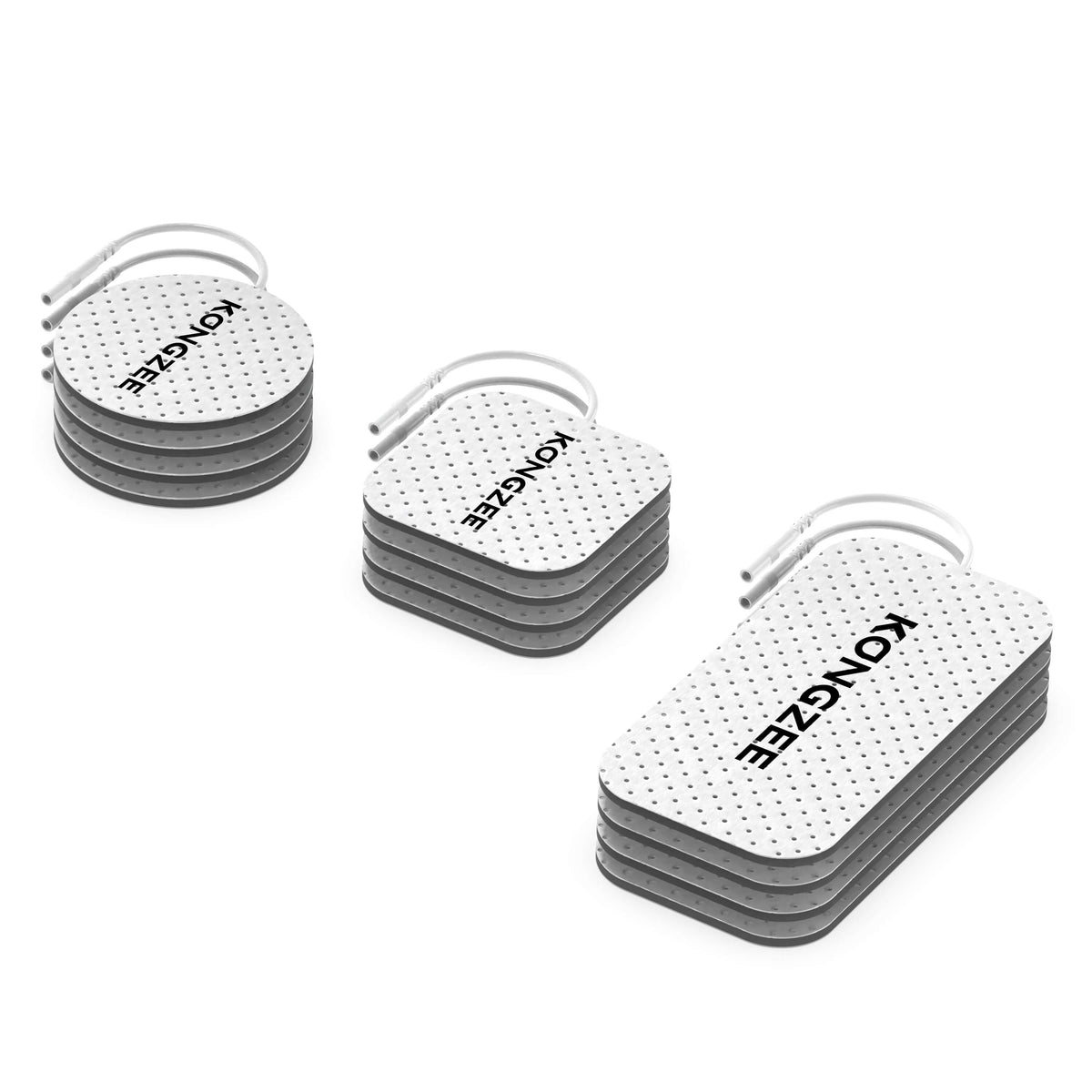
Useful features include clear mode labels, gradual intensity control, compact electrodes that sit flat on the forearm, secure lead connections and readable safety instructions. Independent dual channels may help when a professional recommends two separate pad pairs, but extra settings do not replace an accurate diagnosis.
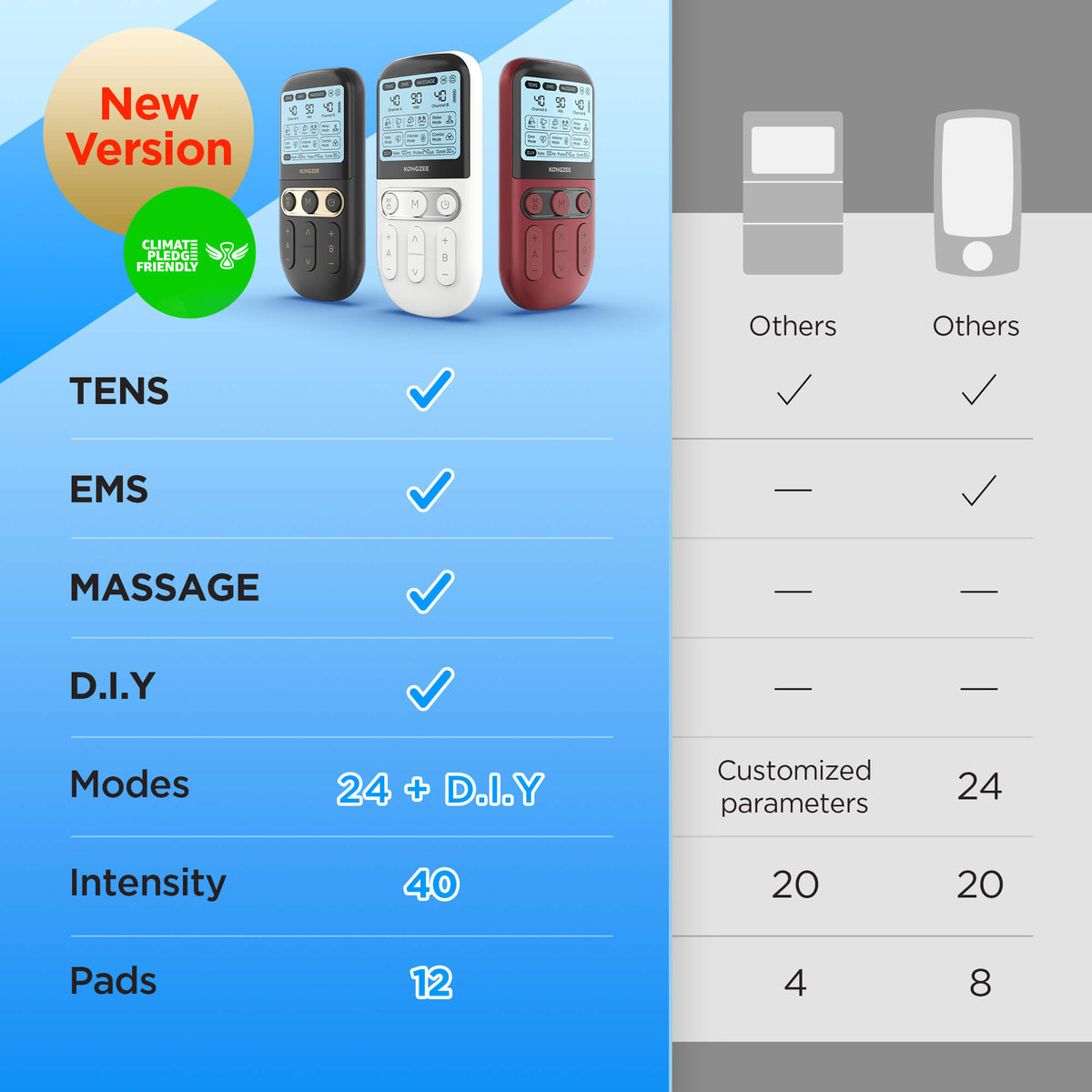
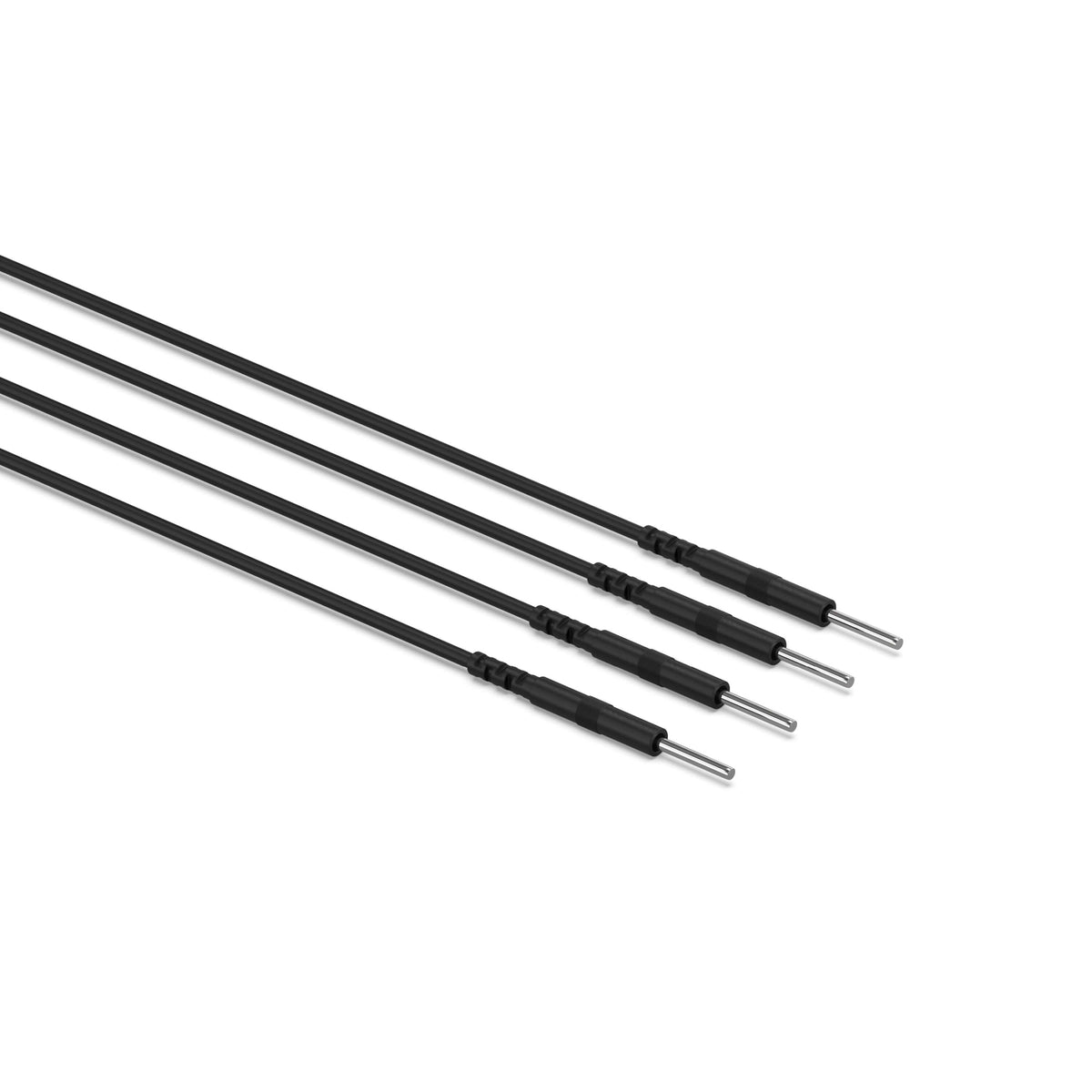
The KONGZEE 4-in-1 TENS and EMS unit includes separate TENS, EMS, Massage and DIY modes, independent A and B controls, 40 intensity levels and reusable 2mm pin electrodes. These adjustment options do not make TENS suitable for a fracture, numb hand, unstable injury or untreated nerve compression.
Frequently Asked Questions
Can I put a TENS pad directly on my wrist?
Use healthy, flat soft tissue identified in your manual or by a clinician. Avoid the wrist crease, prominent bones, wounds, swelling and numb areas because pads may not sit evenly or sensation may be unreliable.
Can TENS cure carpal tunnel syndrome?
No. TENS may temporarily change pain perception, but it does not remove compression from the median nerve. Numbness, weakness or worsening symptoms need medical evaluation.
Can I put electrodes on my palm?
The palm moves and sweats, and its skin can be sensitive. Use only a placement specifically approved by your device instructions or clinician; nearby forearm tissue is often easier to use safely.
Why do my fingers twitch during TENS?
Check that the device is in TENS mode, lower the intensity and review pad position. Forceful or uncomfortable movement is not the goal of a TENS session.
Can I type or exercise while using TENS?
It is safer to keep the wrist supported and monitor the sensation and pad contact. Avoid exercise, driving or any task in which a cable, sudden contraction or distraction could cause harm.
Reviewed September 17, 2026. This article is educational and does not replace diagnosis, medical advice, rehabilitation or the instructions supplied with your device.






Leave a comment
All comments are moderated before being published.
This site is protected by hCaptcha and the hCaptcha Privacy Policy and Terms of Service apply.