

The short answer: Do not put TENS pads on unexplained, suddenly painful or swollen calf tissue. Calf pain can come from a simple muscle strain or cramp, but it can also signal a blood clot or circulation problem. Once a clinician or clear injury pattern supports a muscular cause and TENS is appropriate, two pads may be placed on clean, intact soft tissue of the same calf, above and below or on either side of the sore area. Avoid the back of the knee, Achilles tendon, broken or numb skin, and any setup that sends current between the legs.
Why the Cause of Calf Pain Matters
The calf contains the gastrocnemius and soleus muscles, which help you stand, walk, run and push through the foot. Soreness after unfamiliar exercise, a sudden pull during sport or a short-lived cramp may be muscular. Yet similar pain can come from Achilles injury, nerve irritation, peripheral artery disease, compartment syndrome or deep vein thrombosis (DVT).
Cleveland Clinic advises prompt medical care for sudden pain, swelling, discoloration or symptoms that occur without activity and persist at rest. TENS can alter pain perception, so using it before identifying a concerning cause may delay appropriate care.
Can TENS Help a Calf Strain or Cramp?
TENS sends mild electrical impulses through skin electrodes to influence pain signaling. It may temporarily make a diagnosed mild muscle strain or post-cramp soreness feel easier to manage. It does not repair torn fibers, dissolve a blood clot, improve blocked circulation or correct dehydration and electrolyte problems.
Evidence for TENS varies by condition, and there is no strong basis for describing it as a cure for general calf pain. Use it as an optional comfort tool only after urgent causes have been excluded and alongside an appropriate recovery plan.

TENS Unit Placement for Calf Pain
For an approved muscular condition, keep both electrodes on healthy soft tissue of the same calf. The sore muscle may sit between the pads or just beside them. Do not place an electrode directly over the back of the knee, the Achilles tendon, the shinbone or a visibly swollen area.
Calf size and injury location vary, so use the placement diagram supplied with the device or ask a clinician to identify safe landmarks. Both pads should lie flat without touching.
Vertical Two-Pad Pattern
One pad may sit on the upper calf muscle below the knee crease and the second farther down the same muscle, while staying above the Achilles tendon. Leave enough space so neither pad folds when the ankle moves.
Side-by-Side Pattern
For a wider muscular ache, a clinician may approve one pad on each side of the affected muscle belly. Keep both on the same leg and away from the shinbone, varicose veins, bruising and areas of reduced sensation.
Four-Pad or Dual-Channel Pattern
Four pads are not automatically better. If two channels are recommended, keep each paired circuit local to the same calf and confirm the A and B lead pairs. Never put one electrode on each leg or create a path across the pelvis.
How to Set Up a Calf TENS Session
- Confirm that the cause appears muscular and that no urgent warning signs are present.
- Read the device manual, contraindications and placement diagrams.
- Sit or lie with the lower leg supported and the unit switched off.
- Inspect the calf for swelling, warmth, discoloration, broken skin, bruising or numbness.
- Clean and dry intact skin and remove lotion or oil.
- Place both pads on approved soft tissue of the same calf.
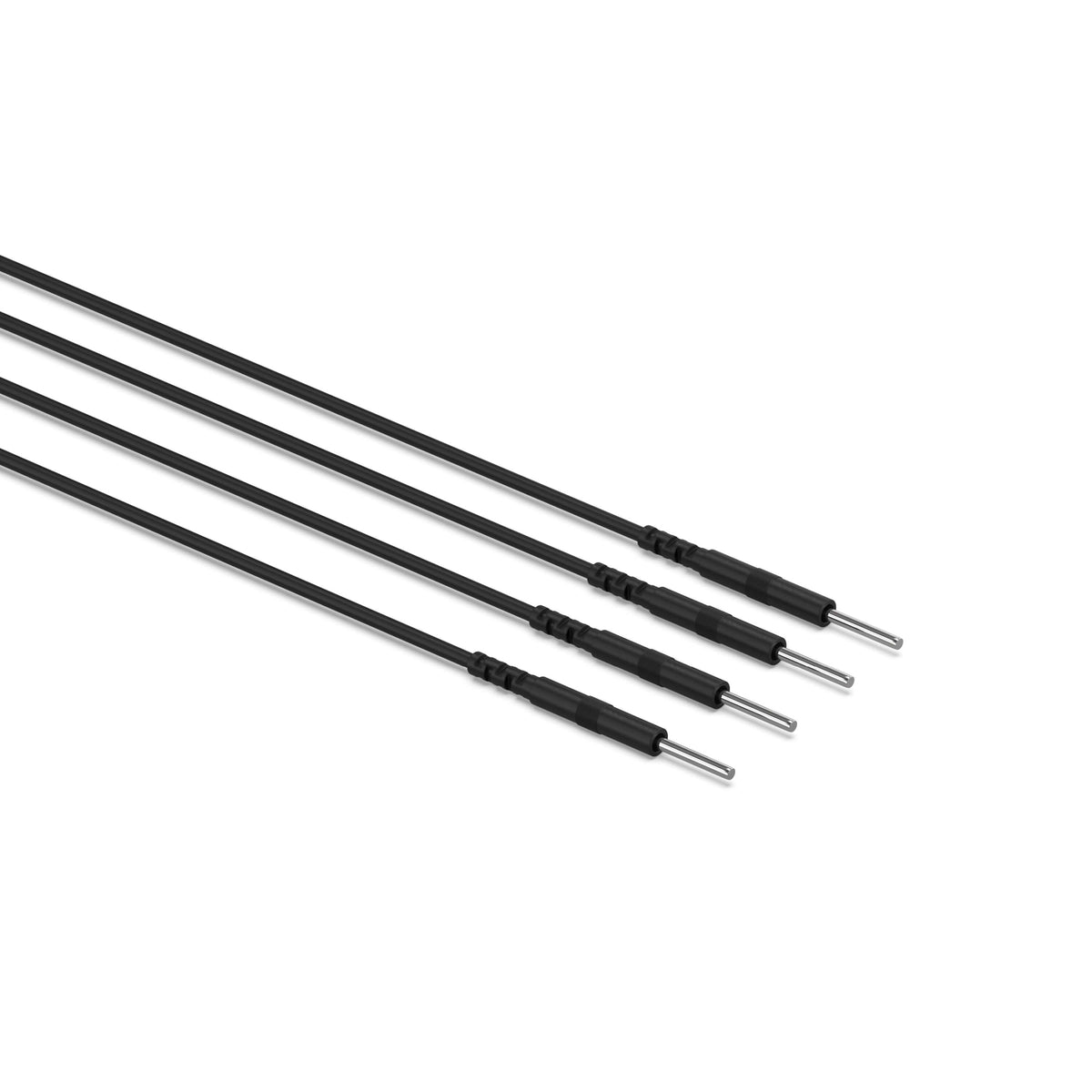
- Route leads so they do not wrap around the leg or catch on furniture.
- Select TENS mode and begin at the lowest intensity.
- Increase gradually to a strong but comfortable tingling without forceful contraction.
- Turn the unit off before repositioning or removing pads, then check the skin.
Follow the session time in the manual or from your clinician. Read our complete TENS setup guide and guide to TENS session length before adjusting duration or intensity.

Do Not Use TENS Before Ruling Out DVT
DVT is a blood clot in a deep vein, commonly in one leg. Warning signs can include new one-sided swelling, warmth, redness or other discoloration, tenderness and pain without a clear exercise injury. Some clots cause few obvious symptoms.
Seek urgent medical advice if DVT is possible. Call emergency services for calf symptoms accompanied by chest pain, shortness of breath, coughing blood, fainting or a very fast heartbeat. TENS does not treat a clot and should not be used to test whether the pain improves.
Other Red Flags
Urgent evaluation is also appropriate for severe or rapidly increasing pain, a tense swollen calf after trauma, inability to bear weight, major weakness, spreading numbness, fever, an open injury, or a foot that becomes cold, pale or blue. Pain that reliably appears with walking and eases with rest may indicate a circulation problem and should be assessed.
Areas and Situations to Avoid
- Do not place pads over swelling, warmth, discoloration, a suspected clot or unexplained tenderness.
- Avoid the back of the knee, shinbone, Achilles tendon and ankle bones.
- Do not use on cuts, rashes, infection, fresh incisions or severe bruising.
- Avoid numb skin or any area where you cannot judge intensity normally.
- Do not place one pad on each leg or send current across the pelvis or torso.
- Do not use while running, sleeping, bathing, driving or operating machinery.
Ask a healthcare professional before use if you are pregnant; have a pacemaker, implanted defibrillator or another electronic implant; have epilepsy, heart disease, cancer, poor circulation or reduced sensation; or recently had surgery. Review our TENS contraindications checklist.
What the Sensation Should Feel Like
TENS should feel like strong but comfortable tingling. It should not burn, sting or make the foot repeatedly point. If the calf contracts, confirm that TENS rather than EMS is selected and lower the intensity.
Stop if pain increases, swelling appears, numbness spreads or the foot changes color or temperature. Curved calf contours and movement can lift a pad edge and concentrate stimulation. Replace worn electrodes and follow our guide to cleaning reusable TENS pads.
TENS vs EMS for the Calf
| Feature | TENS | EMS |
|---|---|---|
| Main purpose | Temporary pain modulation | Muscle activation or contraction |
| Expected response | Comfortable tingling | Rhythmic visible movement |
| Placement basis | Near an appropriate painful region | Over a target muscle or motor point |
| Treats DVT or poor circulation | No | No |
Do not copy a TENS placement when switching to EMS. A clinician may use muscle stimulation for a specific rehabilitation goal, but unsupervised contractions are inappropriate for an acute tear or unexplained calf pain. Read our TENS vs EMS comparison.
Rehabilitation and Return to Activity
For a mild diagnosed strain, early care may include relative rest, elevation and a gradual return to movement. The right timing for stretching and strengthening depends on injury severity. Pain relief should not be used to run through a limp or resume explosive activity before strength and confidence return.
A physical therapist can assess walking, ankle mobility, calf strength and sport demands. Progress may move from gentle range of motion to supported calf raises, heavier strengthening and finally running or jumping. Track symptoms during activity and the following day.
Choosing a Unit for Calf Pain
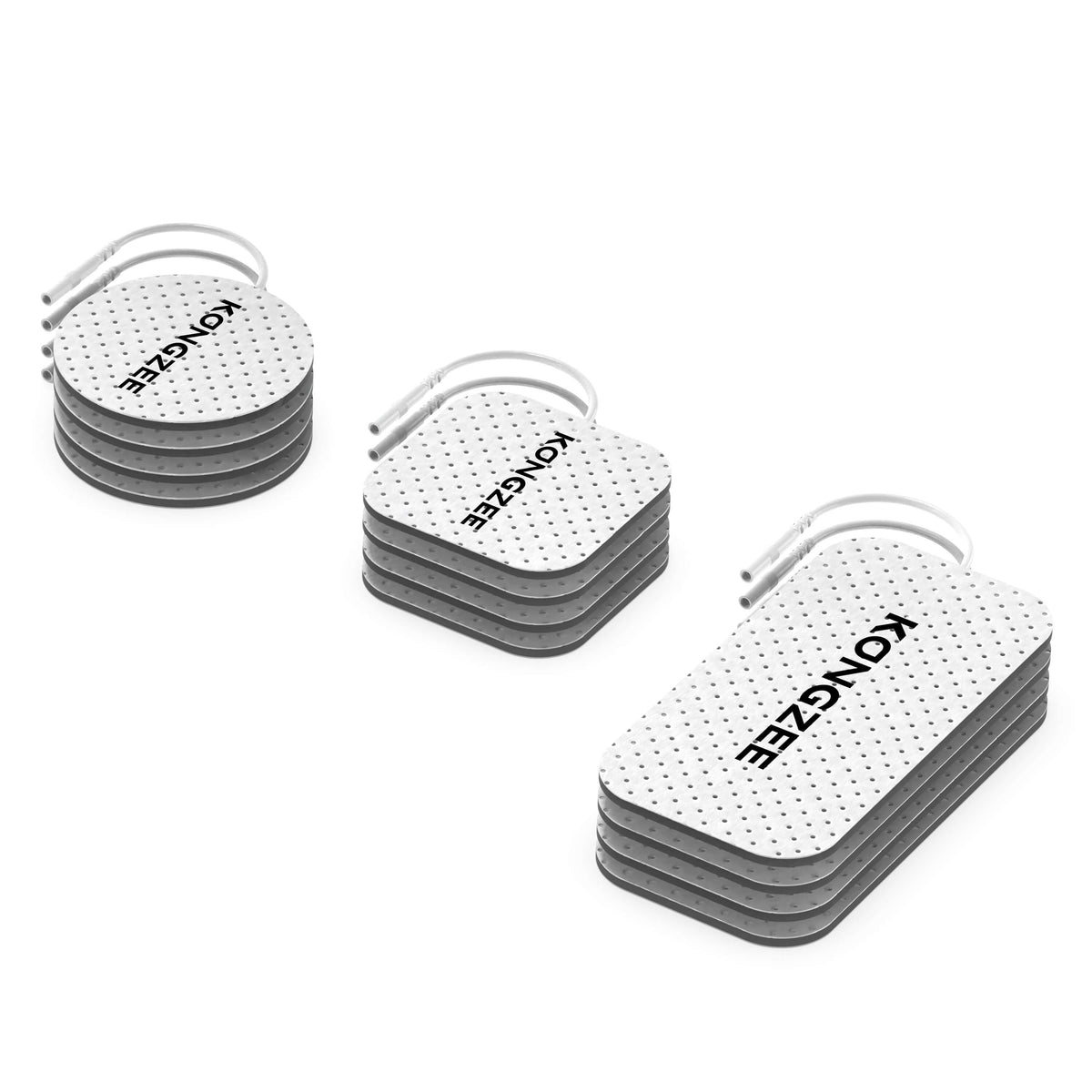
Look for clearly separated TENS and EMS modes, gradual intensity steps, secure lead connections, readable warnings and electrodes that conform to the calf. Independent channels support two approved pad pairs but do not make cross-leg placement safe.
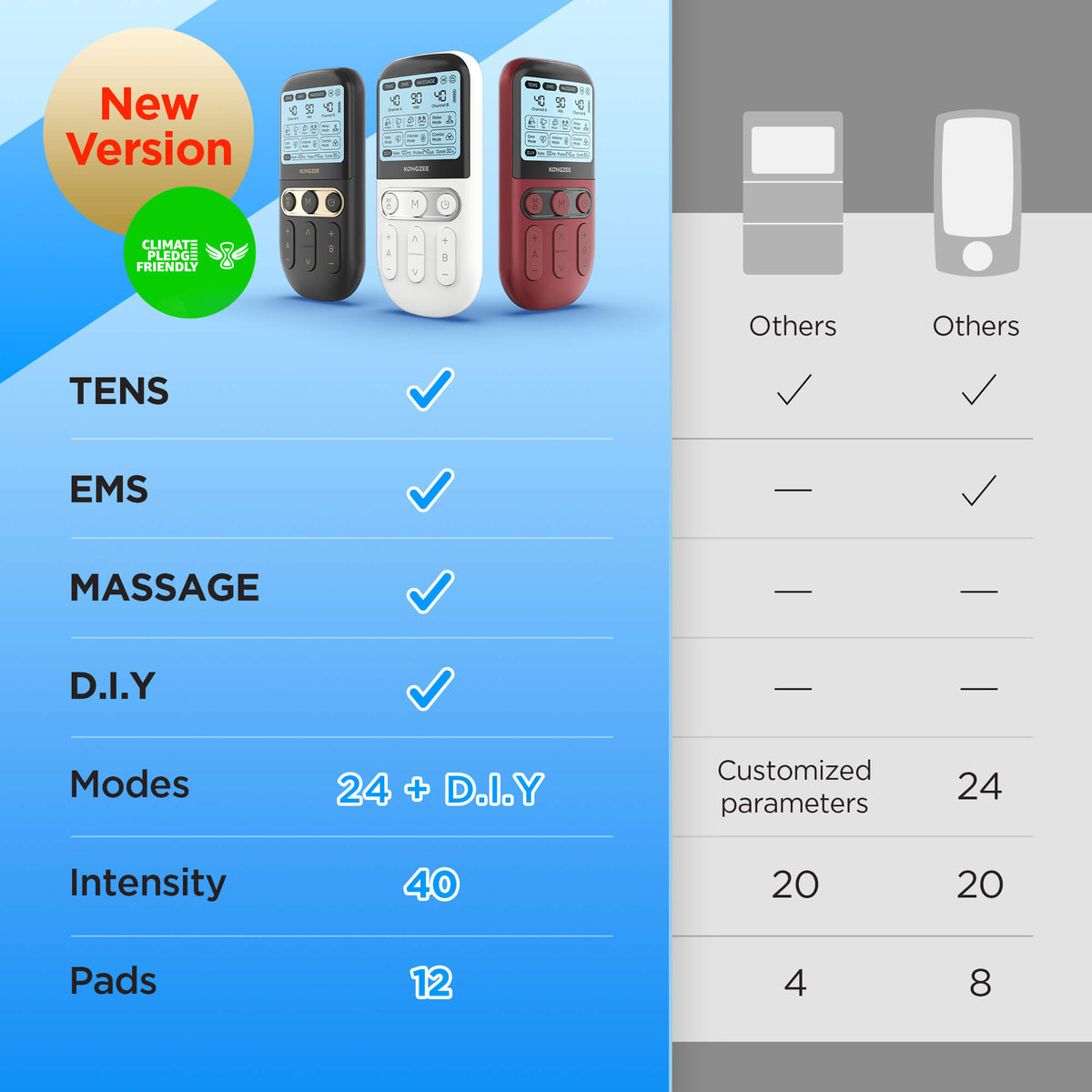
The KONGZEE 4-in-1 TENS and EMS unit includes separate TENS, EMS, Massage and DIY modes, independent A and B controls, 40 intensity levels and reusable 2mm pin electrodes. These features provide adjustment options; they do not diagnose calf pain or replace urgent evaluation when vascular symptoms are possible.
Frequently Asked Questions
Where do TENS pads go on the calf?
After a muscular cause is established, place both pads on approved healthy soft tissue of the same calf, usually above and below or on either side of the sore muscle. Avoid the knee crease and Achilles tendon.
Can I use TENS on a swollen calf?
No. New one-sided swelling, warmth, discoloration or unexplained tenderness requires medical assessment before TENS because a blood clot or another serious condition is possible.
Can TENS stop a calf cramp?
It may change discomfort for some people, but it does not address dehydration, medication effects, circulation problems or other causes of recurrent cramps.
Can I walk while wearing TENS?
Use the device in a stable position unless the manual or clinician specifically approves movement. Walking can loosen pads and catch leads, and pain relief may hide an unsafe load.
When is calf pain an emergency?
Seek urgent care for sudden swelling or discoloration, severe worsening pain, major weakness, a cold or pale foot, or symptoms without a clear cause. Call emergency services if chest pain or shortness of breath occurs.
Reviewed September 17, 2026. This article is educational and does not replace diagnosis, medical advice, physical therapy or the instructions supplied with your device.






Leave a comment
All comments are moderated before being published.
This site is protected by hCaptcha and the hCaptcha Privacy Policy and Terms of Service apply.