

The short answer: For golfer’s elbow, TENS pads are generally placed on clean, intact soft tissue around the painful inner-forearm region, not directly on the inner elbow bone, across the elbow crease or on numb skin. Keep both pads on the same arm, leave space between them and use a strong but comfortable tingling. TENS may provide temporary pain relief, but progressive loading and activity changes address the tendon problem more directly.
What Is Golfer’s Elbow?
Golfer’s elbow, also called medial elbow tendinopathy or medial epicondylitis, causes pain and tenderness around the bony point on the inside of the elbow. The affected tendons connect forearm muscles used to bend the wrist and fingers. Repetitive gripping, lifting, tool use and racquet sports can irritate them; you do not need to play golf to develop it.
The Royal Orthopaedic Hospital guidance describes pain that can travel down the forearm, stiffness and difficulty holding items. It recommends modifying aggravating activity and using stretching and strengthening as part of recovery.
Make Sure the Pain Is Really Golfer’s Elbow
Inner-elbow pain may also come from a ligament injury, arthritis, a fracture, nerve irritation or pain referred from the neck. Tingling or numbness in the ring and little fingers can suggest irritation of the ulnar nerve, which runs near the inner elbow. A sudden injury, marked swelling, deformity, inability to move the arm, loss of feeling or a cold or discolored hand needs prompt assessment.
Golfer’s elbow usually develops with gripping and wrist-flexion load. Pain that is constant, rapidly worsening or unrelated to arm use deserves a diagnosis before home stimulation.
Can TENS Help Golfer’s Elbow?
TENS delivers mild electrical impulses through skin electrodes to influence pain signaling. It may make symptoms more manageable for some people, but it does not rebuild tendon capacity or correct the workload that caused the problem.
Evidence specific to elbow tendinopathy is limited. A systematic review of passive treatments for lateral elbow tendinopathy found no long-term improvement in pain or function from TENS compared with control. That review studied tennis elbow on the outside of the arm rather than golfer’s elbow on the inside, but it reinforces an important point: TENS should not replace graded strengthening, activity modification or professional care.
Broader pain research suggests that TENS can reduce pain during or immediately after use. Treat that as short-term symptom management rather than a cure for the tendon.

TENS Unit Placement for Golfer’s Elbow
A practical two-pad pattern places both electrodes on healthy inner-forearm soft tissue, one above and one below or beside the painful tendon region. The sore inner-elbow point sits near the treatment area without a pad covering the bony prominence. Follow your manual or a clinician’s marked placement.
Do not put an electrode directly in the elbow crease, where bending can fold the pad. Keep the paired pads on the same arm and never create a path from one arm to the other or across the chest.
Two Pads Along the Inner Forearm
One pad may sit on healthy muscle a short distance below the inner elbow and the second farther down the same forearm, with clear space between them. This local arrangement can be easier to keep flat than placing a pad on the elbow itself. Avoid the wrist crease and any area with reduced sensation.
One Pad Above and One Below the Pain
When the upper arm provides enough flat soft tissue and the manual permits it, one pad may sit just above the painful region and the other on the upper inner forearm. Keep both away from the elbow crease and the bony tip. If elbow movement lifts either edge, reposition the pads while the unit is off.
Four-Pad Placement
Four pads are not automatically better. If a professional recommends two channels, keep each pair in its intended local region and confirm which pads belong to channel A and channel B. Do not cross channel pairs around the arm or through the torso.
How to Set Up an Elbow TENS Session
- Confirm the diagnosis and that TENS is appropriate for you.
- Read the manual, contraindications and electrode diagrams.
- Sit comfortably with the forearm supported and the elbow slightly bent.
- Inspect the inner elbow and forearm for cuts, rash, swelling, bruising or numbness.
- Clean and dry intact skin; remove lotion from the pad area.
- With the unit off, place the pads on approved soft-tissue locations.
- Keep cables away from the hand and anything that could snag them.
- Select TENS mode and begin at the lowest intensity.
- Increase gradually to a clear, comfortable tingling without forceful movement.
- Turn the unit off before moving or removing pads, then inspect the skin.
Follow the device or clinician’s schedule. A longer session is not automatically better. See our complete TENS setup guide and guide to TENS session length for general precautions.

Combine Pain Relief With Tendon Rehabilitation
Relative rest means reducing or changing the movements that repeatedly provoke symptoms, not keeping the arm completely still. Consider using a lighter grip, enlarging tool handles, sharing heavy loads between both hands and taking short breaks from repetitive work.
Rehabilitation often progresses from gentle range of motion to isometric and slow resistance exercise for the wrist flexors and forearm. A physiotherapist can set an acceptable pain range, choose the load and adjust technique. If TENS makes an exercise session more comfortable, do not use that temporary change as permission to jump ahead in weight or volume.
Areas and Situations to Avoid
- Do not place pads directly on the inner elbow bone or in the elbow crease.
- Do not use on cuts, rashes, infected skin, fresh incisions or marked swelling.
- Avoid numb skin or any location where you cannot judge intensity normally.
- Do not place one pad on each arm or send current across the chest.
- Keep electrodes away from the front and side of the neck.
- Do not use while sleeping, bathing, driving or operating tools or machinery.
Ask a healthcare professional before using TENS if you are pregnant; have a pacemaker, implanted defibrillator or another electronic implant; have epilepsy, heart disease, cancer, poor circulation or reduced sensation; or recently had surgery. Review our TENS contraindications checklist.
What the Sensation Should Feel Like
TENS should feel like a strong but comfortable tingle. It should not burn, sting or produce a forceful wrist or finger contraction. If the hand repeatedly curls or the forearm jumps, confirm that TENS rather than EMS is selected, lower the intensity and review placement.
An edge that lifts as the elbow bends may concentrate the sensation. Turn the unit off, support the arm and check that each pad lies flat. Replace electrodes that are torn, dry or no longer adhere evenly. Our guide to cleaning reusable TENS pads covers care and replacement signs.
TENS vs EMS for Golfer’s Elbow
| Feature | TENS | EMS |
|---|---|---|
| Main purpose | Temporary pain modulation | Muscle activation or contraction |
| Expected response | Comfortable tingling | Rhythmic or visible movement |
| Placement basis | Around an appropriate painful region | Over a target muscle or motor point |
| Rebuilds tendon capacity | No | Not by itself |
Do not reuse the same pad pattern when changing modes. EMS can create stronger contractions that may load a sensitive tendon. It should support a specific rehabilitation goal, not replace progressive exercise. Read our TENS vs EMS comparison.
Choosing a Unit for Inner-Elbow Pain
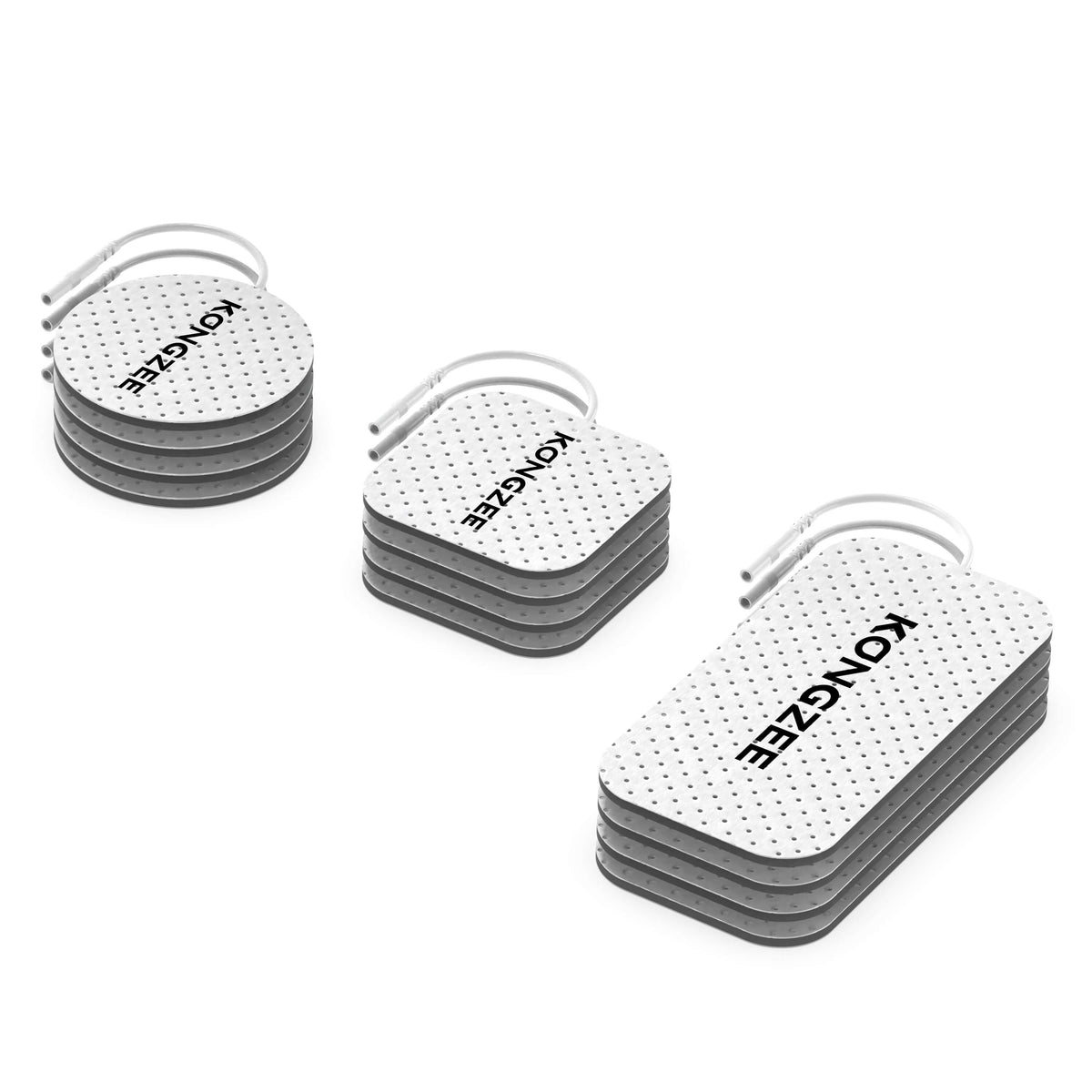
Useful features include clear mode labels, gradual intensity steps, electrodes sized for the forearm, secure lead connections and readable safety instructions. Independent dual channels can support two clinician-approved pad pairs, but extra channels do not improve the tendon or make an unsafe cross-body placement acceptable.
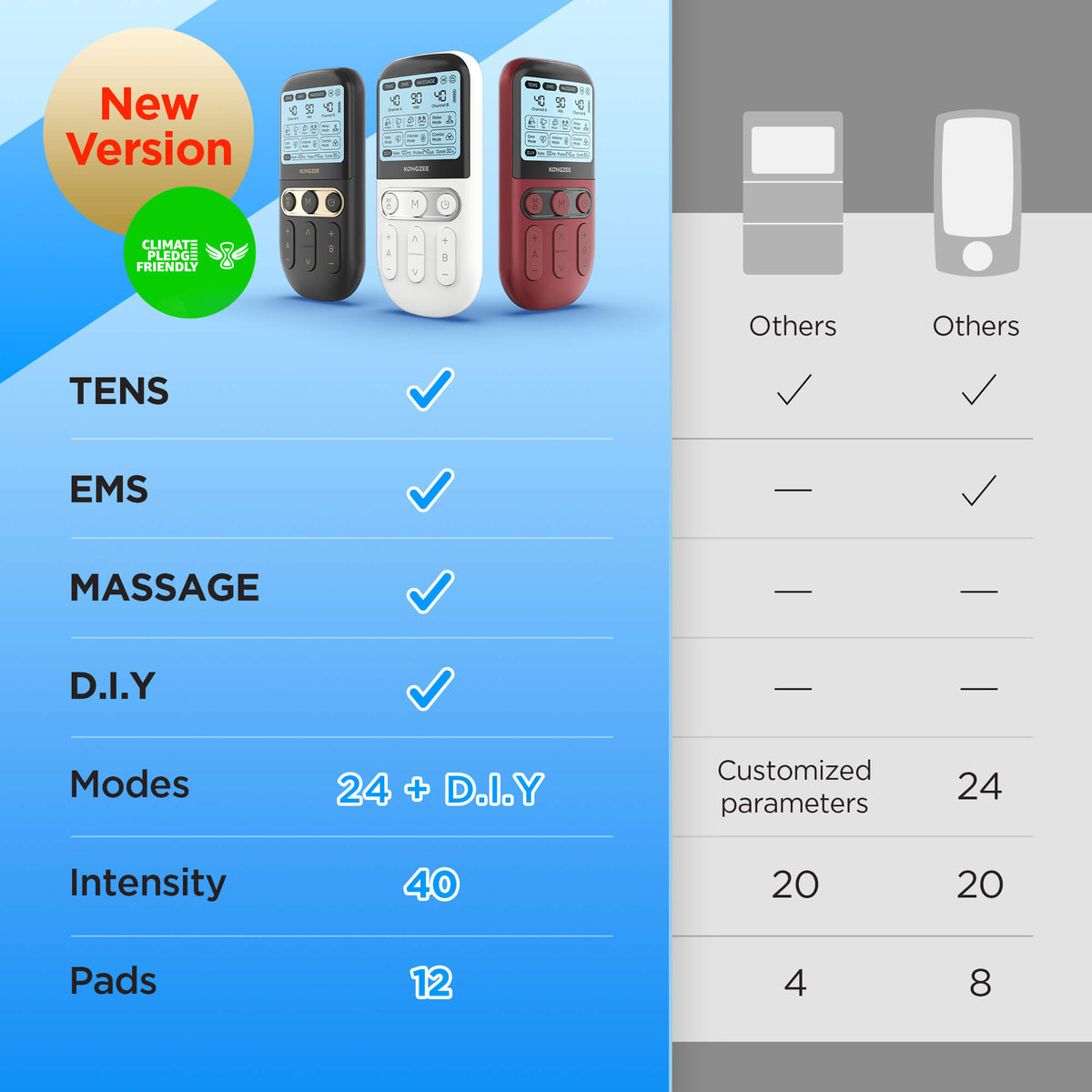
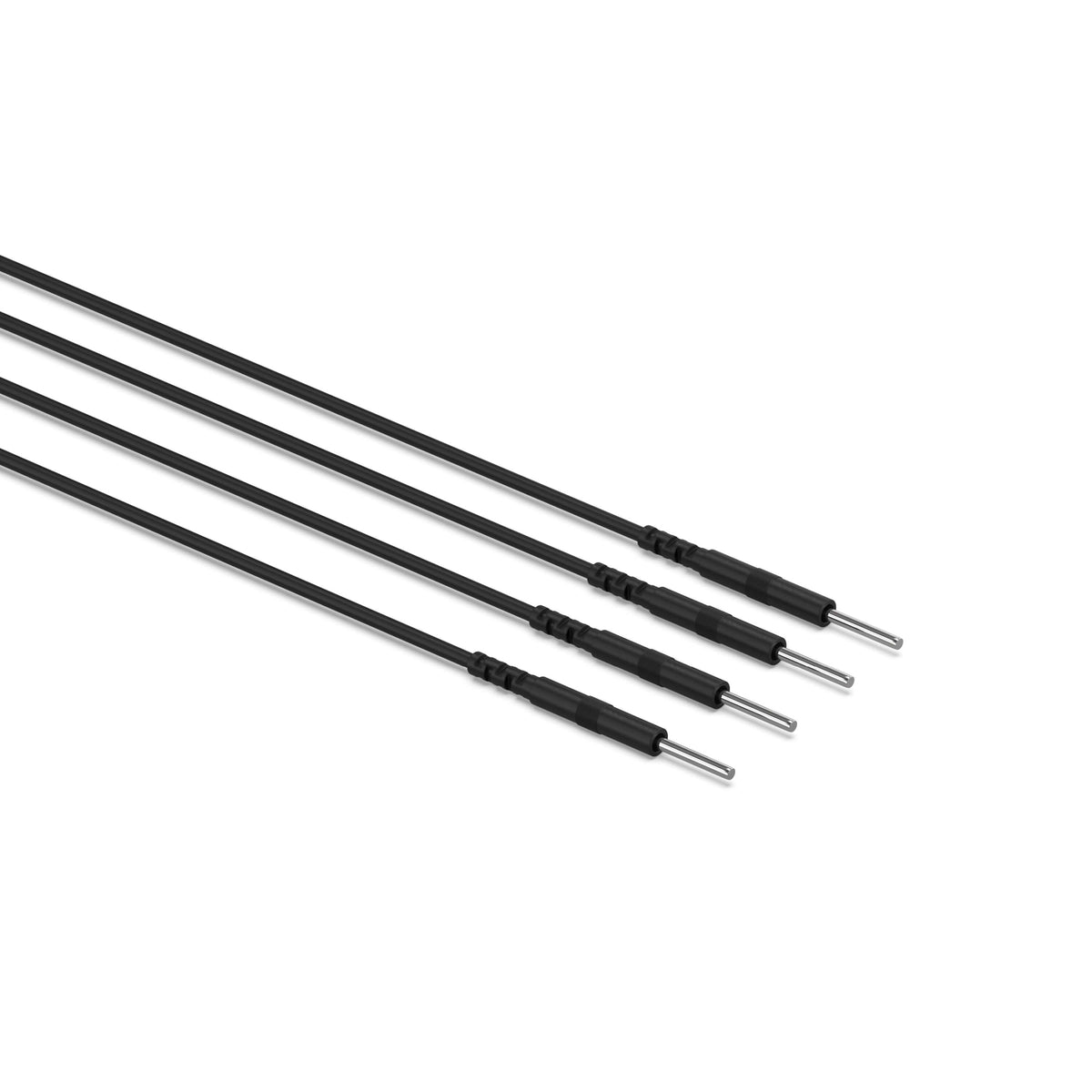
The KONGZEE 4-in-1 TENS and EMS unit includes separate TENS, EMS, Massage and DIY modes, independent A and B controls, 40 intensity levels and reusable 2mm pin electrodes. These options help with adjustment; they do not diagnose elbow pain or replace tendon rehabilitation.
Frequently Asked Questions
Where do TENS pads go for golfer’s elbow?
Use healthy inner-forearm soft tissue around the painful region, leaving space between pads. Avoid the inner elbow bone, elbow crease, wounds and numb skin, and follow your manual or clinician.
Can TENS cure golfer’s elbow?
No. It may provide temporary pain relief, but recovery usually depends on reducing aggravating load and gradually rebuilding forearm and tendon capacity.
Is golfer’s elbow the same as tennis elbow?
No. Golfer’s elbow usually affects the inside of the elbow; tennis elbow usually affects the outside. Placement and exercise plans should match the diagnosed condition.
Can I exercise while wearing the pads?
Use TENS in a stable position unless the manufacturer and clinician approve otherwise. Cables can snag, pads can lift and temporary relief may hide warning pain during exercise.
When should I see a professional?
Seek care after a significant injury or for deformity, severe swelling, weakness, persistent numbness, a cold or discolored hand, inability to move the arm, or symptoms that keep worsening despite activity changes.
Reviewed September 17, 2026. This article is educational and does not replace diagnosis, medical advice, physiotherapy or the instructions supplied with your device.






Leave a comment
All comments are moderated before being published.
This site is protected by hCaptcha and the hCaptcha Privacy Policy and Terms of Service apply.