

The short answer: A TENS unit may temporarily reduce knee pain for some people, but placement depends on the cause of the pain and the area that remains sensitive. Place electrodes around the painful region rather than directly over the kneecap, keep each pad on healthy skin and use a strong but comfortable tingling. TENS does not repair cartilage, ligaments or other injured tissue.
Start With the Cause of Knee Pain
Knee pain can come from osteoarthritis, an overuse injury, a sprain, tendon irritation, surgery or another condition. These problems do not share one treatment plan. Pain after a twist with rapid swelling and difficulty bearing weight needs a different response from long-standing stiffness that has already been diagnosed.
Before trying TENS, seek an assessment when pain is severe, follows a significant injury, causes the knee to lock or give way, or comes with marked swelling, redness, heat or fever. After knee surgery, use electrical stimulation only when the surgical team has approved it and the incision is fully considered in the placement plan.
Can TENS Help Knee Pain?
TENS sends mild electrical impulses through electrodes on the skin. It is intended to influence pain signaling and may provide temporary relief during or after a session. Response varies, and improvement in pain does not mean that the structure causing the problem has healed.
Evidence for knee osteoarthritis is mixed and continues to develop. The 2019 American College of Rheumatology and Arthritis Foundation guideline recommended against TENS for knee and hip osteoarthritis because earlier studies were small and inconsistent. A newer 2026 systematic review and meta-analysis reported a small overall reduction in knee osteoarthritis pain while also calling for stronger sham-controlled trials and better reporting.
This is why TENS is best described as an optional symptom-management tool rather than a replacement for diagnosis, exercise, weight management, medication or physical therapy when those are appropriate.

TENS Unit Placement for Knee Pain
A common general pattern uses two or four electrodes on the soft tissue around the painful area. Pads may be positioned above and below the knee or on the inner and outer sides, leaving space around the kneecap. The exact pattern should follow your device manual or a clinician's advice.
Do not place electrodes directly on the kneecap, on the back of the knee, over an open wound or incision, or on skin that is numb, infected, irritated or swollen. Avoid any arrangement that sends current across the chest. If the pain is widespread or the skin sensation has changed, ask a physical therapist to confirm placement before use.
Two-Pad Pattern
With one channel and one pair of electrodes, place the pads on healthy soft tissue on opposite sides of the painful region. Keep a gap between them. A two-pad pattern is simpler, but it should still avoid bony prominences and damaged skin.
Four-Pad Pattern
A dual-channel unit can control two pad pairs. A clinician may arrange four pads around the knee so that each channel covers an appropriate part of the area. Independent A and B intensity controls are useful because sensitivity can differ on each side. Four pads do not make every placement safe, and they should never be used to route current through the torso.
See our complete TENS unit pad placement chart for other body areas and our dual-channel TENS guide for an explanation of A and B controls.
How to Set Up a TENS Session
- Read the device instructions and confirm that TENS is appropriate for you.
- Turn the unit off before connecting leads or touching electrodes.
- Clean and dry intact skin; do not apply lotion under the pads.
- Place the electrodes around the painful area using an approved pattern.
- Select TENS mode rather than EMS if the goal is sensory stimulation for pain.
- Start at the lowest intensity and increase slowly to a strong but comfortable tingling.
- Stop if the sensation burns, stings, becomes painful or causes forceful muscle contraction.
- Switch the unit off before moving or removing any electrode.
Use the schedule in the manual or a plan from your clinician. There is no single session length that fits every knee condition, device and person. Our guide on how long to use a TENS unit explains the factors that affect timing.

Safety Checks Before Use
- Do not use TENS over broken, infected, irritated or numb skin.
- Do not use it while sleeping, bathing, driving or operating machinery.
- Do not place electrodes on the head, eyes, mouth, front or sides of the neck.
- Do not arrange pads so current crosses the chest.
- Stop if skin becomes red, itchy, painful or blistered.
Ask a healthcare professional before use if you are pregnant; have a pacemaker, implanted defibrillator or another electronic implant; have epilepsy, heart disease, cancer, circulation problems or reduced sensation; or recently had surgery. Review the full TENS contraindications checklist before starting.
When Pads Feel Sharp or Uneven
A sharp spot often points to poor electrode contact, a dry pad, a lifting edge or intensity that is too high. Turn the unit off first. Inspect the lead connection and make sure the full pad surface touches clean, dry skin. Replace torn or badly worn electrodes rather than pressing them harder into place.
Reusable electrodes collect skin oils and lint. Learn how to inspect and care for them in our guide to cleaning TENS pads. If discomfort continues with good contact and low intensity, stop using the unit and seek advice.
TENS vs EMS Around the Knee
| Feature | TENS | EMS |
|---|---|---|
| Main goal | Temporary pain modulation | Muscle contraction or activation |
| Expected response | Comfortable tingling | Visible or rhythmic contraction |
| Placement basis | Around an appropriate painful area | Over a target muscle or motor point |
| Can it repair an injury? | No | No |
Do not copy a TENS placement when switching to EMS. Rehabilitation after surgery or injury should follow the plan provided by the treating professional. Read our TENS vs EMS guide before changing modes.
Choosing a Unit for Knee Pain
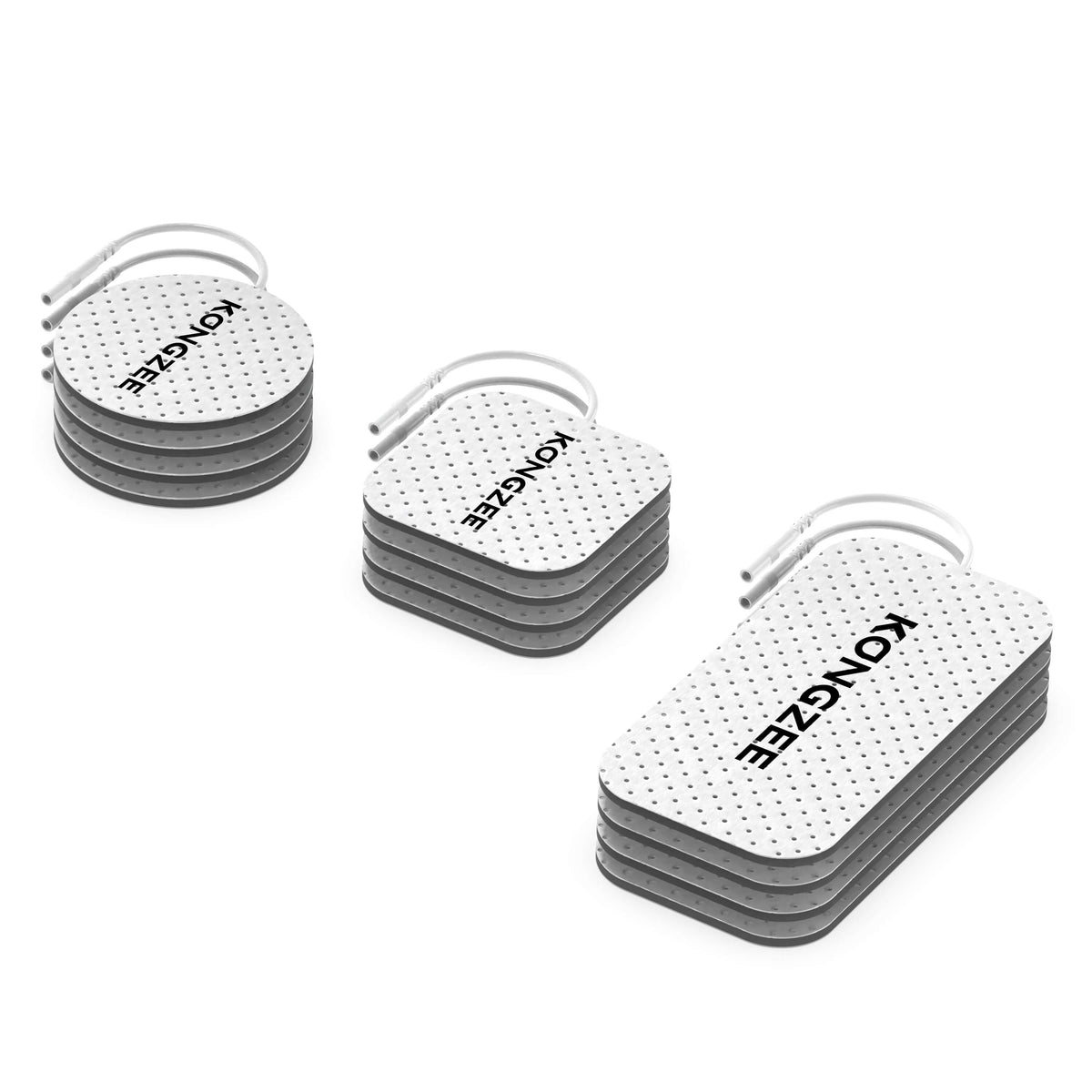
Look for clear mode labels, small intensity steps, independent channel controls when two pad pairs are needed, compatible replacement electrodes and an understandable manual. A portable rechargeable unit may be convenient, but ease of use and safe placement matter more than the number of programs.
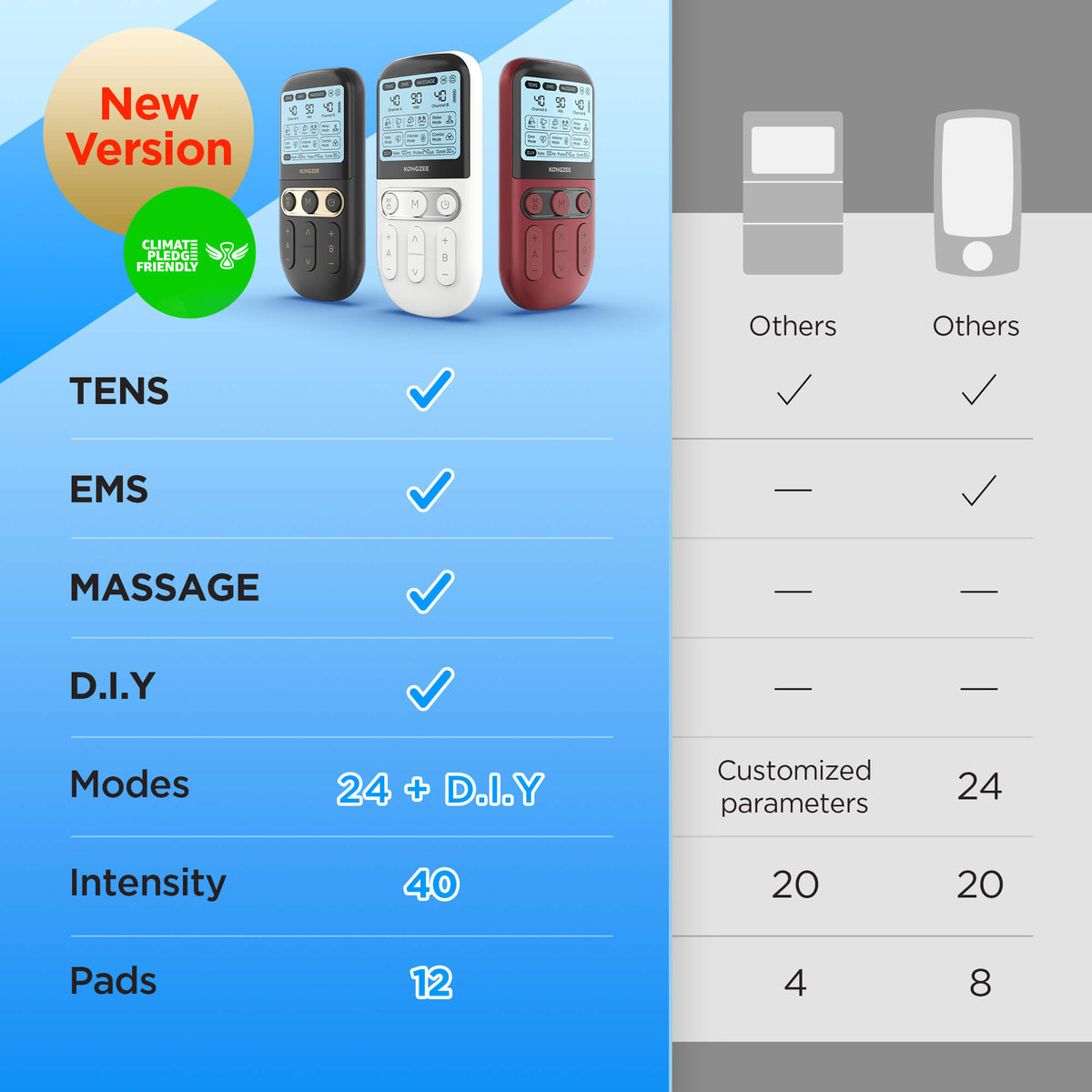
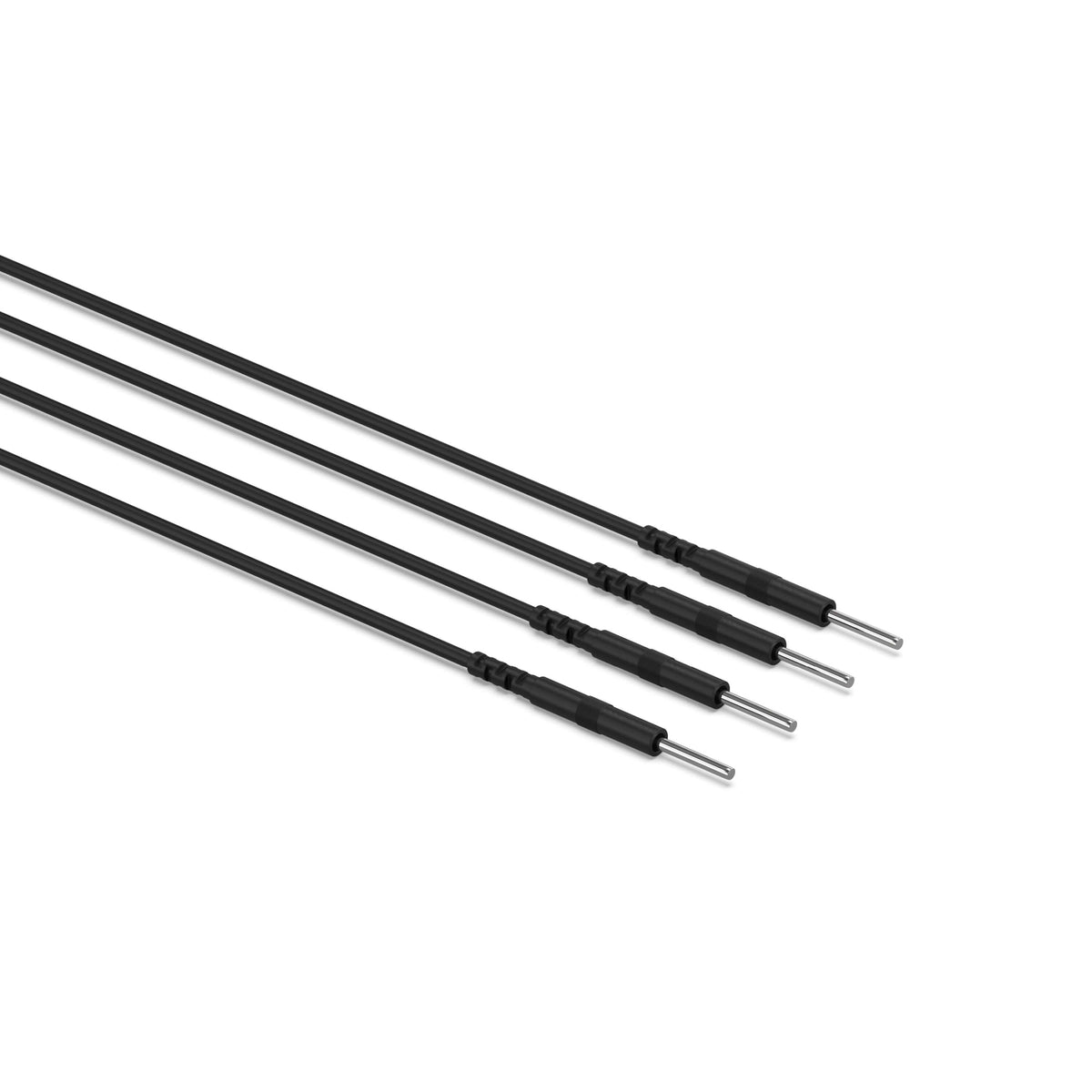
The KONGZEE 4-in-1 TENS and EMS unit includes separate TENS, EMS, Massage and DIY modes, independent A and B intensity controls, 40 intensity levels and reusable 2mm pin electrodes. These features provide adjustment options and do not make the unit suitable for every knee condition.
Frequently Asked Questions
Can I put TENS pads directly on my kneecap?
Place electrodes on healthy soft tissue around the painful area rather than directly over the kneecap. Follow the device manual or a clinician-confirmed pattern.
Can I use TENS after knee replacement?
Only after the surgical team approves it. Do not place electrodes over an incision, infected area or skin with reduced sensation, and do not use TENS as a substitute for the prescribed rehabilitation plan.
Should TENS make my knee muscles move?
TENS usually produces tingling without a forceful contraction. Check the selected mode and reduce intensity if the muscles move strongly or the sensation becomes uncomfortable.
Does TENS cure knee arthritis?
No. TENS may provide temporary pain relief for some people, but it does not rebuild cartilage or cure osteoarthritis.
Can I walk while using TENS?
Only if the device instructions permit it, the leads are secure and the activity does not create a fall or entanglement risk. Never use TENS while driving or operating machinery.
Reviewed September 16, 2026. This article is educational and does not replace diagnosis, medical advice, rehabilitation or the instructions supplied with your device.






Leave a comment
All comments are moderated before being published.
This site is protected by hCaptcha and the hCaptcha Privacy Policy and Terms of Service apply.