

The short answer: A TENS unit may provide temporary symptom relief for some people with sciatica, but it does not remove a herniated disc, spinal narrowing or another cause of nerve irritation. Before trying TENS, make sure the symptoms have been assessed, learn the safe areas for electrode placement and stop if pain, numbness or weakness worsens.
What Sciatica Feels Like
Sciatica describes pain caused by irritation or compression of the sciatic nerve or one of the nerve roots that forms it. Symptoms often begin in the lower back or buttock and travel down one leg. The feeling may be burning, shooting or similar to an electric shock. Tingling, numbness and weakness can occur as well.
Not every pain in the back, hip or leg is sciatica. Joint problems, muscle injuries, circulation problems and other nerve conditions can produce similar symptoms. The Cleveland Clinic overview of sciatica explains why identifying the underlying cause matters, especially when symptoms are moderate, persistent or worsening.
Can a TENS Unit Help Sciatica Pain?
TENS sends a mild electrical current through electrodes placed on the skin. It is thought to change how pain signals reach the nervous system and may encourage the release of natural pain-relieving chemicals. When it helps, the effect is usually temporary and varies from one person to another.
Research does not support promising that TENS will treat sciatica itself. Studies of TENS for spinal pain have used different settings, treatment schedules and patient groups, which makes firm conclusions difficult. A systematic review of TENS and interferential current for spinal pain described the evidence for chronic low-back pain as inconclusive because study quality and treatment methods varied. A more recent review of nonsurgical treatments for chronic sciatica also found low confidence in much of the available evidence.
This distinction is important: reduced pain during or after a session does not prove that pressure on a nerve has changed. TENS should sit within an appropriate plan that may also include gentle activity, physical therapy, medication or other care recommended by a healthcare professional.

How to Use a TENS Unit for Sciatica Pain
- Confirm that TENS is appropriate. Ask a healthcare professional if the cause of the pain is uncertain, the symptoms are new or you have a condition listed in the device warnings.
- Read the complete manual. Check contraindications, approved uses, electrode requirements and the meaning of every mode before connecting the leads.
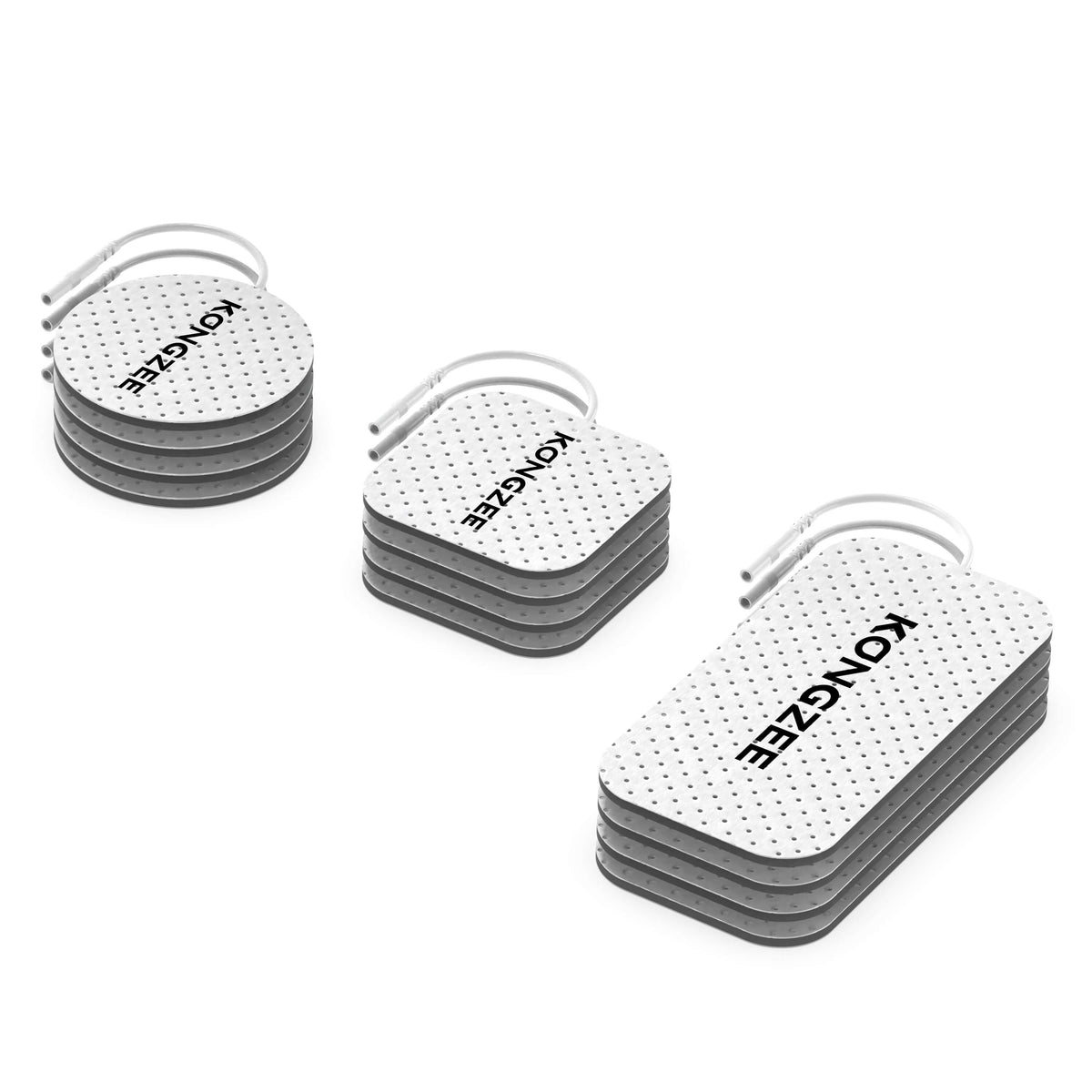
- Inspect the skin and pads. Use clean, dry, intact skin. Replace electrodes that are torn, dry or lifting because poor contact can create an uncomfortable concentration of current.
- Keep the unit switched off while positioning. Connect the lead wires and apply the pads before turning on the device.
- Select TENS mode. Combination units can also include EMS or massage programs. TENS is generally intended to create a strong but comfortable tingling rather than a visible muscle contraction.
- Start at the lowest intensity. Increase gradually until the sensation is clear and comfortable. It should not burn, sting or cause painful movement.
- Check the skin during and after use. Stop if redness, itching, burning or irritation develops. Switch the unit off before moving or removing a pad.
The general setup is the same as in our step-by-step TENS unit guide. Session length is not universal, so use the schedule in your manual or a clinician-designed plan rather than copying another person's routine. Our TENS session length guide explains the factors that change timing.
Electrode Placement Principles for Sciatica
Placement should relate to the painful pathway and the underlying diagnosis. A clinician may recommend positioning electrodes around the lower-back or buttock area, or along an appropriate part of the affected leg. Pads should not be placed directly over the spine, on numb or damaged skin or arranged so the electrical current crosses the chest.
There is no single diagram that is correct for every person called “sciatica.” The location of nerve irritation, the route of symptoms, skin sensation and other health conditions can change the plan. Follow the device instructions and ask a physical therapist or another qualified professional to confirm placement if you are unsure. Our broader TENS pad placement chart provides general body-area guidance, but it cannot diagnose the cause of leg pain.
Areas to Avoid
- Do not place electrodes on the head, eyes, mouth, front or sides of the neck.
- Do not position pads so current travels across the chest.
- Do not apply pads to broken, infected, irritated or numb skin.
- Do not place a pad where you cannot reliably feel the intensity.
- Do not use TENS while sleeping, bathing, driving or operating machinery.
The NHS TENS instructions recommend placing pads near the painful area with a gap between them and raising intensity slowly to a tingling sensation that is not painful. Read our complete TENS contraindications checklist before use.

When Not to Self-Treat Sciatica With TENS
Do not let temporary symptom relief delay an assessment when warning signs are present. Seek urgent medical care for sudden or worsening leg weakness, loss of bowel or bladder control, loss of feeling around the groin or saddle area, symptoms in both legs, or severe pain after a major injury. The Mayo Clinic sciatica guidance identifies sudden weakness and bowel or bladder changes as reasons for immediate care.
Ask a healthcare professional before using TENS if you are pregnant; have a pacemaker, implanted defibrillator or another electronic implant; have epilepsy, heart disease, cancer, poor circulation or reduced sensation; or recently had surgery. The correct advice may depend on the device, placement and your medical history.
TENS Settings and Sensation
A safe starting point is more important than chasing a specific number. Select TENS mode, begin at minimum intensity and increase in small steps. You should feel a strong but comfortable tingling. A sharp, burning or painful sensation is a signal to stop and check the skin, leads and electrodes.
More intensity is not automatically more effective. If the feeling fades, do not immediately turn the unit far higher. First check whether a pad is lifting or drying out. Learn how to care for reusable electrodes in our guide to cleaning TENS pads and restoring contact.
TENS vs EMS for Sciatica
| Question | TENS | EMS |
|---|---|---|
| Main target | Sensory nerves involved in pain signaling | Motor nerves that produce muscle contraction |
| Expected feeling | Strong but comfortable tingling | Rhythmic or visible muscle contraction |
| Role in sciatica | May temporarily help manage pain for some people | May be used in a clinician-directed muscle activation plan |
| Can it remove nerve compression? | No | No |
Do not substitute EMS simply because TENS has not helped. A combination device provides different programs, and each mode requires an appropriate goal and placement. Review our TENS vs EMS comparison before changing modes.
Choosing a TENS Unit for Home Use
For sciatica symptom management, prioritize clear controls, gradual intensity steps, compatible electrodes and a readable manual. Dual channels can provide separate intensity control for two pad pairs, but they do not make every two-area placement safe. Replacement pads and leads should be easy to identify before purchase.
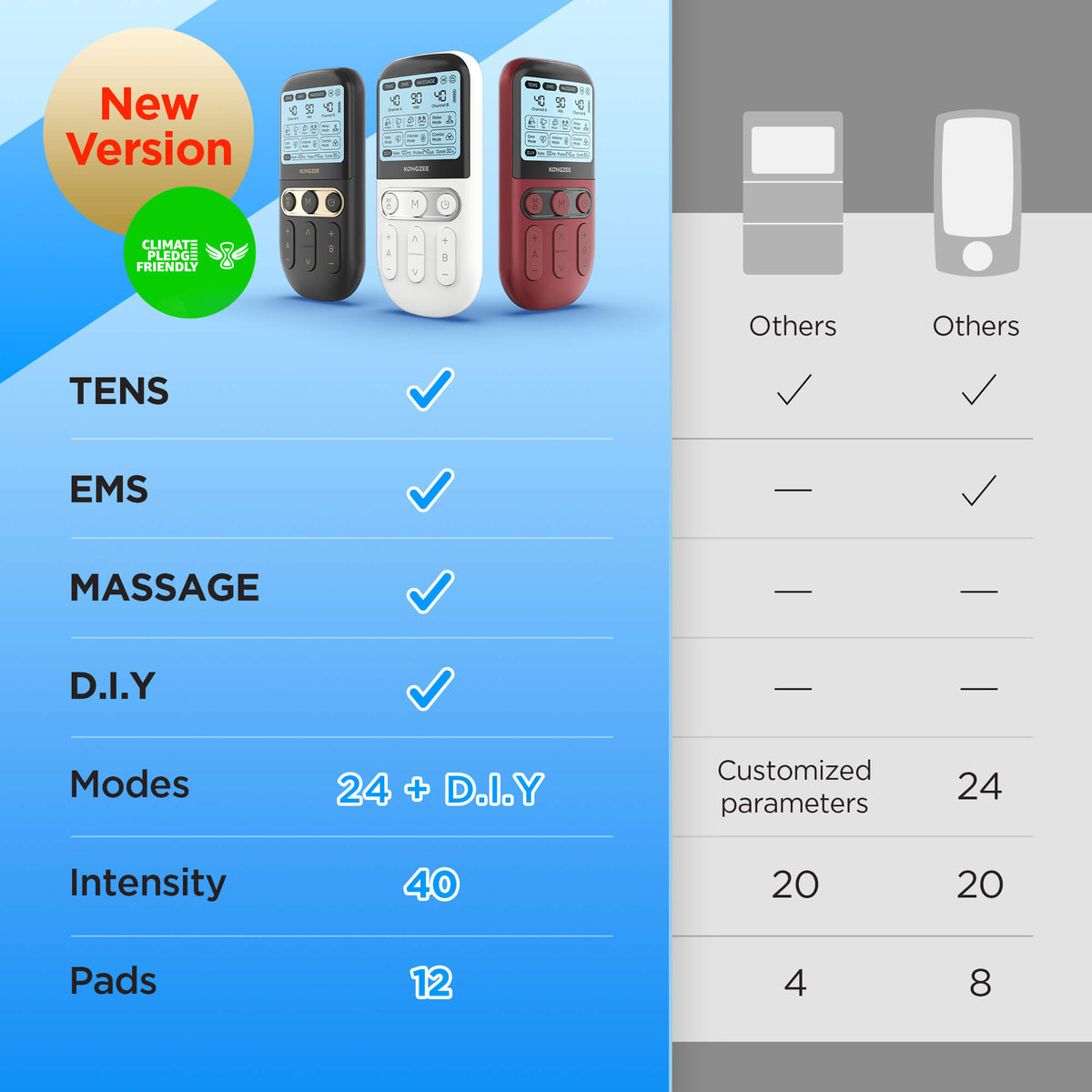
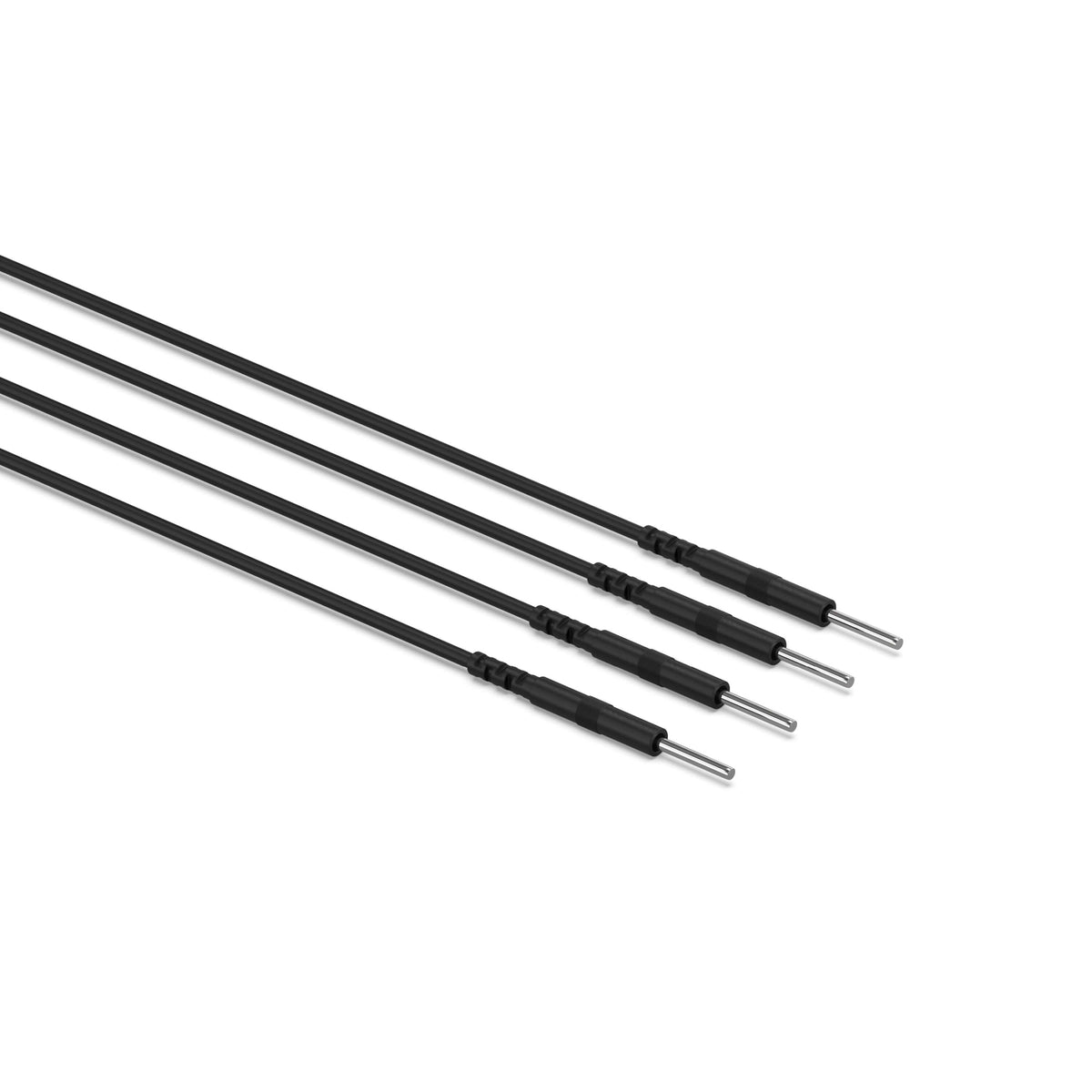
The KONGZEE 4-in-1 TENS and EMS unit includes distinct TENS, EMS, Massage and DIY modes, independent A and B channel intensity controls, 40 intensity levels, USB-C charging and reusable 2mm pin electrodes. These features provide adjustment options; they do not diagnose sciatica or make the device appropriate for every person.
Frequently Asked Questions
Where should I place a TENS unit for sciatica?
Placement is commonly planned around the painful pathway rather than directly on the spine. Because symptoms and causes differ, follow the device manual and ask a healthcare professional to confirm the pattern for your case.
Can TENS make sciatica worse?
TENS should not feel painful. Stop if symptoms intensify, new numbness or weakness appears, the stimulation burns or stings, or the skin becomes irritated. Worsening neurological symptoms need medical assessment.
How long should I use TENS for sciatica?
There is no universal session length for every device and person. Use the manufacturer's instructions or a clinician's plan, inspect the skin and do not sleep with the unit operating.
Does TENS heal the sciatic nerve?
No. TENS may change pain perception temporarily, but it does not repair a nerve or correct disc, bone or tissue changes that may be irritating it.
Should the muscle contract during TENS?
Usually no. TENS is generally adjusted to a comfortable tingling without a forceful contraction. Check that you selected TENS rather than EMS mode if the muscle begins moving strongly.
Reviewed September 16, 2026. This article is educational and does not replace diagnosis, medical advice, physical therapy or the instructions supplied with your device.






Leave a comment
All comments are moderated before being published.
This site is protected by hCaptcha and the hCaptcha Privacy Policy and Terms of Service apply.