

Quick answer: TENS is generally used for temporary pain relief through sensory nerve stimulation. NMES means neuromuscular electrical stimulation and aims to produce a purposeful muscle contraction. EMS is a broader muscle-stimulation label often used alongside NMES. The names overlap, but a home device with an EMS mode is not automatically interchangeable with equipment prescribed for a particular rehabilitation program.
If a physiotherapist has recommended NMES, bring the exact device specifications to your appointment before buying. A product called a “muscle stimulator,” a high intensity level or a large number of presets does not establish that it can deliver the treatment your clinician intends.
TENS vs NMES: the difference is the intended response
TENS stands for transcutaneous electrical nerve stimulation. Conventional TENS usually produces a noticeable, comfortable tingling sensation. Pain relief is the goal; a strong muscle contraction is not the target of ordinary sensory-level use. Some TENS techniques can cause small twitches, so movement alone does not identify which treatment is being delivered.
NMES is directed toward muscle activation. In a rehabilitation plan, the clinician selects the muscle, electrode position and contraction-and-rest pattern around a defined functional goal. A clinical review of NMES distinguishes this purposeful contraction from the sensory response typically sought with TENS. Read the review’s discussion of stimulation terminology.
| Question | TENS | NMES |
|---|---|---|
| What is the main goal? | Temporary pain relief | Targeted muscle activation within an appropriate plan |
| What response is usually intended? | A strong but comfortable sensory feeling | A planned muscle contraction with suitable rest |
| What needs checking? | Safe use, placement and individual response | The prescribed device capability, muscle target and treatment parameters |
| Does a higher number prove suitability? | No; intensity scales vary between devices | No; intensity steps alone do not describe an NMES protocol |
| Can results from one treatment be assumed for the other? | No | No |

Is EMS the same as NMES?
EMS means electrical muscle stimulation. NMES names the neuromuscular route more explicitly. In everyday product descriptions and some clinical discussions, the terms refer to related muscle-stimulation approaches. Neither label, by itself, tells you the complete waveform, available settings, approved uses or supervision requirements.
The Royal National Orthopaedic Hospital describes EMS as a tool used in a specialist peripheral nerve injury service and advises using it when directed by a physiotherapist. That leaflet describes a particular clinical setting; its settings and treatment schedule should not be copied into a home device as a universal routine. See the hospital’s EMS information.
For a broader explanation of the consumer labels, see our TENS vs EMS guide. This article addresses the additional question that arises when a clinician or product listing specifically uses the term NMES.
What should you check if NMES has been recommended?
Start with the treatment request rather than a list of devices. Ask the clinician to identify the capability that matters and compare it with the actual manual. A shopping checklist can organize that conversation without turning a blog into a prescription.
- Identify the exact purpose. Is the recommendation for pain relief, a specific muscle-activation exercise or another supervised use? Write down the intended goal in the clinician’s own terms.
- Check the output description. Share the manufacturer’s waveform and control information, including whether the required pulse, timing or rest controls exist. Do not infer those controls from a “DIY” label.
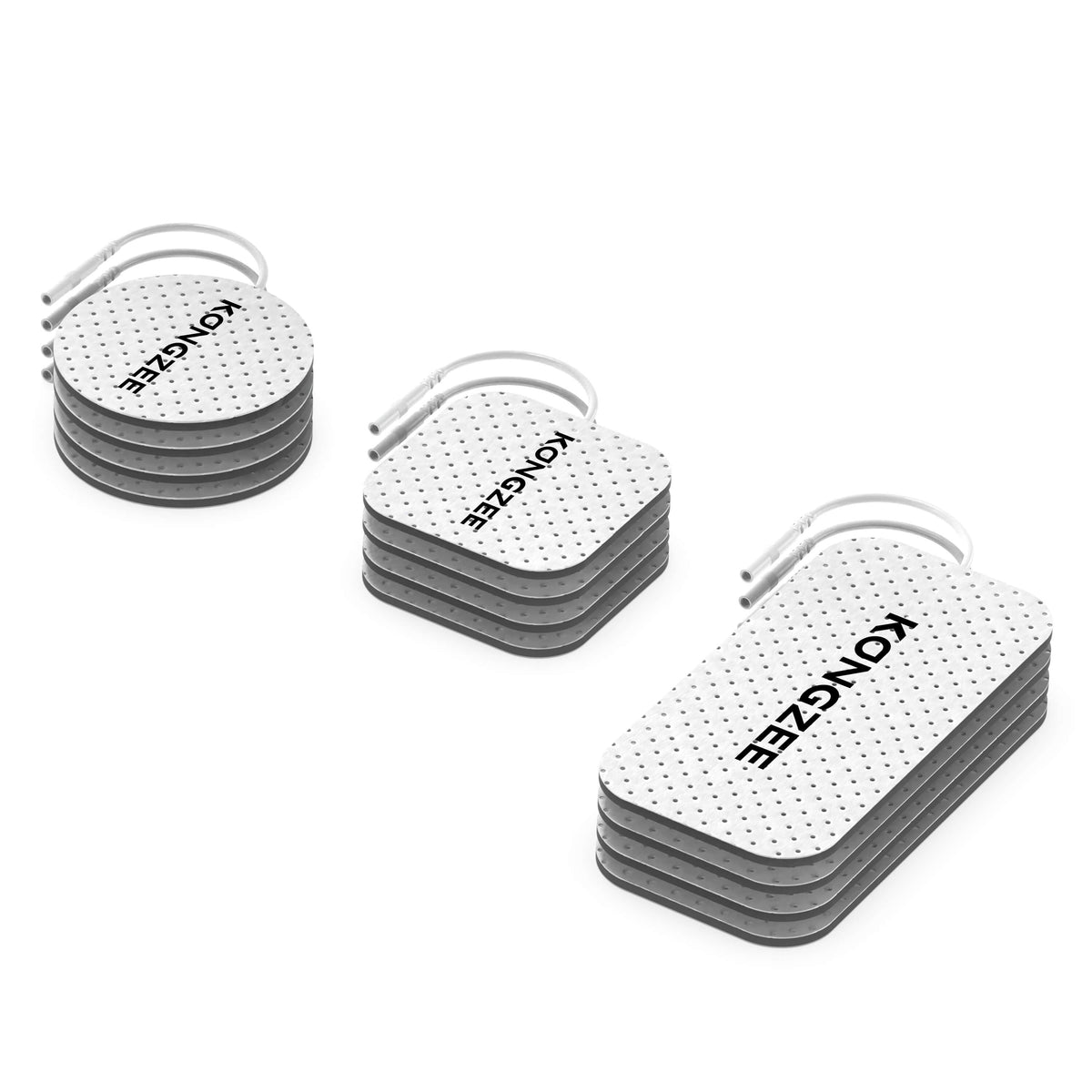
- Check the electrode system. Confirm the specified size, connection and placement instructions, rather than substituting a pad because its plug fits.
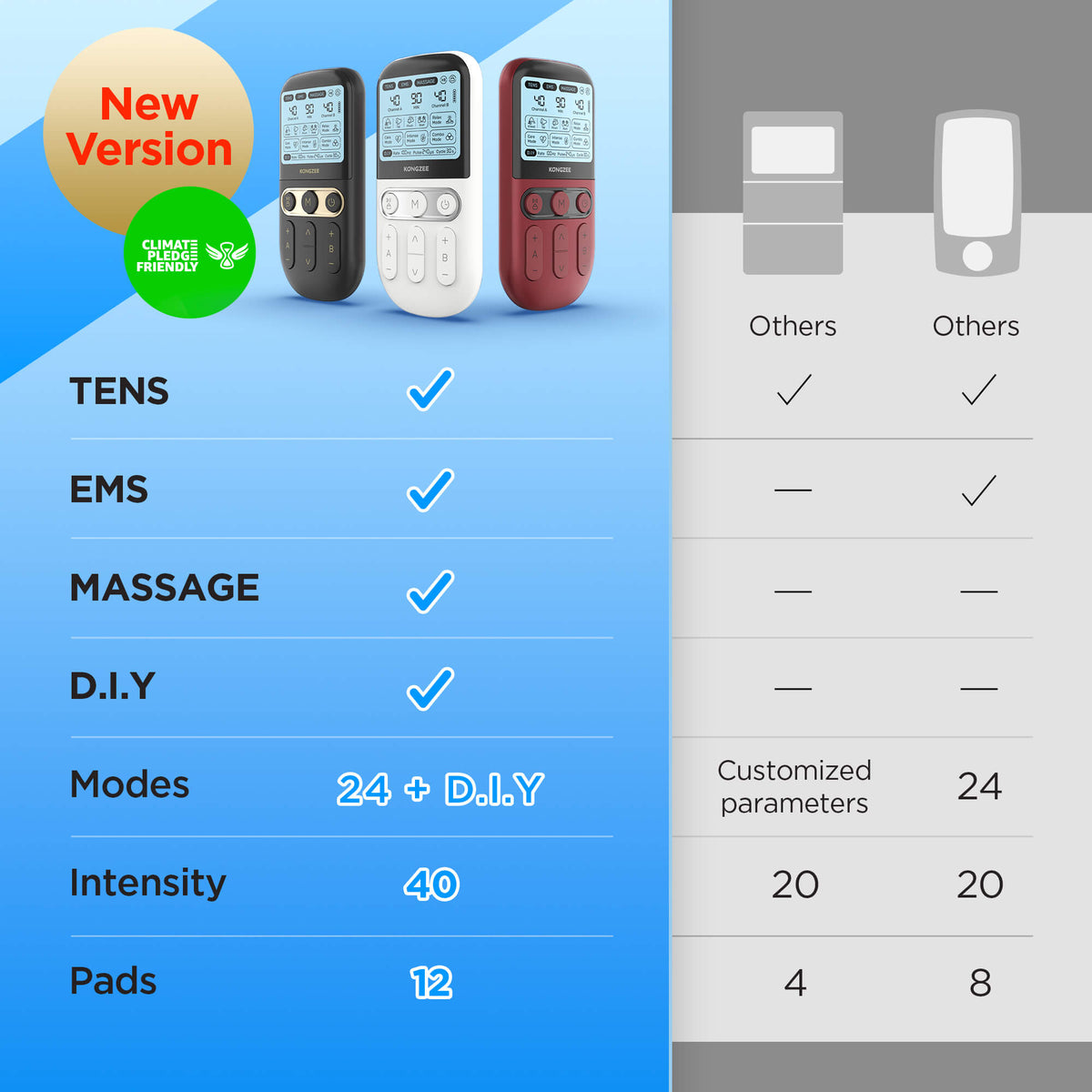
- Separate convenience from clinical capability. Rechargeable power, a pouch and a large screen may affect handling, but they do not establish suitability for a rehabilitation protocol.
- Confirm the follow-up plan. Ask who will check your technique and what response should prompt stopping or contacting the clinician.
A useful pre-purchase question is: “My clinician asked for this specific NMES capability. Does this exact model provide it, and where is that documented?” A clear answer is more useful than a claim that one category is stronger than another.
How does the KONGZEE 9026 fit this comparison?
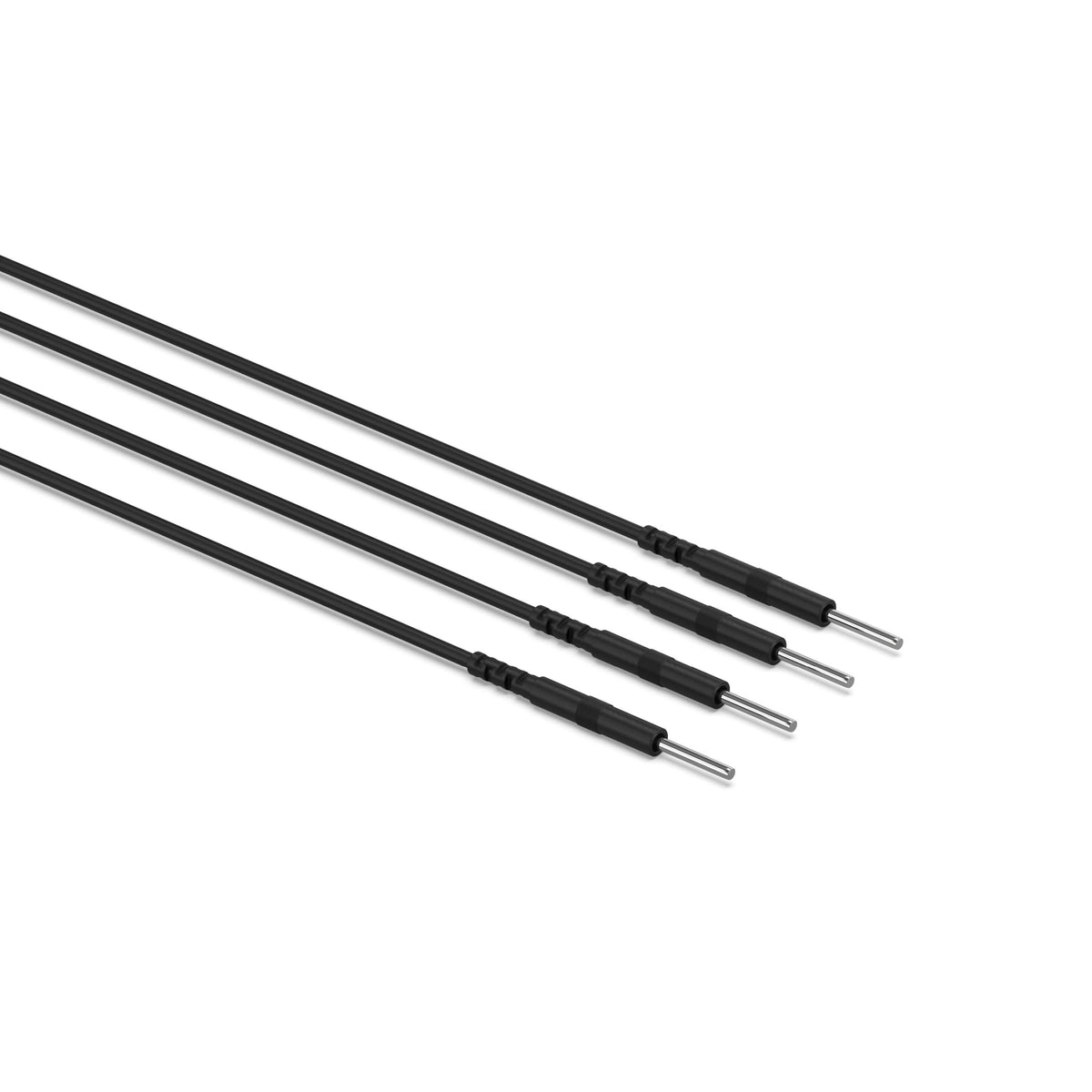
The KONGZEE 9026 TENS and EMS unit lists TENS, EMS, Massage and DIY modes, independent A/B intensity controls, 40 intensity levels and USB-C charging. The current kit includes 12 mixed-size reusable pads with 2mm pin connections and two lead wires.
Those are documented product features. They do not establish equivalence to a prescribed NMES system, a hospital device or a particular post-surgery protocol. Independent A/B intensity also does not prove that every other program parameter can be set independently on each channel.
If a clinician has recommended a specific NMES device, do not replace it with the 9026 solely because both devices can produce muscle stimulation. Use the 9026 manual and support page to obtain model information for your clinician to review. Our combo unit guide explains the everyday controls separately.

Can you switch between TENS and muscle-stimulation modes?
A combo unit’s modes should be used according to its own instructions and your professional guidance. Switch the device off before repositioning electrodes, and restart from the lowest intensity when beginning an approved setup. Do not treat a painful contraction as proof that the session is working.
FDA consumer guidance notes that electrical muscle stimulators can cause adverse reactions and must be used for their supported purposes. It does not establish that an individual KONGZEE model is FDA cleared for a particular use. Read the FDA’s consumer information.
Review the contraindications and precautions guide before use, especially with an implanted electronic device, pregnancy, epilepsy, heart problems or reduced sensation. Electrical stimulation is not a substitute for assessing a new weakness, unexplained pain or an injury.
Frequently asked questions
Does turning up a TENS unit make it an NMES device?
No. A higher intensity number is not a treatment classification. The available output, intended use and planned response matter; do not keep increasing a TENS setting to force a contraction.
Which is better, TENS or NMES?
The question depends on the goal. Temporary pain relief and targeted muscle rehabilitation are different tasks. A clinician can determine whether either approach is appropriate for your condition.
Does a dual-channel unit automatically provide NMES?
No. “Dual channel” describes outputs and their controls. It does not establish a waveform, clinical indication or rehabilitation capability. See what dual-channel control means.
Can an EMS mode replace exercise?
Do not substitute a home stimulation session for a prescribed exercise or rehabilitation plan. Ask the treating professional how, or whether, stimulation belongs in that plan.
Prepared by KONGZEE Editorial. Product features checked October 26, 2026. Educational information, not an individual treatment plan. Lifestyle images are generated illustrations and do not depict treatment or document clinical outcomes.






Leave a comment
All comments are moderated before being published.
This site is protected by hCaptcha and the hCaptcha Privacy Policy and Terms of Service apply.